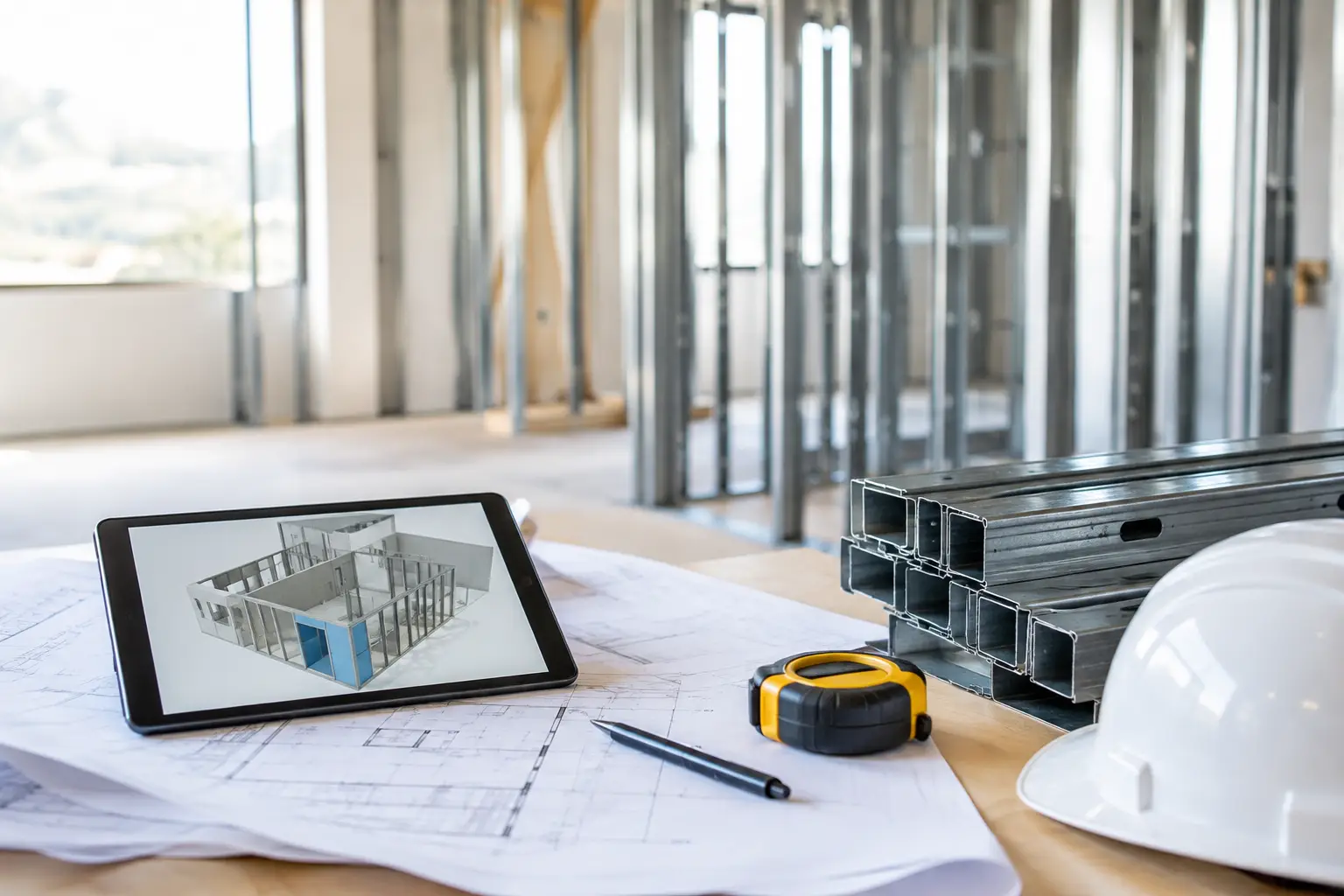
A drywall bid can be won or lost before the first crew steps onto the site. Miss a shaft wall condition, undercount soffits, overlook backing, or carry the wrong stud gauge, and a promising opportunity becomes a margin problem. For drywall takeoff, steel studs and more, All Points Technical’s AI-enabled APAS Vision platform gives estimating teams a faster way to turn plan sets into organized quantity intelligence – then apply experienced human judgment before the bid goes out.
This is not a pitch for replacing estimators with automation. It is a production model built for estimating teams that need to move more opportunities through the pipeline without letting detail, scope awareness, and quality control fall behind. APAS Vision helps surface quantities from drawings while trained technical professionals review, organize, and refine the information for practical bid use.
Why drywall takeoffs demand more than square footage
Drywall estimating is rarely a simple wall-area exercise. The plans may contain several board types, fire-rated assemblies, sound walls, abuse-resistant board, shaft systems, ceilings, bulkheads, soffits, and specialty conditions that change from floor to floor. Steel stud requirements add another layer of coordination. Stud size, gauge, spacing, track, deflection details, headers, and opening conditions all affect material needs and labor planning.
The risk is not only getting a total wrong. It is losing the connection between a quantity and the drawing condition that created it. Estimators need quantities they can trace, challenge, and adjust. They need enough structure to identify exclusions, clarify scope, and price the work with confidence.
That is where APAS Vision is Built Different. The platform accelerates the early measurement work, while an All Points Technical production workflow adds trade-aware review. The objective is not a black-box number. The objective is a usable takeoff package that supports faster decisions.
How APAS Vision supports drywall takeoff, steel studs, and more
APAS Vision applies AI-assisted plan analysis to identify and measure relevant drawing elements. That capability matters when bid desks are managing multiple addenda, short bid windows, and plan sets with repetitive floor layouts. Instead of making a team start every sheet from zero, the platform provides a stronger production starting point.
The human review layer is what makes that speed commercially useful. All Points Technical teams can organize the output around the estimating scope, flag areas that need attention, and deliver APAS QA Reviewed work that gives the estimator a clear basis for final pricing. The estimator remains in control of assemblies, labor factors, waste, vendor pricing, exclusions, and bid strategy.
For a drywall contractor, the scope may include wallboard by type and thickness, ceiling board, shaft wall components, insulation areas, framing lengths, track, and selected accessories. For a general contractor, the need may be broader: a rapid quantity view that helps validate subcontractor coverage, compare scopes, or prepare early budget direction. For MEP contractors and deck builders, the same operating principle applies – faster quantity production with technical review where plans are dense and bid capacity is limited.
Speed matters, but scope control matters more
A fast takeoff that ignores drawing nuance simply moves the rework to a later stage. APAS Vision is designed to reduce the manual burden of measurement, not eliminate the review required by real construction documents. Architectural revisions, reflected ceiling plans, enlarged details, finish schedules, and general notes still require interpretation.
That is why the right workflow starts with scope definition. Before production begins, the team should know what needs to be quantified, how the estimate is organized, which drawings control, and whether alternates or addenda must be separated. A commercial drywall contractor may want a detailed framing and board breakout. A builder evaluating a project at an earlier stage may need a more focused material benchmark. The deliverable should follow the decision being made.
In some cases, APAS Vision-supported takeoffs can be delivered in up to 24-48 hours. Timing depends on drawing volume, drawing quality, trade scope, revisions, and the level of breakdown required. Complex renovation work, incomplete documents, or projects with extensive alternates may need a more deliberate review cycle. That is not a weakness. It is how disciplined estimating protects margin.
The production advantage: people, process, and AI-assisted visibility
Construction businesses do not need another software login that creates work for an already overloaded team. They need output. All Points Technical brings a global technical production model to the estimating process, giving companies access to trained construction support teams that can scale around bid demand.
The APAS Vision platform strengthens that model by helping production teams move through measurement-heavy work more efficiently. The result is a practical division of labor: technology accelerates pattern recognition and quantity capture; experienced people review the plans, organize the takeoff, identify exceptions, and prepare the work for estimator oversight.
That distinction matters when workloads spike. Hiring local estimators or detailers can take months, and the available talent pool is often thin. A dedicated support model can be Up and Running in Days, Not Months, with trial work used to validate workflow and communication before teams scale. Businesses can add production capacity without building an internal recruiting machine every time opportunity volume rises.
For firms using estimating and operational systems such as ECI Solutions with Spruce Point of Sale, takeoff production still needs to fit the company’s existing sales and estimating process. ECI is a referral partner, and the broader point is straightforward: quantity work must be organized so teams can carry it into their preferred pricing, purchasing, and job-management workflow without creating duplicate effort.
Where the platform creates the most value
The strongest fit is not every project automatically. It is the project pipeline where speed and repeatable production are both essential. Multi-family, hospitality, health care, education, tenant improvement, retail, and light commercial work can all create sustained takeoff demand, especially when design teams issue frequent revisions.
A drywall subcontractor may use APAS Vision to expand bid coverage during a busy month without asking senior estimators to spend every hour tracing walls. A GC may use it to build a preliminary quantity position before subcontractor proposals arrive. A lumber dealer or component-focused operation can apply the same capacity logic to related material estimating needs, while leveraging All Points Technical’s wider expertise in technical production.
The trade-off is clear. A platform-assisted takeoff is most valuable when there is a defined handoff and a person accountable for final estimate decisions. If a business expects a quantity file to replace scope review, it will create risk. If it uses the file to accelerate a disciplined estimating process, it can improve bid velocity while maintaining control.
A practical way to get started
Start with a representative plan set, not the most chaotic project on the board. Define the desired outputs, required breakouts, drawing assumptions, and deadline. Then use trial work to test whether the quantity format, communication rhythm, and review process match the way your estimating team actually works.
From there, build a repeatable intake process. Identify who submits plans, who confirms scope, how addenda are tracked, and who signs off on APAS QA Reviewed deliverables. The goal is not to add another layer of administration. It is to create a reliable production lane that frees experienced estimators to focus on pricing, risk, vendor strategy, and winning work.
The Gold Standard is not merely measuring more sheets. It is giving your business the capacity to pursue the right opportunities without sacrificing the technical discipline that protects profit. When drywall takeoff, steel stud quantities, and related scope are produced through a controlled APAS Vision workflow, your bid team has more room to think, challenge assumptions, and act decisively.
www.allpointstech.ai www.s4dz.com www.apasvision.ai
Leave a Reply