Category: Uncategorized

  • Speed Up Drywall and Steel Estimates With All Points

    A drywall scope can look straightforward until the bid calendar turns it into a bottleneck. Walls change, shaft details multiply, ceiling assemblies vary by area, and light gauge steel quantities must align with plans, specs, addenda, and local pricing assumptions. To speed up your drywall and light gauge steel estimates with All Points Technical, you need more than extra hands. You need technical production capacity that understands how construction documents become an accurate, defensible bid.

    For subcontractors, GCs, and building-material suppliers, estimating speed is not a convenience metric. It determines how many opportunities your team can pursue before competitors get there first. But rushing the wrong workflow creates the other problem: omissions, duplicated quantities, unpriced scope gaps, and field teams inheriting a bad handoff. The objective is not simply to estimate faster. It is to build a repeatable estimating operation that moves quickly without giving away margin.

    Why Drywall and Light Gauge Steel Estimates Slow Down

    Estimators lose time when information arrives fragmented. Architectural sheets may define partition locations, reflected ceiling plans may drive soffits and bulkheads, structural sheets may affect framing requirements, and specifications may contain the details that determine whether a wall is basic, rated, impact-resistant, sound-rated, moisture-resistant, or all of the above.

    Light gauge steel adds another layer. Gauge, stud depth, track, deflection requirements, backing, headers, jamb reinforcement, bracing, and connection details are not minor line items. They affect material quantities, labor assumptions, and procurement exposure. A quick takeoff that ignores those conditions may be fast only until the review cycle starts.

    The constraint is often not software. Many firms already have estimating platforms, plan-viewing tools, spreadsheets, and historical pricing data. The real constraint is the availability of trained people who can interpret drawings, follow a defined takeoff process, and produce organized data for the estimator who owns the final number.

    That is where dedicated technical support changes the equation. Instead of forcing a senior estimator to spend every hour tracing walls, counting doors, sorting assemblies, and cleaning spreadsheets, the production work can be handled by a trained team working to your standards. Your lead estimator stays focused on scope decisions, pricing strategy, exclusions, clarifications, vendor coordination, and bid review.

    Speed Up Drywall and Light Gauge Steel Estimates Without Cutting Corners

    The fastest estimating teams separate production from judgment. Production means drawing review, digital takeoff, assembly classification, quantity extraction, and workbook preparation. Judgment means deciding what the documents require, applying company-specific labor and material logic, resolving scope conflicts, and setting the commercial position of the bid.

    Those functions should work together, but they do not need to be performed by the same person from start to finish. When every task stays on one overloaded estimator’s desk, bid velocity becomes limited by that individual’s available hours. When technical production is delegated through a controlled workflow, capacity becomes easier to scale against the pipeline.

    A strong process begins with standards. Before any takeoff starts, the team needs clarity on the estimate format, trade breakdown, drawing hierarchy, assumptions, wall-type naming conventions, scope boundaries, waste factors, and revision controls. This upfront alignment prevents the common offshore-support failure: receiving a large quantity report that cannot be reconciled to the way your business actually bids.

    The next requirement is disciplined document control. Every plan set, bulletin, addendum, sketch, and revised architectural detail must be logged against the active scope. A quantity is useful only when the estimator can trace it back to the source drawings and confirm what version it represents. Clear file naming, revision registers, marked-up takeoffs, and defined review checkpoints keep fast production from turning into rework.

    Then comes assembly-level organization. A drywall estimate should not be a single total of board and studs. It should distinguish the wall types, ceiling types, soffits, shafts, specialty assemblies, insulation, backing, firestopping interfaces, and other scope categories that materially affect cost. Light gauge steel quantities should be organized in a way that supports your procurement and labor model, not merely copied from a generic takeoff template.

    This approach does take initial setup. For a one-off, low-value project with a simple scope, the onboarding effort may not justify a dedicated production resource. But for companies consistently facing bid volume, short deadlines, or a shortage of experienced estimators, the operating leverage is substantial.

    What a High-Performance Estimating Workflow Looks Like

    A reliable workflow does not begin with a promise to send an estimate overnight. It begins with a controlled intake. The production team receives the complete bid package, deadlines, relevant proposal requirements, and your instructions on what to include, exclude, or flag for review.

    From there, the team performs a first-pass document review. They identify relevant sheets, wall-type schedules, ceiling plans, partition details, specifications, alternates, and known conflicts. Questions are surfaced early, while there is still time for the estimator to make a decision or submit an RFI.

    The takeoff is then completed using the agreed measurement logic. Depending on the client workflow, that can include wall areas, lineal feet by partition type, ceiling areas, soffit quantities, door openings, stud and track requirements, shaftwall systems, framing accessories, and other material drivers. The output should be structured, auditable, and ready for internal review.

    Your estimator reviews exceptions instead of rebuilding the entire takeoff. That is the point. A quality technical team should make the senior review more valuable by highlighting uncertain conditions, not burying them. If a detail is missing, a framing condition is unclear, or a wall type appears inconsistent between plan and schedule, it belongs in an exception log.

    After review, pricing and proposal development can move forward with more confidence. The estimate still requires commercial ownership from your team. Labor productivity, supplier quotes, market conditions, risk posture, and final inclusions are business decisions. But the tedious production load no longer has to dictate how many bids you can pursue.

    The Value of a Dedicated Technical Team

    Hiring locally for drywall estimating or light gauge steel takeoff can take months, especially when the candidate must understand construction drawings and work within your existing systems. A dedicated support model gives you another path: build a trained production team around your workflow, validate performance through trial work, and scale capacity based on real demand.

    All Points Technical was built for this kind of technical production challenge. Its teams support construction businesses with specialized estimating, detailing, CAD, Revit, and BIM capacity across multiple time zones. That time-zone coverage can keep work moving after your domestic office closes, so a bid package submitted late in the day can be organized, reviewed, and advanced while your core team is offline.

    The value is not just lower production cost. It is operational continuity. When a local estimator takes vacation, leaves the company, or gets consumed by a major project, the pipeline does not stop. Dedicated technical capacity helps protect output during the exact periods when your business is under the most pressure to perform.

    Where Speed Creates Better Margins

    Faster estimating creates margin in more than one way. First, it lets your team pursue a larger share of qualified opportunities. More bids do not automatically mean better results, but a company that can selectively pursue the right work has more control than one forced to decline projects because the team is overloaded.

    Second, a structured takeoff improves internal review. When quantities are broken out by assembly and exceptions are visible, estimators can spot unusual conditions before they become field problems. This matters most on projects with extensive rated assemblies, complex ceiling layouts, acoustical requirements, heavy backing, or nonstandard light gauge steel framing.

    Third, reliable capacity reduces the temptation to rush. Under deadline pressure, many teams price from incomplete counts, reuse stale assumptions, or skip detail review. Those shortcuts can produce a number quickly, but they often move risk downstream. A disciplined support process gives your estimator time to challenge the documents, protect the scope, and submit a cleaner proposal.

    Build Capacity Before the Next Bid Surge

    The companies that win consistently do not wait for an estimating backlog to become a crisis. They define their standards, test outside production support on controlled work, measure accuracy and turnaround, then expand the team as demand proves out.

    For drywall and light gauge steel contractors, that means treating estimating capacity as a growth asset, not an administrative expense. The right technical team can turn late plan releases, stacked bid dates, and hard-to-fill staffing gaps into manageable operating conditions. When your production engine is built to move, your estimators can spend their time where it pays: making sharper decisions, protecting scope, and putting more credible bids in the market.

  • All Points Technical Remote Truss Design and Estimating

    All Points Technical Remote Truss Design and Estimating

    A truss plant does not lose opportunities because demand is low. It loses them when a quote sits too long, a design queue backs up, or an open role stays unfilled for another quarter. All Points Technical, the gold standard for remote truss design and estimating, was built for that operational reality: specialized production capacity that helps component businesses bid faster, design accurately, and keep work moving when local hiring cannot keep pace.

    Remote technical support is not simply a lower-cost alternative to adding headcount. Done poorly, it creates rework, communication gaps, and more supervision for an already overloaded design or estimating manager. Done right, it becomes a controlled extension of the operation – one that understands truss software, lumber packages, plant workflows, loading requirements, and the commercial pressure behind every quote.

    Why Truss Capacity Has Become a Growth Constraint

    The truss and building-materials market runs on speed with very little room for error. Builders expect prompt turnaround. Sales teams need pricing before competitors lock in the project. Production teams need complete, buildable packages before schedules tighten. Meanwhile, experienced truss designers and estimators remain difficult and expensive to recruit in many U.S. markets.

    That creates a familiar trap. The business has more bid opportunities than its internal team can process, but leadership hesitates to add permanent staff before the pipeline is fully secured. When the workload drops, fixed labor costs remain. When it spikes, managers are left asking their best people to work longer hours, train new hires, and protect quality at the same time.

    The issue is not whether a company needs more capacity. It is whether it can add the right capacity quickly, without creating another management burden. Specialized remote teams solve that problem when they are staffed for the actual work, not treated as generic drafting support.

    The Gold Standard for Remote Truss Design and Estimating

    The difference between basic outsourcing and a high-performing remote production model comes down to specialization, process control, and accountability. Truss design and estimating are not interchangeable with general CAD work. A team member must understand how design assumptions affect pricing, manufacturability, delivery, engineering review, and margin.

    A capable remote truss designer can support layout development, truss design, revisions, production documents, and project coordination within the plant’s established standards. A capable estimator can interpret plans, calculate material requirements, build lumber and component packages, identify scope gaps, and return information in a format the sales team can use. Those capabilities must be supported by consistent quality checks, documented workflows, and direct communication with the client team.

    That is why trial work matters. Before a remote resource becomes part of a larger production plan, the work should be tested against real files, real standards, and real turnaround expectations. It gives operations leaders evidence rather than promises. They can see technical capability, communication quality, attention to detail, and fit with their preferred software and workflow.

    Capacity That Flexes With the Pipeline

    Permanent hiring assumes workload will stay steady. Construction rarely cooperates with that assumption. A large subdivision release, storm-rebuild demand, a new builder account, or a surge in multifamily work can change the production picture fast. The reverse is also true when a project stalls or a market softens.

    A dedicated remote team gives companies a more practical way to respond. Start with the immediate bottleneck: estimating backlog, truss design overflow, quote support, or a mix of all three. Scale once the team has proven itself. Adjust staffing as the pipeline changes instead of carrying unnecessary fixed overhead through slower periods.

    This is not an argument for removing internal expertise. Strong internal leaders remain essential. They set standards, own customer relationships, manage exceptions, and protect the operation’s commercial priorities. Remote technical professionals give those leaders the production bench they need to operate at a higher level.

    The best results come from clear ownership. The client defines scope, standards, turnaround targets, software access, and escalation paths. The remote team handles focused technical production. With that structure in place, the internal team spends less time chasing status updates and more time winning work, solving complex issues, and improving plant performance.

    What Faster Estimating Actually Changes

    Faster estimating is not only about sending more quotes. It changes the economics of the sales process.

    When estimates return quickly and accurately, sales teams can respond while the buyer is still active. They can pursue more opportunities without forcing estimators to choose between speed and diligence. They also gain more time to review unusual conditions, clarify exclusions, and avoid pricing mistakes that damage margins later.

    For lumber dealers and component manufacturers, this matters even more when material takeoffs and truss packages are connected. A late or incomplete estimate can create downstream confusion in purchasing, scheduling, and fulfillment. A disciplined estimating workflow gives the operation a cleaner handoff from bid to order to production.

    There is a trade-off. Not every project should be handed to a remote team with no context. Highly unusual jobs, unclear architectural sets, or projects with sensitive customer history may require closer internal involvement. The answer is not to abandon remote capacity. It is to establish a triage process: standard production work flows efficiently to the dedicated team, while complex exceptions receive senior internal review.

    The 24-Hour Workflow Advantage

    Time-zone coverage is valuable only when the handoff is disciplined. Sending work overnight without clear instructions simply moves confusion from one shift to another. But when teams use shared standards, defined priorities, and regular communication, global delivery creates meaningful production continuity.

    A U.S. estimator can finish a plan review, document questions, and hand off a package at the end of the day. The remote team can advance takeoffs, layouts, design work, or revisions while the local office is offline. By the next business morning, the work is further along, questions are visible, and the internal team can make decisions instead of starting from zero.

    This is especially effective for companies that already run tight turnaround windows. It does not eliminate the need for review, and it should never be sold as automatic. It does create more productive hours around the clock, which can be the difference between keeping pace and losing a bid to a faster competitor.

    Technical Talent Must Match the Tools and the Work

    Software familiarity is not a cosmetic credential. Whether the operation relies on MiTek, Alpine, Simpson, AutoCAD, Revit, or specialized estimating tools, team members need to work within the systems that drive the business. They must also understand the output expected by downstream users: sales, engineering, purchasing, production, installation crews, and customers.

    The same principle applies to training. A remote professional may have strong technical experience but still need onboarding into a company’s naming conventions, design preferences, quality-control requirements, and customer-specific rules. The fastest implementations do not skip this step. They make it focused and practical, using sample jobs, written standards, feedback loops, and a defined first-week workload.

    A reliable ramp-up process is straightforward. Begin with a real production need, validate work quality through a trial, establish communication and review routines, then add capacity as results justify it. That approach gets teams up and running in days, not months, while giving leadership control over risk.

    Build for Output, Not Headcount

    The wrong question is, “How many people do we need?” The better question is, “What output do we need to protect revenue and margin?” A company may need more bids per week, shorter design turnaround, dependable coverage for a key employee absence, or enough technical bench strength to pursue a new market segment.

    Once the output target is clear, the staffing model becomes easier to design. A dedicated estimator may be the immediate answer. A combined estimating and truss-design team may be more appropriate for a growing component operation. For a contractor or engineering-driven builder, CAD, BIM, or structural detailing support may address the real bottleneck instead.

    The useful measure is not remote headcount. It is whether the business can quote more work, release cleaner packages, meet commitments, and preserve the margins that make growth worth pursuing.

    The next bid surge should not force your best people into another cycle of overtime and triage. Build the technical capacity before the backlog becomes the reason a customer calls someone else.

  • MEP Design by Solutions 4 Design at s4dz.com

    MEP Design by Solutions 4 Design at s4dz.com

    A missed clash between a duct main and a structural beam does not stay a design problem for long. It becomes a field delay, a change order, a strained subcontractor relationship, and a margin hit. That is the standard to apply when evaluating MEP design by Solutions 4 Design, s4dz.com, or any outside MEP production partner: Can the team protect coordination, maintain drawing velocity, and deliver work your project team can build from?

    For general contractors, specialty contractors, developers, and engineering-led construction firms, the right question is not whether an MEP provider can produce drawings. Many firms can. The real question is whether its process holds up when the model is incomplete, the deadline moves forward, and field conditions demand fast, technically sound answers.

    What MEP Design Must Deliver on Real Projects

    Mechanical, electrical, and plumbing design sits at the intersection of code compliance, equipment requirements, constructability, architectural intent, and structural limitations. A polished plan set is not enough if it creates impossible access clearances, ignores ceiling congestion, or leaves trade coordination to the field.

    A capable MEP design partner should establish clear scope boundaries from the start. That means identifying whether the assignment includes design development, construction documents, BIM modeling, shop drawing support, permit revisions, coordination, or as-built updates. Those services overlap, but they are not interchangeable. A firm hired for production drafting may not carry the same engineering responsibility as a licensed engineer of record.

    That distinction matters commercially. Before assigning work, confirm who owns calculations, code review, equipment selection, stamping requirements, and final design liability. If your team assumes those items are included and the provider assumes they are excluded, the project starts with a costly gap.

    How to Evaluate MEP Design by Solutions 4 Design

    A website, proposal, or sample model can show presentation quality. It cannot by itself prove delivery discipline. Evaluate MEP design by Solutions 4 Design with the same operational rigor you would apply to an internal production team or any outsourced technical resource.

    Start With Project Fit, Not a Generic Capability List

    MEP work varies sharply by building type. A tenant improvement project, distribution center, multifamily development, healthcare facility, and educational building each bring different coordination pressure, documentation standards, and approval paths.

    Ask for examples that resemble your work in complexity and delivery model. The useful comparison is not simply commercial versus residential. It is whether the provider has handled your design phase, software environment, owner standards, coordination workflow, and jurisdictional expectations.

    For example, a team that performs well on repetitive retail layouts may be an excellent fit for rollout work but not the right choice for a hospital renovation with dense existing conditions. There is no universal best provider. There is a provider that matches the risk profile of the assignment.

    Test BIM Coordination Where It Counts

    BIM coordination should reduce downstream conflict, not create a larger file with more unresolved issues. Determine which platform and version the team uses, how models are exchanged, and who has authority to resolve clashes. Revit proficiency matters, but disciplined model management matters more.

    The strongest workflow defines model origin points, levels, linked-model protocols, naming conventions, LOD expectations, clash tolerance, issue ownership, and revision control before production begins. It also defines the rhythm for coordination meetings and the turnaround expectation for clash responses.

    Pay particular attention to equipment rooms, risers, above-ceiling corridors, roof penetrations, and congested structural zones. These areas expose weak coordination quickly. A provider should be able to explain how it identifies conflicts early, documents alternatives, and escalates decisions that require input from the architect, structural engineer, or trade contractor.

    Demand a Measurable QA Process

    Quality assurance cannot be a promise made after a drawing package is complete. It needs to be embedded in the production sequence. Ask how drawings are checked for system continuity, equipment tags, schedules, routing logic, clearances, sheet consistency, and changes from the latest background set.

    A useful QA process includes peer review, senior technical review, coordinated markups, and a defined final-release check. The exact structure depends on project size. A fast-track interior project may need short, frequent review cycles, while a major ground-up project may require formal milestone gates.

    The key is visibility. Your project manager should know what has been checked, what remains open, and what assumptions are carrying risk. Silent assumptions are where avoidable rework starts.

    Capacity Is a Schedule Control

    A shortage of qualified MEP production talent can delay bids and drain senior staff time. When one experienced coordinator becomes the bottleneck for every model revision, a project can lose speed even if the design team is technically capable.

    That is why capacity planning deserves the same attention as design credentials. Ask how many dedicated people will support the work, whether the team can scale during submittal or permit pushes, and who covers absences or sudden volume increases. Also ask whether staffing is truly dedicated or shared across competing client deadlines.

    Global delivery teams can create meaningful schedule advantages when handoffs are controlled. Work completed overnight can be ready for review the next morning. But time-zone coverage only creates value when markups are clear, project data is current, and communication has an accountable owner. Without those controls, round-the-clock production becomes round-the-clock confusion.

    For businesses that need broader technical production support beyond a single MEP engagement, All Points Technical applies this same capacity-first discipline to specialized CAD, Revit, BIM, estimating, detailing, and component-design workflows. The objective is straightforward: add trained production capacity without waiting months for local recruiting to catch up.

    Price the Full Cost of Delivery

    An attractive hourly rate can be misleading when scope is unclear or rework is high. Compare providers using total delivery cost: production hours, review time from your internal staff, coordination cycles, revisions, software administration, and the potential cost of late design changes.

    A fixed-fee engagement can work well when inputs and deliverables are stable. It is less forgiving when architectural backgrounds are still moving or owner decisions remain unresolved. A time-and-materials structure may be more practical for iterative coordination, provided there are reporting controls, not-to-exceed thresholds, and clear approval steps for scope expansion.

    Do not treat every revision as either automatically included or automatically extra. Establish what constitutes a design change, a coordination adjustment, a background update, and a correction to the provider’s own work. That single conversation prevents friction later.

    Run a Controlled Pilot Before Scaling

    The fastest way to validate a new MEP partner is not a long procurement cycle. It is a controlled pilot with measurable deliverables. Select a package meaningful enough to test coordination and responsiveness, but contained enough that your team can review it closely.

    Set acceptance criteria before work begins. Define the source files, required deliverables, drawing standards, response times, review checkpoints, and the person authorized to make scope decisions. Measure first-pass quality, turnaround, the number and type of comments, and how effectively the team resolves issues after review.

    A pilot should test communication as much as drafting ability. Can the provider raise a constructability issue before it becomes a clash? Can it explain a technical decision clearly? Can it maintain pace when new information arrives? Those behaviors reveal whether a vendor can become a dependable extension of your operation.

    The Decision Standard That Protects Margin

    The best MEP design relationship gives your team more control, not less. It creates predictable production capacity, cleaner coordination, and a documented path for resolving uncertainty before it reaches the field.

    Review the work, the staffing model, the QA checkpoints, and the communication rules with equal discipline. When the provider can prove those four areas on a real pilot, you have more than a design resource. You have a production partner capable of helping your team bid faster, build with fewer surprises, and keep critical schedules moving.

  • Truss Design Types That Fit the Job

    Truss Design Types That Fit the Job

    A truss package can look efficient on paper and still create problems in production, installation, or cost recovery. That usually starts with one issue: the wrong truss design types being applied to the wrong conditions. For truss plants, lumber dealers, component manufacturers, and builders trying to move faster without giving away margin, knowing how major truss forms behave is not academic. It is a production decision.

    Why truss design types matter in real operations

    Different truss configurations solve different structural and manufacturing problems. Span, pitch, loading, bearing conditions, web geometry, material optimization, and field handling all change what makes sense. A design that performs well for a residential roof may be a poor fit for a long clear-span commercial application. A truss that minimizes member count may still complicate plate placement, bracing, or shop throughput.

    That is why experienced teams do not treat truss selection as a drafting exercise. They treat it as an operational lever. The right truss type supports cleaner engineering, predictable fabrication, faster installation, and fewer surprises in the field. The wrong one adds redesign cycles, production friction, and callbacks nobody wants.

    The main truss design types and where they fit

    King post truss

    The king post is one of the simplest truss forms. It typically works best over shorter spans and uses a central vertical member with angled top chords. Its value is straightforwardness. It is easy to understand, efficient for small structures, and often economical when the span is limited.

    But simple does not mean universally useful. Once spans increase, the king post quickly reaches its practical limits. For production teams, it is rarely the answer when projects demand larger open spaces or more complex loading conditions.

    Queen post truss

    The queen post truss extends the concept by using two vertical posts instead of one. That allows somewhat longer spans than a king post while maintaining a relatively clean layout. It is often chosen where a simple, traditional geometry still needs a bit more reach.

    The trade-off is that it remains a moderate-span solution. If a project needs significant open area or heavy loading, other truss forms usually outperform it. In practice, it can be a useful middle ground, but not a high-capacity answer.

    Fink truss

    In residential work, the Fink truss is one of the most common roof truss forms for a reason. Its web pattern creates strong triangulation, making it efficient for standard pitched roofs. It tends to provide a solid balance of structural performance, material use, and production familiarity.

    This matters to high-volume operations. Familiar truss profiles reduce design ambiguity, streamline shop processes, and support repeatability. If your business depends on throughput, the Fink often earns its place because it is proven and production-friendly.

    That said, a Fink truss is not automatically the best answer for custom roof geometry, attic use, or long-span commercial needs. Standardization helps margins, but only when it fits the actual building.

    Howe truss

    The Howe truss uses diagonal members that slope toward the center, paired with vertical web members. It has a long history in structural applications and can perform well where timber compression members are advantageous. Depending on the project, it may offer a practical and durable layout.

    Its usefulness today depends on context. In some component design environments, other truss patterns are more common because they align better with current fabrication preferences or standard residential packages. Still, the Howe remains relevant when loading and geometry support its strengths.

    Pratt truss

    The Pratt truss reverses the diagonal orientation seen in the Howe. It is often associated with efficient tension behavior in the diagonals and has broad structural relevance, especially in larger-span applications. In certain roof and floor systems, it can be a strong performer.

    For construction businesses, the key point is not memorizing textbook differences. It is knowing when the load path, span, and support conditions make Pratt geometry a better fit than other options. That decision affects engineering confidence and fabrication efficiency at the same time.

    Warren truss

    The Warren truss is recognized by its repeating triangular pattern, often with fewer vertical members. It distributes loads efficiently and can be effective for longer spans. Its clean geometry also appeals in applications where repetitive structure is useful.

    But there is no free lunch. Depending on the exact loading pattern, connection detailing and deflection behavior may require closer review than a more conventional layout. If loads are not uniformly distributed, what looks simple can become more nuanced in analysis.

    Scissor truss

    Scissor trusses are used when the design calls for a vaulted or cathedral-type ceiling while retaining a trussed roof system. Architecturally, they open up interior space. Commercially, they let builders create a higher-value interior feel without switching to a completely different structural strategy.

    The catch is that scissor trusses introduce more design coordination. Ceiling slope, roof slope, heel conditions, insulation requirements, and bracing all need to work together. They can absolutely be the right answer, but they demand accuracy up front.

    Attic truss

    An attic truss is designed to create usable space within the roof system. For builders trying to add square footage efficiently, this can be a smart move. It turns the truss cavity into a functional area rather than dead space.

    From a design and manufacturing standpoint, attic trusses are more demanding than standard common trusses. The room opening changes load paths and member forces, which can drive up lumber requirements and connection complexity. The value is real, but so is the need for disciplined engineering and detailing.

    Mono truss

    Mono trusses support single-slope roofs and are common in additions, sheds, canopies, and contemporary rooflines. They are useful when the building geometry or drainage strategy calls for a one-directional slope.

    Their simplicity can help, but only if bearing conditions and uplift demands are handled correctly. Mono systems often look easy from the outside. In design production, they still require careful attention to load transfer and attachment details.

    Parallel chord truss

    Parallel chord trusses are widely used in floor systems and flat or low-slope roof applications. Because the top and bottom chords run parallel, they are well suited to projects that need depth for mechanical runs, longer spans, or flat framing profiles.

    For many commercial and multifamily applications, this is where truss strategy becomes a major operational advantage. Parallel chord systems can support layout flexibility and speed in the field. They can also become coordination-heavy if openings, service routing, or concentrated loads are not addressed early.

    Choosing among truss design types is rarely just structural

    The best choice usually sits at the intersection of engineering need and production reality. Span is the obvious starting point, but not the only one. Roof shape, ceiling profile, bearing layout, uplift exposure, transportation limits, install sequencing, and plant capacity all affect what should be designed.

    This is where a lot of companies lose time. They focus on structural adequacy first and deal with manufacturability later. That approach creates rework. A truss that technically works but slows table setup, complicates jigging, or increases plate conflicts can quietly erode margin.

    The stronger approach is integrated thinking from the start. Design teams, estimators, and production leaders need alignment on what the job is really optimizing for. Lowest board footage is not always the same as lowest total cost. Fastest design turnaround is not always the same as best field outcome.

    What high-performing teams look for early

    Experienced operations do a few things differently. They assess whether the project needs standardization or customization. They identify where geometry will create exceptions. And they pressure-test whether the selected truss form will remain efficient once engineering, fabrication, delivery, and installation are all considered.

    That matters even more when volume increases. If your team is bidding aggressively or running multiple projects at once, truss selection cannot depend on whoever is available to draft that day. It needs process discipline. That is one reason companies use specialized technical production partners like All Points Technical – not just to add drafting capacity, but to keep design throughput aligned with manufacturing and growth targets.

    Common mistakes when selecting truss types

    One common mistake is forcing a familiar truss type into conditions it was not meant to handle. Another is overlooking field constraints, especially crane access, bracing demands, or delivery limitations. A third is treating custom geometry as a minor variation when it actually changes the design logic significantly.

    There is also a commercial mistake that shows up often: underestimating the time cost of redesign. When workloads are heavy, every extra revision cycle affects bid velocity and plant scheduling. The better your team gets at matching truss type to application early, the more stable your operation becomes.

    The right truss type supports scale

    Truss design is not just about making a structure stand up. It is about making your business run better. The right truss type helps engineering move faster, keeps fabrication predictable, and reduces friction from estimate to install.

    If you are evaluating truss design types, the smartest question is not which option is most common. It is which option gives your team the strongest combination of structural fit, production speed, and margin protection for the job in front of you. That is where better decisions start, and where better operations keep pulling ahead.

  • How to Build Remote Drafting Teams

    How to Build Remote Drafting Teams

    When a backlog hits, most construction businesses make the same mistake – they treat drafting capacity like a hiring problem. It is usually an operating model problem. If you want to know how to build remote drafting teams that actually raise output, protect quality, and keep projects moving, the answer is not simply adding more people. It is building a production engine with the right structure, standards, and accountability.

    That matters more than ever in drafting-heavy environments. Revit, CAD, BIM coordination, structural detailing, shop drawings, and takeoff support do not slow down just because local recruiting does. If your pipeline is growing but your technical bench is thin, remote drafting teams can give you a faster way to expand capacity without waiting months for the perfect local hire.

    Why remote drafting teams fail

    Most failures come from bad design, not bad talent. Companies rush into remote staffing with a vague job description, weak onboarding, and no production owner. Then they blame geography when deadlines slip or revisions pile up.

    Remote drafting work is highly process-dependent. Standards matter. File naming matters. Markup clarity matters. Model setup matters. If your internal team relies on tribal knowledge and hallway conversations, a remote team will struggle because the work was never truly systemized in the first place.

    The other common issue is role confusion. Leaders say they need a drafter when they really need a coordinated mix of production drafting, redline execution, model cleanup, sheet production, QA support, and overflow capacity during bid peaks. If you hire one person to do five jobs, remote or local, performance will suffer.

    How to build remote drafting teams that scale

    The strongest remote drafting teams are built like operating units, not like temp labor. Start with demand, define the work, and then build a team around repeatable production.

    Start with the production bottleneck

    Before you decide who to hire, identify where work is actually getting stuck. For some firms, the bottleneck is BIM modeling. For others, it is shop drawing production, markups, clash updates, or construction document revisions. In estimating-driven environments, it may be preconstruction drafting support tied directly to bid volume.

    This step sounds basic, but it saves time and money. A remote team built around the wrong bottleneck just creates more coordination overhead. A remote team built around the right bottleneck increases throughput almost immediately.

    Measure the problem in business terms. Are you losing bids because turnaround is too slow? Are PMs waiting on revisions? Are your senior designers doing junior-level cleanup work? Those are signs that capacity is misallocated, and that is where a remote drafting team can create margin.

    Define work by task type, not just by title

    A title does not tell you enough. “CAD drafter” can mean ten different things across construction and structural workflows. To build an effective remote team, break the job into specific task categories and volume.

    That may include model setup, annotation, redline incorporation, families or library management, detailing, sheet organization, quantity support, permit set updates, or as-built revisions. When you define work at that level, you can match talent more accurately and avoid overpaying for skills you do not need on every task.

    This also helps you decide whether to start with one dedicated drafter, a small pod with QA coverage, or a blended team that supports both drafting and adjacent technical functions. It depends on your pipeline stability and how standardized your projects are.

    Build around one system of record

    Remote drafting teams perform best when there is no ambiguity about where files live, which version is current, and who approves changes. If your current workflow still depends on scattered email attachments and informal handoffs, fix that first.

    You need one system of record for models, drawings, markups, revisions, and production status. That does not require a complicated tech stack. It requires discipline. Everyone should know where to pull work, where to post output, how to log issues, and when a file is ready for review.

    The goal is simple: reduce interpretation. Remote production gets faster when process removes guesswork.

    Hiring for remote drafting performance

    Technical skill matters, but it is not enough. The best remote drafting teams combine software proficiency with production discipline, communication habits, and comfort working inside established standards.

    Test real work, not interview polish

    If you want predictable output, validate candidates with real production tasks. Give them a sample set, a markup package, or a model update exercise that reflects your actual workflow. Then evaluate speed, accuracy, and how well they follow instructions.

    This matters because drafting is execution-heavy. Some candidates interview well but struggle with redline interpretation, layer discipline, naming conventions, or revision control. Trial work exposes that quickly.

    An experienced staffing and production partner can compress this process by pre-vetting software skill, industry background, and output quality before the candidate ever reaches your desk. That is one reason specialized providers outperform general staffing firms in construction-facing technical roles.

    Hire for overlap, then expand coverage

    A lot of companies assume remote teams should work only while the US sleeps. That can help with turnaround, but full overnight separation is not always the best place to start. In early-stage onboarding, shared working hours matter. You want enough overlap for live questions, quick reviews, and standard-setting.

    Once the team is stable, extended time zone coverage becomes a major advantage. Work can move from markup to production to review in a near 24-hour cycle. That is where remote drafting teams stop being a labor substitute and start becoming a real production asset.

    Operating remote drafting teams without losing quality

    The quality question is where most decision-makers hesitate, and fairly so. Drafting errors are expensive. A remote model only works when quality control is built into the workflow from day one.

    Set production standards before volume ramps

    Do not wait until the team is busy to define standards. Establish templates, annotation rules, dimensioning conventions, title block requirements, modeling expectations, QA checklists, and escalation paths early. If your standards are loose, rework will rise with every additional person you add.

    This is especially true in industries where design output feeds downstream manufacturing, field installation, or procurement. A remote drafting team must understand not just what to draw, but what the drawing affects.

    Use layered review, not heroic review

    If quality depends on one senior person catching everything at the end, your process will break under load. Strong remote teams use layered review. Junior or mid-level drafters complete defined work packages. A lead checks against standards. A final reviewer clears high-risk output before issue.

    That structure is more efficient than having your most expensive technical people redraw or heavily repair files after the fact. It also creates a training path, which makes scaling easier.

    Track production with a few hard metrics

    Do not overcomplicate performance management. You need visibility into turnaround time, revision rate, QA pass rate, output volume, and utilization. Those metrics tell you whether the team is actually improving capacity or just shifting work around.

    The right benchmark depends on project type. High-complexity BIM coordination and repeatable drafting support should not be measured the same way. But every remote drafting team should be judged on speed, accuracy, and consistency.

    What the best rollout looks like

    If you are serious about how to build remote drafting teams, do not start with a massive rollout. Start with a controlled production test. Choose work that matters enough to prove value but is contained enough to manage closely.

    A smart first phase usually lasts a few weeks. Assign a dedicated internal owner. Feed the team real tasks. Review output aggressively. Tighten standards. Then expand headcount only after the workflow is working.

    This is where many construction firms gain confidence fast. Once they see that drafting output can be delivered accurately, on schedule, and at lower production cost, the conversation changes. Remote drafting stops looking like a workaround and starts looking like a growth strategy.

    That is why experienced firms do not build these teams as one-off experiments. They build them to increase bid capacity, absorb volume spikes, protect key local staff from burnout, and keep technical production moving even when the domestic labor market is tight. All Points Technical has built its model around that reality for years, helping construction businesses get up and running in days, not months.

    The companies that win with remote drafting are not the ones chasing the cheapest rate. They are the ones that design the team correctly, set clear standards, and treat drafting capacity as a strategic lever. If your business is hitting production limits, that shift is worth making now – before backlog turns into missed revenue.

  • A Guide to Component Design Workflows

    A Guide to Component Design Workflows

    A component design workflow usually breaks down in the same place: not in engineering logic, but in handoffs. A quote comes in incomplete. A sales rep promises a turnaround before loading is verified. Design waits on missing architectural pages. Production gets a file that technically works but creates shop-floor friction. That is why a real guide to component design workflows has to cover more than software steps. It has to cover how work moves, who owns decisions, and where capacity gets lost.

    For truss plants, lumber dealers, and component manufacturers, workflow is not an internal process exercise. It is a margin issue. It affects bid velocity, redraw volume, plant scheduling, and customer confidence. When the workflow is built right, teams produce more without adding chaos. When it is built wrong, every urgent job becomes expensive.

    What a component design workflow actually includes

    A strong component design workflow starts before design and ends after release. That matters because many businesses define workflow too narrowly, as if it begins when a technician opens design software and ends when a layout is sent out. In practice, the workflow includes intake, scope review, pricing assumptions, design criteria, loading validation, drafting standards, quality checks, revision handling, and final release to production or the field.

    This is where many operations underperform. They may have good designers, but they do not have a controlled system around those designers. That forces skilled technical staff to spend time chasing information, interpreting inconsistent requests, and fixing avoidable mistakes.

    A better workflow creates clear gates. One team or role confirms job readiness. Another handles design production. Another verifies standards and release status. In smaller businesses, one person may wear multiple hats, but the gates still need to exist. If they do not, accountability gets blurry fast.

    The five stages in a practical guide to component design workflows

    Most high-performing teams run component design through five working stages: intake, qualification, production, quality control, and release. The names may vary by company, but the structure should not.

    1. Intake has to filter bad inputs early

    The first stage is where speed is won or lost. If your intake process accepts incomplete plans, unclear markups, or missing loading criteria, the backlog looks full but the work is not actually ready. That creates false capacity planning and constant stop-start production.

    At intake, the goal is simple: confirm that the job can move. That means customer files are complete enough to design, project scope is defined, turnaround expectations are realistic, and key structural assumptions are identified. If anything critical is missing, the job should not silently move downstream.

    A disciplined intake process feels slower to sales teams at first. In reality, it prevents much bigger delays later.

    2. Qualification defines design rules before production starts

    This stage is where experienced operations leaders protect margin. Qualification means assigning the correct design path before labor is committed. Is the job straightforward residential roof trusses, a floor package with special loading, or a more complex commercial scope that needs elevated oversight? Is it bid-level design, permit-ready work, or production release?

    Without qualification, easy jobs get overworked and difficult jobs get underestimated. Both outcomes hurt.

    This stage should also set software standards, naming conventions, required outputs, and review thresholds. If one designer assumes a package needs only sealed reactions and another assumes full production release, the problem is not talent. The problem is workflow control.

    3. Production should be standardized, not improvised

    Design production is where companies often rely too heavily on individual heroics. A top designer can rescue almost any project for a while. But businesses do not scale on rescue work. They scale on repeatable production.

    That means standardized templates, file structures, communication rules, and modeling practices. It also means assigning work based on complexity, not just whoever is available. A junior technician can move volume on repetitive scopes with proper oversight. A senior designer should be reserved for complex engineering decisions, difficult revisions, and exception handling.

    This is also where offshore and distributed production teams can create a serious advantage – if the workflow is mature enough to support them. Global technical teams extend capacity, compress turnaround windows, and keep work moving across time zones. But they only perform at a high level when scope definition, quality rules, and communication paths are already clear.

    4. Quality control needs to be separate from production pressure

    If the same person who is measured on speed is also the only line of defense for quality, problems get through. That is not a character issue. It is a system issue.

    Quality control should check more than engineering validity. It should verify fit for use. Are the truss profiles aligned with project intent? Are bearing conditions, loading assumptions, and output documents consistent? Are there obvious conflicts that will trigger field questions or plant rework? A file can pass a narrow technical check and still create downstream waste.

    Good QC also tracks patterns. If similar mistakes keep showing up, the answer is usually not more reminders. The answer is process correction, training, or a change in intake discipline.

    5. Release should be controlled and traceable

    Final release is not just emailing files. It is confirming version control, release status, and downstream readiness. Production teams need confidence that they are building from the right set. Sales teams need to know what changed. Customers need clarity on what is approved, what is preliminary, and what may still shift.

    The best workflows reduce ambiguity at release. That lowers revision churn and protects shop-floor efficiency.

    Where component design workflows usually fail

    Most breakdowns come from predictable causes. The first is inconsistent intake. The second is weak scope definition. The third is assigning technical work based on urgency instead of fit. The fourth is treating revisions as random events rather than managing them as a recurring production category.

    There is also a staffing issue that many companies do not want to say out loud: workflow quality is limited by access to trained talent. If your design queue depends on a handful of overloaded local hires, workflow improvements will only go so far. Strong systems matter, but so does capacity.

    That is why labor strategy belongs inside any serious workflow discussion. You can have clean SOPs, but if there are not enough component designers to handle peak demand, turnaround still slips. The businesses gaining ground right now are the ones that combine process discipline with flexible technical staffing.

    How to build a workflow that scales

    Start by mapping the actual path of a job, not the path your team thinks it follows. In most companies, those are different. Look at how requests arrive, who clarifies missing information, where jobs sit untouched, how revisions get triggered, and when production teams have to ask for rework.

    Then define ownership at each stage. Intake ownership. Qualification ownership. Production ownership. QC ownership. Release ownership. If one person owns everything, the workflow is fragile. If no one owns a stage, it is already broken.

    Next, separate standard work from exception work. Most component design volume is not exotic. It should move through a stable production lane with defined expectations. The unusual jobs need a different lane, with senior oversight and tighter communication. When both types of work are mixed together, every queue becomes unpredictable.

    After that, align staffing with demand patterns. This is where many firms leave money on the table. They build a workflow for average volume, then panic during spikes. A better model gives you expandable design capacity without forcing a long local hiring cycle every time business improves. That is one reason companies turn to specialized production partners like All Points Technical – not just for labor, but for workflow-ready technical teams that can plug into real operating environments quickly.

    Finally, measure the right things. Turnaround time matters, but so do redraw rates, release accuracy, revision sources, and design hours per project type. If you only measure speed, quality problems hide until they hit the plant or the field.

    Technology helps, but it does not fix a weak workflow

    Software matters. So do integrations, templates, and shared production environments. But technology is an amplifier, not a rescue plan. If intake is weak, software just helps bad information move faster. If review standards are inconsistent, digital tools will not create consistency on their own.

    The strongest operations use technology to support a disciplined process. They do not expect it to replace one.

    That is the real value of a strong component design workflow. It gives your team a way to increase output without sacrificing control. It gives sales more confidence when quoting. It gives production cleaner releases. And it gives leadership a path to scale without rebuilding the operation every time demand rises.

    If your design team is constantly busy but the business still feels constrained, the issue may not be effort. It may be workflow. Fix that, and capacity starts to look very different.

  • How Do You Compare Steel Truss Plate Pricing?

    How Do You Compare Steel Truss Plate Pricing?

    Dave Walstad – CEO, All Points Technical Inc. (The Demo is just the Magic sauce- What’s the price savings?) I sometimes hear of up to a $1 per pound spread from the lowest to the highest plate price offered.

    There are many variables in choosing a truss plate vendor. Personally running US Components; early on one of the 6th ProBuild Divisions and at one time with 16 truss plants; certainly provided me volume to obtain competitive pricing from the truss plate vendors. The close relationship one builds with that vendor can be strained when its time to review truss plate pricing or when a new increase notice arrives.

    How Often should you check pricing? I normally took a look every 2-3 years on the surface and a very deep dive every 5 years. Of course increases or allocation of plates that has occurred in the last few years will likely force immediate price review. Image how brutal Home Depot, Lowes, Walmart are when doing line reviews? Don’t be timid, get your best deal!

    Keep in mind that a seasoned regional manager from a plate vendor is a master at negotiation tactics, so you need to be armed with good data, steel market updates, your usage, repair drawings, freight needs and ability to obtain the best deal and payment terms to fit your company needs.

    Some will provide you offshore design services like All Points Technical does. However caution should be given here as do you really want the vendor to own your design team when you already are a captive customer? And what if you want to change vendors, start all over with a new design team offshore? All Points handles all truss software’s so you keep your offshore design team, just convert the software your using. Personally I would never let a vendor expand the golden handcuffs on my truss operation.

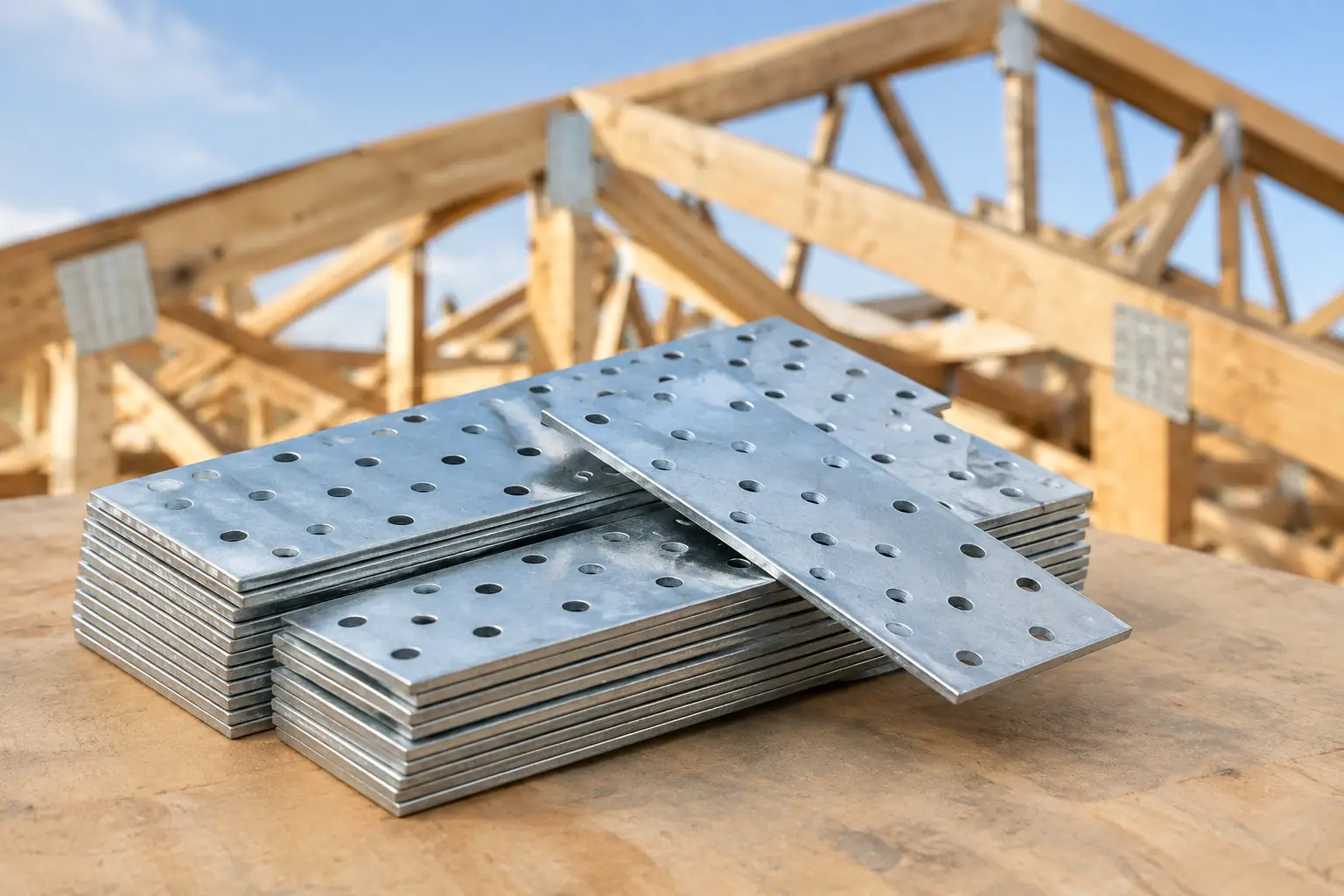
    A connector plate quote can look cheaper and still cost a truss operation more money. If the plate requires a larger footprint, creates press issues, adds lead-time risk, or fails to meet a customer’s approved design criteria, the per-pound savings disappear fast. So, how do you compare steel truss plate pricing? Start by comparing the installed production value of an approved plate system, not just a line item on a supplier quote.

    For truss plants, component manufacturers, and lumber dealers, plate purchasing is a margin decision. The right comparison protects bid velocity, keeps production moving, and gives engineering and design teams confidence that the material specified can be sourced when it is needed.

    Compare Steel Truss Plate Pricing on a Like-for-Like Basis. Yes, I’m guilty, I look at the plate pricing per pound first…..

    The first rule is simple: do not compare two prices until the plates are technically equivalent for the trusses you intend to manufacture. A lower price for a lighter gauge, smaller plate, or different tooth geometry is not a lower price if it cannot deliver the same design capacity and press performance.

    Build the comparison around the actual requirements of your plate schedule. That means identifying the steel gauge, plate dimensions, tooth configuration, coating, and applicable evaluation reports or approvals. It also means confirming whether the supplier’s system works with your design software, engineering standards, and current production equipment.

    A quote that says “20-gauge truss plates” is not enough. (how much is the high strength, 18 gauge, hinge plates?) One supplier may price a nominal gauge differently than another. Plate width, length increments, tooth density, tooth depth, and yield strength can materially affect both connection performance and the number of plates required across a job. Ask for the product data behind the quote, not just a catalog description.

    Start With the Plate Schedule, Not the Price Sheet

    Pull a representative sample of recent and upcoming jobs. Include standard residential roof trusses, floor trusses, long-span applications, and any higher-load commercial work your plant regularly handles. Then compare the proposed plate systems against the connections that drive your material usage. There will be variances in the plate size per vendor and roof vs floor.

    The goal is to answer a more valuable question than, “Which supplier has the lowest per-pound rate?” Ask, “Which approved plate system produces the lowest total plate cost for this mix of trusses without slowing the plant down?”

    On one design, a higher-capacity plate may reduce the required plate area or eliminate the need for a larger connector. On another, a lower-cost plate may work perfectly well. The answer depends on your engineering assumptions, connection demands, and manufacturing process.

    Understand What Is Inside the Steel Price

    Steel is a commodity, but truss plates are not simply commodity purchases. The base steel market influences cost, yet the delivered price also reflects processing, galvanization or other coating, tooling, quality controls, packaging, inventory commitments, and supplier service.

    Gauge is one of the most visible variables. Heavier material generally increases cost per square foot or pound, but it may provide greater capacity or reduce the plate area needed at critical joints. Do not assume heavier is automatically better, either. Over specifying plates can inflate material cost and complicate purchasing without creating a meaningful production advantage. How many truss plate sizes to you carry? How often do you over-plate or run out of a size? Do you prepull the plates to insure the right plates on the table?

    Coating deserves the same scrutiny. Standard galvanized products may suit many interior applications, while exposure conditions, coastal environments, treated lumber, or project specifications may call for a different corrosion-resistance strategy. If one quote includes a different coating level, it is not an apples-to-apples comparison. How much are the stainless plates?

    Tooth pattern is another major factor. Plate teeth transfer loads from the wood into the connector plate. Their geometry affects embedment, withdrawal resistance, and behavior in different lumber species and grades. A supplier’s product evaluation data should support the design values used by your team. If it does not, a cheaper plate can create redesign work, approval friction, or unacceptable risk. Also be named as a certificate holder from your plate vendor’s GL insurance coverage as well as the excess policy. Its good business practice.

    Calculate the Real Cost Per Truss

    The most useful number is rarely the cost per plate and often not even the cost per pound. It is the total material and production cost per truss, or per job, using a specific plate system.

    To calculate it, price the actual plate schedule for a defined job package. Include all required plate sizes, not just the common sizes that make a quote look attractive. Then add the costs that are easy to miss: freight, fuel or delivery charges, minimum-order penalties, storage requirements, breakage or damage allowances, and inventory carrying costs.

    A supplier may offer an aggressive unit price while requiring full truckload purchases, narrow delivery windows, or large minimum quantities of slow-moving plate sizes. That puts cash on the floor and increases the chance that inventory becomes stranded when the job mix changes. Another supplier may charge more per pound but provide better replenishment, broader local availability, or a more practical stocking program.

    Production labor belongs in this calculation too. If a plate presses cleanly, matches your setup, and lets the team maintain cycle time, its value extends beyond material cost. If it causes misfeeds, incomplete embeds, frequent adjustments, or extra quality checks, those costs show up in labor hours and rework.

    Test Compatibility Before You Commit

    A plate system must work through the full workflow – design, engineering review, purchasing, cutting, assembly, pressing, inspection, and delivery. Any disconnect creates friction that can overwhelm a modest price advantage.

    Before converting significant volume, run a controlled trial. Use real truss designs and the lumber your plant commonly receives. Verify that the proposed plates are available in the required sizes, can be properly represented in your design process, and can be pressed consistently with your equipment. Review finished trusses for plate seating, wood splitting, alignment, and connection quality.

    This is where experienced technical teams create leverage. A truss design group can model the impact of alternate plate products across a job mix before purchasing locks into a decision. That analysis identifies whether a proposed plate system changes plate area, plate count, connector sizes, or engineering assumptions. It turns a supplier quote into an operational decision backed by production data.

    Evaluate Supplier Reliability as a Pricing Variable

    Price is only valuable if the plate arrives on time and performs as represented. A plant that loses a production day because a critical plate size is unavailable will not recover that loss through a few cents saved on material.

    Evaluate the supplier’s lead times, fill rates, emergency response, technical support, and willingness to hold the inventory that matches your demand profile. Ask how they handle price changes, substitutions, damaged deliveries, and discontinuations. Clarify whether quoted pricing is fixed, indexed, or subject to surcharges.

    You should also understand the supplier’s documentation. Approved product reports, design values, quality records, and clear technical support matter when questions arise from builders, engineers, inspectors, or customers. If a plate change requires extensive documentation or reapproval, include that administrative and engineering cost in the decision.

    For multi-location operations, consistency matters even more. A cheap plate program that works at one plant but creates different stocking, design, or quality procedures elsewhere can erode the scale benefits you expected to gain.

    Ask for a Quote Structure That Supports Better Decisions. IF your using cloud services to host your design software with the vendor, make sure you know this cost upfront.

    Request pricing in a format your operations and estimating teams can use. The quote should clearly separate product price, freight, surcharges, minimums, payment terms, and any rebates or volume incentives. It should also identify the exact plate series, gauge, coating, dimensions, and available stock lengths.

    Avoid comparing a broad annual rebate against an immediate delivered-price disadvantage without calculating the actual threshold needed to earn it. A rebate that looks compelling may require volume you cannot reliably commit to, or it may be offset by higher pricing on the plate sizes that dominate your work.

    Use a weighted scorecard if multiple suppliers are being considered. Material cost should carry serious weight, but so should technical equivalency, availability, press performance, software and engineering compatibility, service response, and commercial terms. This keeps the decision grounded in margin protection rather than a single headline number.

    The Better Buying Decision Is a Production Decision – both Design and Production

    The strongest plate-buying strategy connects purchasing with design and plant operations. Procurement sees the delivered cost. Design sees connection requirements. Production sees what actually happens at the press. When those functions compare the same job data, they can identify the plate system that supports more output at a defensible cost.

    Steel truss plate pricing will move with markets, volume, and supplier capacity. Your decision framework should not move every time a new quote arrives. Compare technically equivalent plates, model the cost per truss, test real production performance, and put delivery reliability in the same conversation as price. That is how a truss operation buys for margin, not merely for the lowest number on a spreadsheet.

    When plate costs are under pressure, the fastest path to better economics may also be higher design and estimating capacity. A specialized technical production team can help plants analyze alternates, process more bids, and keep engineering work moving while the shop stays focused on building quality components.

    Are you optimizing the design? Reducing material costs……. Todays software is so improved over the years you can run any plant with any of the software vendors offering, dont let that scare you.

    Need Help contact? All Points Technical – www.allpointstech.ai 941.713.4395 – Dave

  • All Points Technical Services That Drive Output

    All Points Technical Services That Drive Output

    A truss plant can have orders waiting, material priced, and customers demanding delivery dates – then lose capacity because two designers leave or a senior estimator is buried in takeoffs. That is the operational problem behind the services available at All Points Technical, allpointstech.ai. The objective is not to add generic headcount. It is to put trained construction production talent into the workflows that directly affect bid velocity, design capacity, margins, and customer commitments.

    For component manufacturers, lumber dealers, builders, and engineering-driven construction firms, technical production is rarely a side function. It is the work that determines whether an opportunity gets quoted accurately, released on time, and built without expensive corrections. When local hiring cannot keep pace with demand, a dedicated offshore or blended production team gives leadership another way to grow.

    Services Available at All Points Technical

    All Points Technical provides specialized technical staffing and production support for construction businesses that need more output without carrying the full cost and delay of traditional hiring. Teams are built around the disciplines where construction organizations commonly face the greatest talent pressure: truss and component design, lumber and material estimating, CAD and BIM production, commercial detailing, structural support, and architectural deck design.

    The model is built for operational control. Clients can validate technical fit through trial work, establish standards and communication routines, then scale capacity according to their project pipeline. That matters because a business with a seasonal rush, a newly won account, or an expanding territory does not need the same staffing structure every month.

    Truss and Component Design

    Truss design is a high-consequence production function. A shortage of experienced designers can slow order release, extend lead times, and put sales teams in the difficult position of turning away work they could otherwise win. Dedicated truss and component designers help plants increase design capacity while maintaining the procedures, engineering requirements, and customer-specific standards that make each operation different.

    Support can be structured around residential roof and floor trusses, wall panels, component packages, takeoffs, revisions, and production-ready documentation. The right arrangement depends on where the bottleneck sits. Some clients need designers to absorb a steady flow of standard work. Others need experienced support to handle overflow, complex jobs, or revision volume while internal staff focus on engineering coordination and customer-facing decisions.

    The trade-off is straightforward: offshore capacity performs best when the plant has clear standards, a defined review path, and consistent input information. If every job enters production with incomplete plans or shifting assumptions, no staffing model can eliminate rework. A strong delivery team reduces the production burden, but disciplined intake still drives speed.

    Lumber and Material Estimating

    Estimating capacity determines how many opportunities a business can pursue. When estimators are overloaded, bids go out late, follow-up suffers, and profitable work may never be quoted. Material estimating support gives lumber dealers, builders, and component operations a way to process more plans without waiting months to recruit local estimating talent.

    The work can include plan takeoffs, material lists, framing and package estimates, bid support, scope review, and pricing preparation based on the client’s systems and standards. The value is not merely lower labor cost. It is the ability to create a predictable estimating engine that helps sales teams respond while the opportunity is still active.

    Accuracy remains the standard. Estimating teams need current pricing inputs, scope rules, supplier requirements, and a clear escalation process for ambiguous drawings. Businesses that treat offshore estimators as isolated order takers often leave value on the table. Businesses that integrate them into the estimating workflow can build a stronger, more responsive bid operation.

    CAD, Revit, and BIM Production

    CAD and BIM production has become essential across architecture, engineering, fabrication, and construction coordination. Yet skilled detailers and modelers are difficult to hire, especially when volume rises quickly. Dedicated technical professionals can expand drawing and modeling capacity without forcing internal teams to choose between production deadlines and strategic project coordination.

    Services may include CAD drafting, Revit modeling, BIM production support, construction documentation, shop drawings, clash-ready model preparation, and drawing revisions. For firms managing repeated work types, a dedicated team can learn the standards, naming conventions, templates, and quality checks that keep deliverables consistent from project to project.

    Software proficiency matters, but it is only part of the equation. A model that looks clean but fails to reflect fabrication constraints, field conditions, or the client’s documentation standard creates downstream risk. Construction-focused technical staffing must combine software capability with practical familiarity with how drawings and models are actually used.

    Commercial and Structural Detailing

    Commercial projects introduce a different level of coordination pressure. Larger scopes, multiple stakeholders, tighter document control, and more complex interfaces can make detailing capacity a major constraint. Commercial and structural detailing support helps firms keep technical work moving when internal staff is stretched across active jobs.

    Depending on the operation, support may include structural drawings, steel or wood-related detailing, coordination drawings, submittal packages, revisions, and production documentation. The most effective teams work within established client standards and communicate early when plans contain conflicts, missing information, or decisions that require internal approval.

    This service is particularly valuable when a company has a capable senior technical lead but lacks enough production depth beneath that lead. Instead of asking senior staff to spend every hour drafting or revising, the business can reserve its highest-cost expertise for review, technical judgment, client communication, and problem-solving.

    Architectural Deck Design and Specialized Production

    Architectural deck design requires precision, code awareness, and an understanding of how design choices affect installation, fabrication, and project cost. It is specialized work, which makes it even harder to staff through broad recruiting channels. Dedicated production support can help businesses handle drawings, layout, documentation, and revision cycles without allowing a niche discipline to become a growth ceiling.

    The same principle applies to other technical support needs. A construction business does not always need to hire a full local department to solve a capacity problem. It may need a targeted team that can take ownership of repeatable production work under the direction of its internal experts.

    Strategic Support That Keeps Teams Moving

    Technical output is the center of the delivery model, but production issues are often connected to operational gaps. Recruiting support can help firms identify difficult-to-find technical talent. Consulting can help leadership assess workflow, staffing structure, and production constraints. Project management support can strengthen coordination when volume, geography, or team size creates friction.

    These functions are most useful when they are tied to a measurable operating goal: more bids submitted, shorter turnaround times, less backlog, improved utilization of senior staff, or better coverage across time zones. Support should never become another management layer without a clear performance purpose.

    A Delivery Model Built for Scale

    The strongest offshore staffing relationships do not begin with a large commitment and a vague promise. They begin with defined work, clear expectations, and proof of performance. Trial assignments allow a client to evaluate quality, communication, speed, and technical fit before expanding the team.

    Once the work is validated, teams can be scaled based on workload. That may mean one dedicated estimator, a group of truss designers, a BIM production unit, or a blended team supporting several functions. With delivery capacity across the USA, India, Vietnam, Honduras, and Panama, work can continue across multiple time zones rather than stopping when a single office closes.

    More hours of coverage do not replace management. They create an advantage only when handoffs are intentional. Clear task queues, documented standards, daily communication, and practical quality checks turn time-zone coverage into faster throughput. Without those controls, a 24-hour workflow can simply create 24 hours of confusion.

    For construction businesses facing persistent hiring pressure, the decision is not whether technical work must be done. It is whether that work will remain a bottleneck or become a scalable production advantage. The right team, working inside the right process, can turn capacity from a constant limitation into a commercial weapon.

  • What Truss Design Software Is the Best?

    What Truss Design Software Is the Best?

    If you’re asking what truss design software is the best, you’re probably not looking for a generic top-10 list. You’re trying to protect throughput, keep engineering clean, reduce redraws, and get more work out the door without creating chaos on the plant floor. That changes the answer fast.

    The best truss design software is not simply the platform with the longest feature sheet. It’s the one that fits your production model, your engineering requirements, your customer mix, and the skill level of the people actually using it every day. For one operation, that means deep integration with a plate supplier’s ecosystem. For another, it means speed in layout, easy revision control, and the ability to onboard designers quickly.

    This is where a lot of buyers get stuck. They compare software like they’re buying a general office tool. Truss design software is different. It sits in the middle of sales, estimating, design, manufacturing, and field performance. A weak fit doesn’t just slow down one department. It drags on bids, labor, quality, and margin.

    What truss design software is the best for your operation?

    The honest answer is that there is no universal winner. There are dominant platforms in the market, and some are clearly stronger than others in specific environments, but “best” depends on how your business makes money.

    If you’re a high-volume truss manufacturer tied closely to a certain connector plate supplier, software alignment with that supplier’s systems often matters more than abstract feature comparisons. If you’re serving a wider mix of custom residential, multifamily, and light commercial work, flexibility in modeling, loading, and output can matter more. If you’re growing fast and struggling to hire experienced designers, usability and training curve become major decision factors.

    So instead of asking which platform wins in theory, ask which one helps your team move faster with fewer errors and less dependency on hard-to-find local talent.

    The leading truss design software platforms

    In the US market, the conversation usually centers on a handful of established systems. MiTek software still remains a major force because of its market penetration, engineering workflows, and broad use across truss plants. Alpine software is also deeply embedded in many operations, especially where plant processes and supplier relationships are already built around that environment. Combined with the #1 hanger provider; Simpson Strong-Tie’s component software enters the conversation in certain manufacturing setups as well, depending on the product mix and structural workflow. And certainly dont overlook Eagle and Paragon as great options. All Points Technical can provide design teams with all available software’s. In Australia and NZ markets, certainly look at Multinail.

    Some teams also evaluate broader structural or BIM-adjacent tools, but those usually do not replace dedicated truss design software in a production environment. They may support coordination, review, or downstream detailing, but they are not the same thing as a platform built specifically for truss layouts, loading, engineering checks, manufacturing output, and plant-ready documentation.

    That distinction matters. A program can look impressive in a demo and still be the wrong tool if it adds friction between design and fabrication.

    What separates a strong platform from an expensive headache

    The first separator is engineering confidence. Truss software has to do more than draw cleanly. It needs to handle loading conditions, member design, plate selection logic, and output in a way your engineers and production teams trust. If your staff spends half their day second-guessing the software, the platform is not helping.

    The second separator is production speed. Some systems are powerful but slower to work in, especially for less experienced designers. Others support faster repetition on common jobs but may become clunky on complex layouts. This is where your actual job mix matters more than vendor claims.

    The third is talent availability. This is a bigger issue than many owners realize. A platform may be excellent, but if experienced designers are hard to find in that environment, your labor strategy takes a hit. Software decisions and staffing decisions are connected. The best software for your business is partly the one you can actually build a scalable team around.

    The fourth is integration. If the software connects cleanly with estimating, material optimization, shop documentation, saw output, or ERP workflows, that can save serious time. If it creates workarounds, spreadsheets, and re-entry points, the hidden cost builds quickly.

    MiTek vs Alpine and the real-world trade-off

    For many buyers, the real question is not what truss design software is the best in the abstract. It’s whether MiTek or Alpine is the better fit.

    MiTek often gets strong marks for broad market adoption, established workflows, and the size of the available user base. That matters because it affects hiring, training resources, and the availability of experienced production talent. If you need to scale design capacity quickly, widespread software adoption can become a real operational advantage.

    Alpine can be the right fit in plants that are already optimized around its ecosystem and support structure. In those settings, changing platforms may create more disruption than value. Even if another system looks better on paper, retraining, process redesign, and compatibility issues can wipe out the benefit for months.

    This is the part many articles skip. Switching software is not just a technology decision. It is a production decision, a staffing decision, and often a customer service decision. If the transition slows submittals or introduces avoidable design inconsistencies, your sales pipeline feels it.

    The questions smart operators ask before choosing

    Start with output. What types of projects drive your margin? High-volume single-family work, custom residential, multifamily, agricultural, floor systems, roof packages, or light commercial each put different pressure on the software.

    Then look at workflow friction. Where do jobs currently stall? In engineering review, in estimating handoff, in revisions, in shop package generation, or in plant communication? The right software should attack bottlenecks, not just add features.

    Training is next. How long does it take a new designer to become productive? Not certified. Productive. Those are not the same thing. If your growth plan depends on building bench strength, software with a steep learning curve may cost more than the license itself.

    Finally, look at support and scale. Can the platform support a distributed team? Can outside designers work in it efficiently? Can you add capacity without rebuilding your process every quarter? These are not side issues. They directly affect bid velocity and labor cost.

    Why software alone will not solve your bottleneck

    A lot of companies overestimate what software can fix. Good software improves speed and consistency, but it does not create experienced truss designers out of thin air. If your biggest problem is talent shortage, the software decision only solves half the problem.

    This is why some of the highest-performing truss operations stop treating software as a standalone purchase. They treat it as part of a production system that includes staffing, training, QA, standardization, and time-zone coverage. That is where the real advantage shows up.

    A strong platform in the hands of an understaffed team still creates backlog. A solid platform paired with trained design capacity can increase bids, protect turnaround time, and keep plants fed without forcing you into desperate local hiring cycles.

    For companies scaling aggressively, this is often the better question: not just “What truss design software is the best?” but “What software and delivery model will let us produce more without breaking operations?” That is where companies like All Points Technical have pushed the market forward by pairing software-proficient truss design talent with production-driven workflows.

    The best choice depends on the cost of being wrong

    If you choose a platform that doesn’t fit, you usually don’t feel it on day one. You feel it six months later in delayed approvals, uneven design quality, overtime, frustrated estimators, and production teams working around documentation issues. The software may still be technically capable, but the business pays for the mismatch.

    That is why the best software is the one that performs under your real conditions. Not ideal conditions. Real ones. Your customer deadlines. Your team mix. Your revision load. Your engineering standards. Your hiring constraints.

    For one company, that will be MiTek. For another, Alpine or Simpson. For a few, the answer depends on a broader component design ecosystem already in place. There is no serious operator advantage in pretending otherwise.

    What matters is choosing the platform that helps your team execute faster, train smarter, and scale with fewer failure points. Software should increase production confidence, not add another layer of management.

    If you’re evaluating truss design software right now, don’t chase the loudest brand claim. Look at plant fit, talent fit, and workflow fit. The best platform is the one that makes your operation harder to beat next quarter, not just easier to demo this week. www.allpointstech.ai

  • Attending This Year’s BCMC Trade Show in Columbus

    Attending This Year’s BCMC Trade Show in Columbus

    If you’re attending this year’s BCMC trade show in Columbus, Ohio, don’t show up looking for swag and small talk. Show up looking for throughput, labor solutions, software leverage, and better ways to protect margin. BCMC is one of the few events where plant operations, component manufacturing, software, machinery, engineering, and field reality all collide in one place. That makes it valuable – but only if you work the show with a plan.

    For owners, design managers, estimators, and operations leaders, BCMC is not a casual industry outing. It’s a pressure test. You get a live look at where the component industry is moving, which vendors are solving real production problems, and which conversations are worth taking back to your team on Monday.

    Why attending this year’s BCMC trade show in Columbus, Ohio matters

    The companies that get the most out of BCMC usually walk in with a business problem, not a general sense of curiosity. They want to increase design capacity. They need to reduce estimating backlog. They’re trying to improve manufacturing speed without adding avoidable overhead. Or they’re staring at the same issue hitting the entire industry – not enough skilled technical labor to support growth.

    That’s where BCMC earns its time commitment. You can compare machinery, software, automation workflows, connectors, and production systems in one concentrated environment. More importantly, you can have direct conversations with people who understand the actual bottlenecks inside truss plants, component shops, lumber operations, and structural production teams.

    There’s also real value in seeing how the market is talking about labor. Some suppliers will pitch efficiency through equipment. Others will pitch software integration. A smaller number will speak directly to production support, design bandwidth, and technical staffing. All of those matter, but they solve different problems. A machine may increase output on the floor. It does not automatically solve design queue delays, estimating overflow, or the inability to turn more bids fast enough.

    Go in with operating questions, not generic curiosity

    A productive BCMC schedule starts before you land in Columbus. The smartest attendees define what they need to learn in operational terms.

    If your sales team is winning opportunities but engineering is slowing intake, that is a capacity issue. If your estimators are stretched and quotes are going out late, that is a bid-speed problem. If your plant can build more than your technical team can release, that is a production pipeline problem. BCMC helps when you know which one you’re trying to fix.

    That changes the conversations you have on the floor. Instead of asking, “What does your company do?” ask, “How fast can this improve turnaround time?” Ask what implementation actually looks like. Ask how much internal training is required. Ask whether the solution reduces dependence on hard-to-hire domestic roles or simply shifts the burden from one department to another.

    That last point matters. Plenty of good ideas die in implementation because they require more internal bandwidth than the business can spare. A solution that looks strong in a demo can become expensive if it takes months to onboard, retrain staff, and rebuild workflow.

    What to pay attention to on the show floor

    The show floor can pull you in ten directions at once. Stay focused on four categories that usually have the biggest operational impact: equipment, software, process integration, and labor strategy.

    Equipment is the most visible category, and for good reason. Plant automation, saw systems, material handling, and production hardware can create serious gains when the volume justifies the investment. But hardware only pays off when the upstream work is ready. If design releases are inconsistent or estimates are lagging, the equipment sits downstream from the real bottleneck.

    Software deserves closer scrutiny than it often gets. Not every software improvement creates measurable output gains. Some tools improve visibility but don’t materially change speed. Others help standardize production, reduce errors, or increase coordination between design and manufacturing. The difference usually comes down to adoption. Ask whether teams like yours are fully using the platform or only buying into part of its promise.

    Process integration is where a lot of hidden value sits. Watch for companies that understand handoff points between estimating, design, engineering review, manufacturing, and delivery. In most construction-related businesses, delays happen at transitions, not just inside tasks. A vendor or service partner that speaks clearly about workflow continuity is usually worth more attention than one selling a standalone feature.

    Then there’s labor strategy, which may be the most important category of all. If you can’t hire enough truss designers, estimators, CAD technicians, BIM detailers, or structural production support, growth stalls no matter how good the rest of the system looks. This is the conversation many companies still approach too late. They wait until backlog becomes painful, then start hiring into a market that’s already tight.

    The real value of face-to-face meetings at BCMC

    BCMC is one of the best places to speed up decision-making because weak answers become obvious in person. You can hear whether someone understands your business or is reciting a script. You can test how they talk about implementation, quality control, staffing depth, and turnaround expectations. You can also get a better read on whether they’ve actually worked with operations leaders dealing with production pressure.

    That matters if you’re evaluating service partners, not just products. A technical production partner should be able to discuss output, QA structure, software familiarity, ramp-up speed, and communication rhythm without hesitation. If they can’t explain how they keep work moving across time zones, support review cycles, or scale with pipeline changes, the model may not hold under pressure.

    For businesses dealing with chronic labor shortages, this is where in-person conversations can save months. You can move past vague claims and get straight to fit: what roles can be supported, how trial work is handled, how quality is validated, and how quickly a team can become productive. The strongest partners will talk in terms of throughput and business continuity, not just resumes.

    How to judge whether a solution is actually worth bringing home

    The best BCMC conversations lead to a very simple question: will this help us produce more, faster, and with better control?

    If the answer is yes, the next issue is timing. Some investments are right for companies with stable volume and capital ready to deploy. Others make more sense when you need flexibility first. That’s the trade-off many businesses are navigating right now. They want to grow, but they do not want to lock themselves into fixed overhead before the pipeline proves out.

    That’s why scalable production support is getting more attention. Instead of waiting months to recruit local technical staff, some firms are building dedicated offshore and hybrid teams that can increase bid capacity, design output, and drafting support without the same hiring friction. For the right operation, that changes the math. It can create breathing room fast, especially when domestic recruiting has already slowed growth.

    That approach is not one-size-fits-all. If your workflow is undocumented, your review standards are inconsistent, or your leadership team is not ready to manage capacity intentionally, even a good staffing model can underperform. But if you know your process and need more trained hands in specialized roles, it can be one of the fastest ways to get up and running in days, not months.

    Make attending this year’s BCMC trade show in Columbus, Ohio actionable

    Too many attendees leave with brochures, vague follow-ups, and no internal next step. That’s wasted opportunity. Before the event ends, decide what category each promising conversation falls into: immediate action, near-term evaluation, or future watch list.

    Immediate action means the problem is active now and the solution deserves a serious post-show meeting. Near-term evaluation means the fit looks strong, but you need more internal data, budget clarity, or stakeholder input. Future watch list means the idea is interesting, but not tied to current operating priorities.

    This discipline matters because trade shows create momentum that disappears fast once everyone returns to backlog, customer calls, and production issues. The companies that get ROI from BCMC convert conversations into decisions while the details are still fresh.

    For leaders in truss, components, estimating, detailing, and structural production, this is the larger point: BCMC is not just where you see what’s new. It’s where you decide what kind of business you want to run next year. More dependent on a thin labor market, or built with enough capacity and flexibility to keep taking work when competitors can’t.

    If you walk the floor with that lens, Columbus becomes more than a calendar event. It becomes a chance to make your operation faster, harder to disrupt, and better positioned for growth.