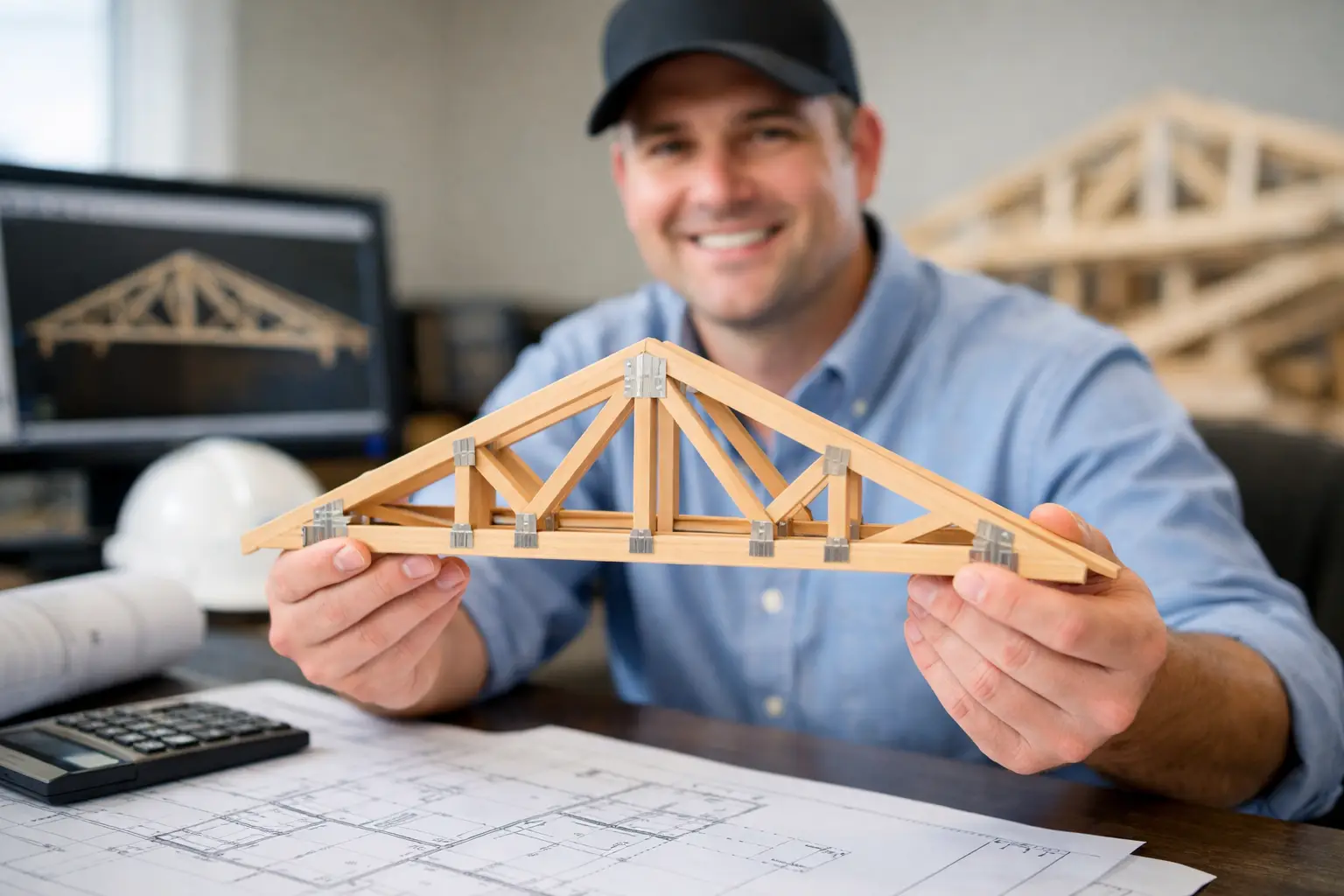
A backed-up design queue does not care that your hiring market is tight. It does not care that one senior designer is covering for two open seats, or that sales keeps pushing for faster turnarounds. For truss designers who use Eagle Truss software, the real issue is not just design speed. It is whether your operation can keep moving when volume spikes, deadlines tighten, and experienced talent is hard to find.
That is where software skill stops being a line on a resume and starts becoming a production advantage. Eagle Truss is not useful because it is popular. It is useful because the right designer can turn that platform into output, consistency, and fewer handoff problems between estimating, design, and manufacturing. If you run a truss plant, supply components, or manage technical production, that distinction matters.
Why truss designers who use Eagle Truss software matter
Eagle Truss proficiency has direct operational value because truss design is not a generic drafting job. The software is part of a production chain that touches layout interpretation, load handling, plate selection, manufacturing logic, and communication with downstream teams. A designer who knows the tool but does not understand the plant environment will still create friction. A designer who understands both can increase throughput fast.
That is the difference many businesses miss. They hire for software familiarity when they should be hiring for usable production capacity. A capable Eagle Truss designer should not only build designs. They should help reduce redraws, support cleaner reviews, and keep projects moving without constant supervision.
When the right people are in place, the benefits show up quickly. Turnaround times become more predictable. Senior staff spend less time correcting avoidable errors. Managers gain room to take on more bid activity without gambling on quality. Those are not soft gains. They hit margin, scheduling, and customer confidence.
Eagle Truss skill alone is not enough
There is a big gap between knowing where the buttons are and being production-ready. Many operations have learned this the hard way. Someone can interview well, claim software experience, and still struggle once live jobs start coming in at real pace.
The stronger measure is whether the designer can work inside your standards. Can they read plans the way your team reads them? Can they apply loading and design criteria consistently? Can they deliver files and details in a format that your reviewers and production teams can use without cleanup? If not, software knowledge is only partial value.
This is why staffing truss design is harder than many adjacent technical roles. You are not filling a CAD seat. You are protecting a workflow that directly affects fabrication and field performance. The cost of a mismatch is not just a slow onboarding cycle. It is lost capacity at the exact moment you were trying to create more of it.
What strong Eagle Truss designers actually bring to the table
The best truss designers who use Eagle Truss software usually stand out in three ways. First, they understand design intent and plant realities at the same time. Second, they work with enough speed to support volume without forcing quality trade-offs. Third, they need less management drag because they already know how component workflows operate.
That last point matters more than people admit. A designer who constantly needs clarification can consume the time of your most valuable internal leaders. On paper, you added headcount. In practice, you shifted senior production hours into training, corrections, and follow-up. That is not scale.
A stronger designer lowers the burden on the rest of the system. Reviews get tighter. Communication gets cleaner. Jobs move with less rework. If your business is trying to increase bid velocity or extend output without adding domestic overhead at full cost, that kind of support becomes a real lever.
Where the payoff shows up fastest
Most companies see the biggest payoff in backlog relief and scheduling control. If your current team is overloaded, even one capable Eagle Truss designer can stabilize lead times. That alone can protect customer relationships and keep sales from promising dates production cannot support.
The second payoff is in capacity planning. Once design resources become more reliable, you can make better decisions about what work to pursue. You stop treating every new project as a staffing risk. That changes how aggressively you can grow.
The third payoff is cost discipline. Not every business needs another domestic full-time hire with a long recruiting cycle and premium salary burden. Sometimes the smarter move is flexible technical production support that matches your pipeline.
The hiring problem is bigger than software availability
There is no shortage of people who can claim software exposure. There is a shortage of truss designers who can perform in a live production environment, inside US-driven standards, with enough consistency to matter. That is the actual bottleneck.
For many truss plants and component manufacturers, the challenge is timing as much as talent. You do not need help six months from now. You need production support while work is in front of you. Traditional hiring often moves too slowly for that. By the time a local search is complete, trained, and productive, the backlog has already done damage.
This is why more companies are rethinking how they access technical talent. Instead of treating truss design staffing like a standard recruiting exercise, they are treating it like an operations decision. They want proven software users, tested in real workflows, who can plug into active demand with less delay.
How to evaluate truss designers who use Eagle Truss software
If you are assessing talent, start with workflow evidence, not broad claims. Ask what kind of projects the designer has handled, what review structure they worked under, and how they managed revisions, loading criteria, and production coordination. The goal is to understand whether they have lived in a real truss environment.
A practical test is usually more revealing than an interview. Give the candidate a representative scope. Review not just the final output, but also how they interpret plans, flag issues, and respond to corrections. Good designers do more than complete a task. They show judgment.
It also helps to evaluate communication early. Even highly technical roles affect speed through handoffs. If a designer can produce acceptable work but struggles to communicate assumptions, changes, or open questions, cycle times still suffer.
What decision-makers should watch for
Owners and operations leaders should watch for hidden management cost. A lower-cost hire is not cheaper if they require constant senior oversight. Estimating managers and design managers should watch for review burden, revision quality, and consistency across similar jobs. Executives should focus on a larger question: does this resource increase throughput in a measurable way?
That framing keeps the conversation where it belongs. The point is not to collect resumes with software keywords. The point is to add dependable capacity.
Why flexible production teams are changing the equation
The market has pushed many businesses to move beyond one-at-a-time hiring. When demand shifts quickly, rigid staffing models create risk. You either overhire and carry excess cost, or underhire and leave revenue on the table.
A more effective model is access to dedicated technical talent that can scale with volume. For businesses that rely on Eagle Truss, that means bringing in trained designers who can support current production standards without forcing a complete rebuild of internal processes. It is a practical answer to a practical problem.
This is one reason specialized partners have gained traction. Companies like All Points Technical built their model around hard-to-fill technical production roles, not generic staffing. That matters because truss design is too specialized for trial-and-error recruiting. When the resource is already trained, tested, and aligned to industry workflows, onboarding gets shorter and output starts faster.
There is still a trade-off to manage. Not every outside resource will fit every internal process on day one. Expectations, QA standards, and communication routines still need to be clear. But that is a manageable issue. A prolonged shortage of qualified design capacity is far more expensive.
The real question is not software. It is scale.
Eagle Truss is part of the equation, but it is not the whole equation. The businesses that win with it are the ones that pair software proficiency with production discipline, quality control, and a staffing strategy built for demand swings.
If your pipeline is growing, your local talent market is thin, or your senior team is buried in review work, this is the moment to get more specific about what kind of help you actually need. Not another resume. Not another vague promise of CAD support. You need truss designers who use Eagle Truss software well enough to create usable capacity.
That standard is higher, but the payoff is bigger. When design resources are right, everything downstream gets easier.
Leave a Reply