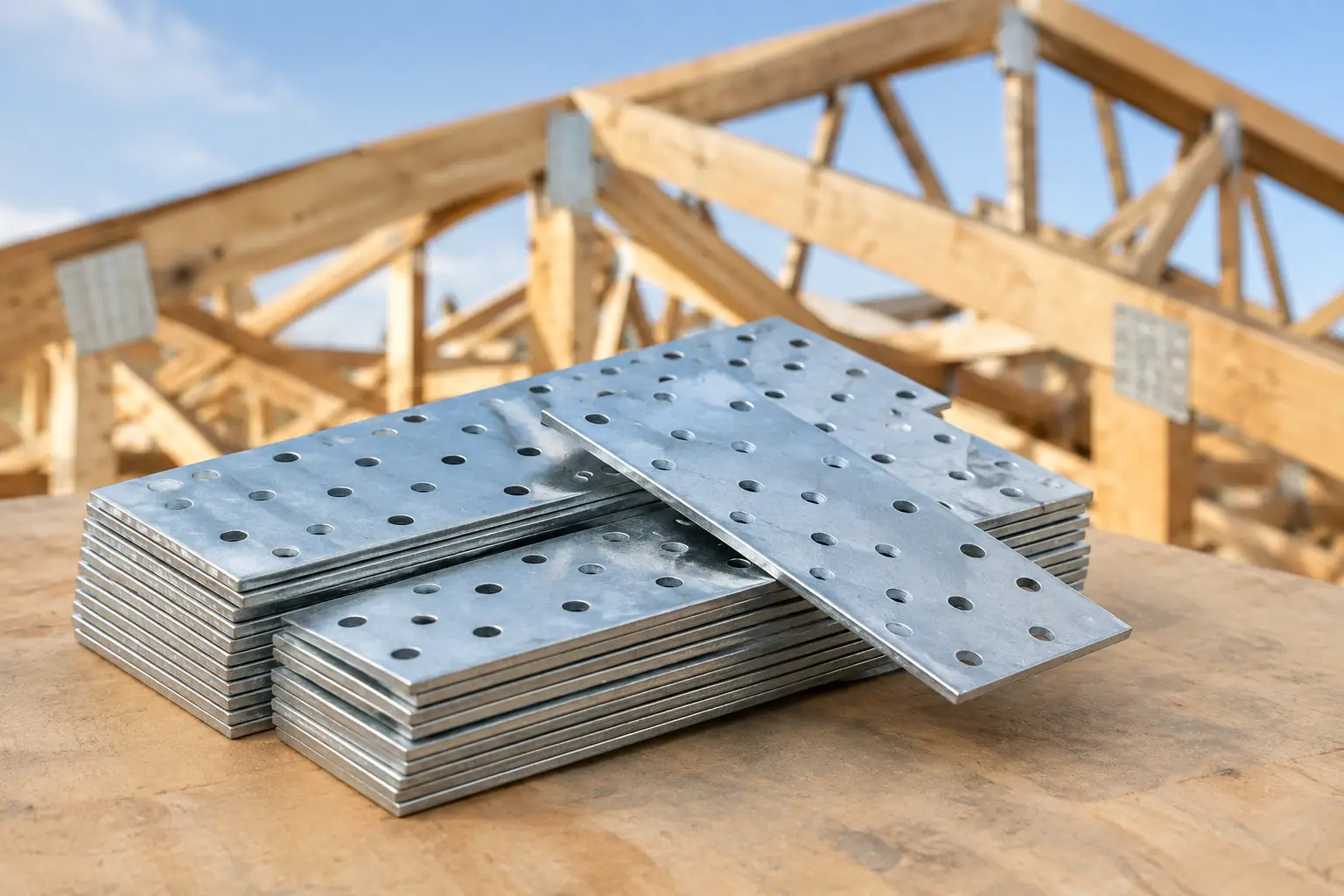
A cheap connector plate that creates delays at the press, complicates inventory, or fails to match approved truss engineering is not a bargain. For a truss plant or component manufacturer, what is a good steel truss plate price? The honest answer is the price that delivers approved capacity at the lowest total installed cost – not necessarily the lowest number on a supplier quote.
Steel truss plates are a small line item compared with lumber, labor, freight, and rework. But they sit at a critical point in the operation. The wrong plate specification, supply program, or purchasing decision can slow production when schedules are tight and bid margins are already under pressure.
What Is a Good Steel Truss Plate Price?
For planning purposes, bulk galvanized steel connector plates commonly work out to a few cents per square inch. A basic small plate may cost well under a dollar, while larger, heavier-gauge, specialty, or high-demand plates can cost several dollars each. That range is broad because plate pricing is not truly a one-size-per-piece market.
A good price must be measured against the exact product being purchased: plate area, steel gauge, tooth pattern, coating, bundle quantity, freight terms, and approved engineering system. A 2-by-4-inch plate and a 6-by-12-inch plate may both be called “truss plates,” but they do not carry remotely similar steel content or production value.
For a plant purchasing in volume, compare offers by cost per square inch or cost per pound, then calculate the actual plate cost per truss and per thousand board feet of production. Those numbers expose whether a low per-piece quote is genuinely competitive or simply based on a smaller plate mix.
Why the Quote Price Is Only the Starting Point
The plate invoice is visible. The operational cost of a bad buying decision is usually buried in the day-to-day workflow.
If one supplier has lower unit pricing but longer lead times, higher freight minimums, inconsistent bundles, or limited stock on high-usage plate sizes, the savings can disappear fast. A line shutdown or a forced spot purchase costs more than a modest difference in plate material price. The same is true when an unfamiliar plate system creates added design checks, shop-floor confusion, or preventable remakes.
The right benchmark is delivered, usable cost. That includes freight, surcharges, ordering frequency, inventory carrying cost, scrap, damaged bundles, and the labor impact of handling the product. It should also account for whether the plate is readily available when your production schedule changes.
A plant processing a steady, standardized mix can often justify larger purchase commitments and tighter pricing. A plant supporting custom homes, commercial work, long-span trusses, or volatile regional demand may be better served by a supplier program that protects availability, even if the per-plate cost is slightly higher.
The Variables That Move Steel Truss Plate Pricing
Steel is the obvious driver. Changes in coil pricing, galvanizing costs, energy, trade policy, and transportation can move connector plate pricing quickly. Yet raw steel is only one part of the equation.
Plate size and gauge
More square inches and thicker steel mean more material cost. That sounds basic, but purchasing teams should not compare pricing without normalizing the data. A supplier offering a lower price per plate may be quoting a lighter gauge or a different average plate footprint.
Gauge matters because it affects performance and approved application. Do not reduce plate thickness simply to lower material spend unless the truss design, engineering requirements, and connector system support the change. The cost of an under-specified connection is not limited to the plate.
Tooth pattern and connector system
Pressed metal connector plates are engineered products. Tooth geometry, plate layout, embedment, and the connector manufacturer’s engineering data all influence the design. Plates are not interchangeable simply because their dimensions look similar on a purchase order.
A good price is tied to a plate system your truss designers can specify correctly and your production team can press consistently. If changing vendors requires broad redesign work, revised approval processes, or retraining, include those conversion costs before declaring a savings opportunity.
Galvanizing and exposure conditions
Standard galvanized plates may be suitable for typical dry applications, but corrosion risk changes the conversation. Coastal exposure, high-humidity environments, agricultural buildings, chemical exposure, and certain treated lumber applications may require a different corrosion-protection approach.
Paying more for the right coating can be the correct commercial decision. Paying more for a coating your project does not require is unnecessary overhead. The specification should follow the actual use case and governing requirements, not a blanket assumption.
Volume, freight, and supplier terms
Freight can distort the economics of plate purchasing, especially for smaller plants or irregular order patterns. A slightly higher unit price with delivered pricing, local stocking, or predictable replenishment may outperform a lower factory quote once transportation and emergency orders are included.
Ask whether quotes include fuel surcharges, pallet charges, minimum order requirements, and price-escalation language. Also determine whether the supplier will hold pricing for a defined period. A quote is less valuable when it exposes the plant to frequent unplanned adjustments.
Build a Better Comparison Than Price Per Box
When reviewing plate proposals, put every supplier on the same scorecard. Start with cost per square inch by common gauge and plate family. Then look at delivered cost, on-time availability, lead time, bundle configuration, inventory support, engineering compatibility, and claim resolution.
The decision should also reflect your design mix. A plant building high volumes of repetitive residential trusses has different plate usage than a manufacturer producing complex roof systems, floor trusses, and commercial components. Your top 20 plate sizes may drive most of your consumption. Those are the sizes where pricing, availability, and replenishment discipline matter most.
Use actual production data rather than an assumed average. Pull three to six months of plate usage from the design and purchasing systems, identify high-volume sizes, and calculate total spend by supplier and plate family. Then compare how often production waited for material, substituted plates, or used oversized plates because the preferred size was unavailable.
Oversizing is a quiet margin leak. A plate that costs a few cents more may seem insignificant, but repeated across thousands of trusses, unnecessary area becomes real money. Accurate truss design and disciplined plate optimization protect both engineering intent and material cost.
Design Capacity Has a Direct Effect on Plate Spend
Plate purchasing and truss design are connected more tightly than many operations treat them. A well-trained truss designer uses approved connector plates efficiently, selects appropriate plate sizes, and avoids excessive material without compromising loading requirements or manufacturability.
That requires capacity. When in-house designers are overloaded, teams can be forced into expedient decisions: oversized plates, incomplete optimization, delayed revisions, and rushed releases to the plant. Those issues raise plate consumption and create production friction at exactly the moment the business is trying to increase throughput.
This is where specialized technical production support can move the numbers. All Points Technical helps truss operations add experienced design capacity without waiting through a long domestic hiring cycle, so teams can keep designs moving, handle more bids, and maintain consistency across production demands. The objective is not to chase the smallest plate on every joint. It is to deliver engineered, buildable designs that protect material efficiency and plant output.
Questions to Ask Before Approving a Plate Quote
Before committing, get clear answers on four operational issues: Is the quoted plate system approved for your intended applications? What is the delivered cost under your real order pattern? Can the supplier support your high-usage sizes without disrupting production? And what happens when a quality, availability, or engineering issue needs immediate resolution?
Also separate a temporary market discount from a sustainable supply relationship. A low introductory quote can look attractive until the first price reset, backorder, or urgent truckload. Procurement should negotiate price, but operations should have equal influence over service expectations and technical fit.
Set a Price Target That Protects Margin
Instead of asking for one universal “good” plate price, establish a target range for each major plate category based on your actual usage. Track price per square inch, delivered cost per truss, and plate material variance against your estimate. Review those figures alongside turnaround time, shortages, and rework – not in isolation.
The strongest purchasing decision is the one that keeps engineered trusses flowing through design, production, and delivery without giving away margin in material waste or disruption. When plate costs start moving, bring purchasing, design, and operations to the same table early. That is where a price question becomes a production advantage.
Leave a Reply