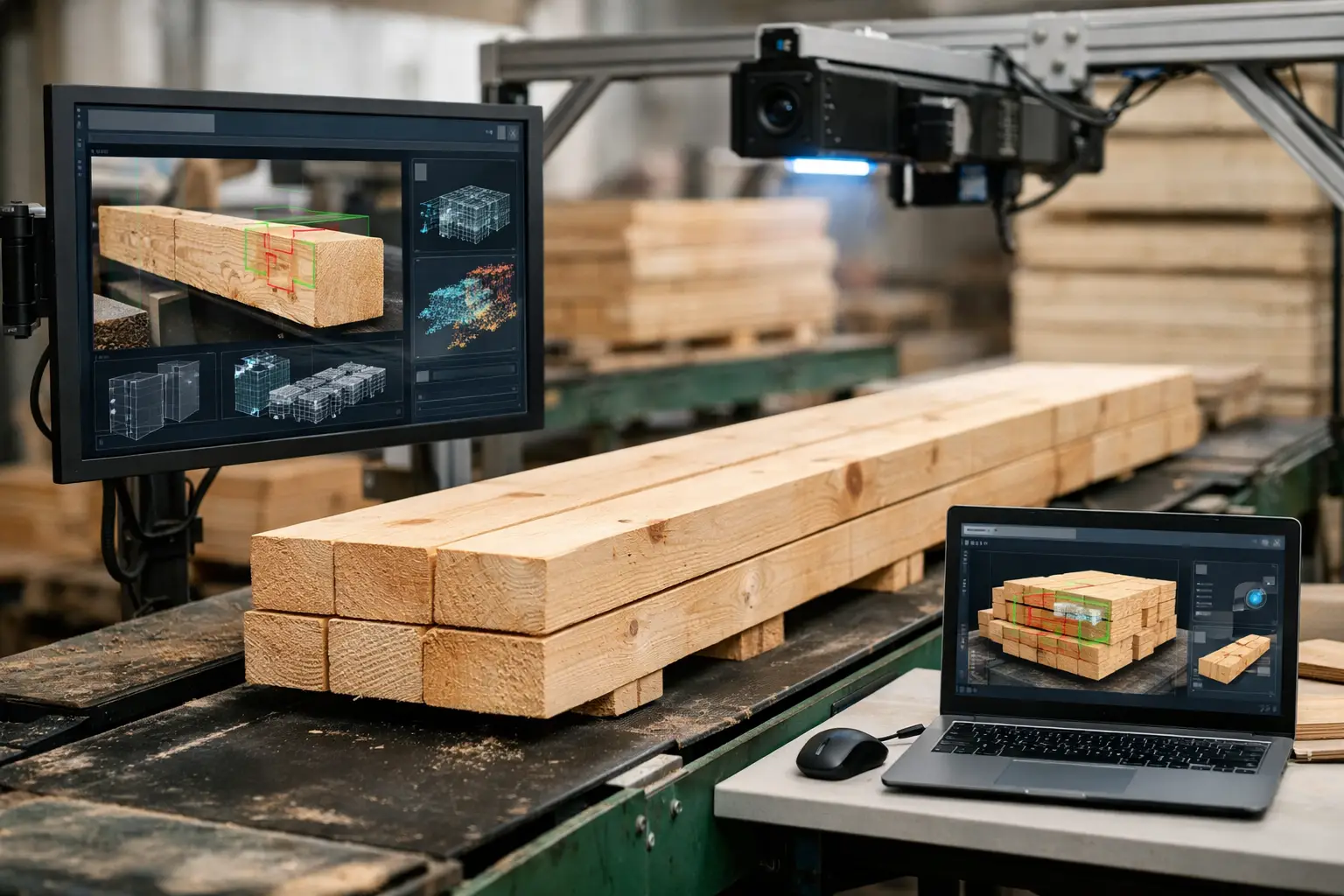
The APAS Vision Engine – AI lumber estimating launch set for Oct. 1, 2026 – puts a hard question in front of lumber dealers, component manufacturers, and builders: when takeoff work moves faster, is your operation built to turn that speed into profitable bids?
That question matters more than the software headline. Estimating has never been just a measurement exercise. It is where plan interpretation, material knowledge, waste assumptions, supplier strategy, scope control, and margin discipline meet. AI may accelerate portions of the work, but it does not eliminate the need for experienced people who know when a plan is incomplete, a framing condition is unusual, or a quantity does not match the way the job will actually be built.
Oct. 1 should not be treated as a magic switch. It should be treated as a preparation deadline.
What the APAS Vision Engine AI Lumber Estimating Launch Could Change www.apasvision.ai
The commercial promise of AI estimating is straightforward: reduce the time required to get from plan set to usable material quantities. For businesses fighting bid backlogs, that can be meaningful. A faster first pass can give estimators more time to review alternates, resolve scope gaps, compare supplier options, and pursue more work before a competitor gets there first.
The real gain is not simply producing an estimate faster. It is increasing the number of estimates your team can trust enough to price, submit, and follow up on. Bid volume without disciplined review creates a different bottleneck – one that shows up later as missed material, weak margins, field disputes, and expensive corrections.
That is why the launch should be evaluated in operational terms. Can the tool help your team identify and quantify materials from construction documents with less manual effort? Can your estimators validate the output quickly? Can the data move into your existing pricing, purchasing, and production workflow without creating rework? Those answers will determine value far more than an impressive demo.
For a high-volume lumber operation, even a modest reduction in takeoff time can compound quickly. An estimating manager who recovers several hours per estimator each week can redirect that capacity toward plan review, customer response time, value engineering, and jobs that previously sat untouched in the queue.
AI Will Change the First Draft, Not the Accountability
Every estimator knows that drawings are rarely as clean as the schedule suggests. Revisions arrive late. Architectural, structural, and MEP sheets do not always agree. Notes buried in the specifications can change materials, fastening, blocking, treated lumber requirements, or responsibility for a scope item.
An AI engine may be able to recognize visual patterns, extract quantities, and organize a takeoff faster than a manual process. But it cannot carry the commercial consequences of a wrong assumption. Your business still owns the estimate.
That makes estimator judgment more valuable, not less. The work shifts from repetitive clicking toward higher-value review: checking assemblies, spotting exclusions, comparing revision clouds, confirming waste factors, and ensuring the estimate matches the customer’s actual request.
The best operators will not use AI to remove estimators from the process. They will use it to raise the level of work estimators perform. A junior team member may complete more first-pass work with the right controls. A senior estimator can spend less time counting and more time protecting margin. That is a better operating model than treating automation as a shortcut around technical experience.
Build the Validation Process Before Oct. 1
Do not wait for a new platform to arrive before deciding what “accurate enough” means. Establish your baseline now using completed estimates and awarded jobs. Pull a representative sample across the work you actually pursue: tract housing, multifamily, light commercial, remodeling, complex custom homes, or whatever drives your revenue.
Then compare any AI-assisted output against an approved takeoff, not against a rushed manual estimate that may contain its own errors. The point is not to prove that people or software win. The point is to identify where the tool is dependable, where it needs human intervention, and how much review time it truly saves.
A serious pilot should test at least these areas:
- Quantity accuracy by material category, including framing lumber, sheathing, engineered wood, connectors, and specialty items.
- Performance on incomplete plans, revisions, poor scans, and unusually detailed architectural sets.
- The clarity of the audit trail, including whether an estimator can see and verify the source of each quantity.
- Compatibility with your estimate templates, supplier pricing structure, purchasing workflow, and customer-facing proposal format.
- The amount of senior review required before an estimate is ready to release.
The fifth point is where many technology evaluations get soft. If a platform produces a fast result that still requires a senior estimator to rebuild the takeoff, it has not created capacity. It has moved work around. If it gives the team a credible starting point that can be checked efficiently, it may be worth serious attention.
Your Constraint May Still Be Staffing
AI can increase output per estimator. It cannot automatically build the technical bench required to handle more bids, more revisions, more customer questions, and more production coordination. In fact, companies that successfully accelerate front-end takeoffs may expose staffing gaps elsewhere.
More estimate capacity can mean more awarded work. More awarded work means more detailers, truss designers, CAD technicians, purchasing support, and project coordination. A business that improves bid velocity without planning for delivery can trade one bottleneck for another.
This is where a flexible production model matters. Instead of waiting months to recruit locally for specialized roles, companies can add dedicated technical support around the workflow that is actually growing. Estimating teams can use AI to accelerate initial quantity work while trained production specialists handle plan review, material estimating support, truss and component design, detailing, or BIM production as demand rises.
All Points Technical works in the reality behind that model: technology is strongest when it is paired with specialized people, defined review standards, and capacity that can scale with the pipeline. The goal is not to create an automated estimate that nobody owns. The goal is to build a production system that keeps bids moving without surrendering technical control.
Protect the Data That Protects Your Margin
Before adopting any AI estimating product, leadership should be clear about data governance. Plan sets can contain sensitive client information. Estimates can reveal pricing methods, supplier relationships, historical costs, and strategic assumptions. Ask direct questions about who can access uploaded documents, how data is retained, whether it is used to train models, and what controls exist for permissions and project separation.
This is not administrative cleanup. It is margin protection.
The same discipline applies to estimating standards. If each estimator applies different assumptions for waste, exclusions, alternates, or material substitutions, faster takeoffs will simply produce inconsistent estimates faster. Standardize your assemblies, naming conventions, review checkpoints, and release authority. AI performs best when it enters a defined operating system rather than a pile of individual habits.
The Smart Launch Strategy Is Controlled Expansion
A controlled rollout is usually stronger than a company-wide mandate on day one. Start with a limited group of users, a defined project type, and a measurable acceptance standard. Track initial takeoff time, review time, quantity variance, change-order exposure, and estimator confidence. Then expand based on evidence.
It depends on your mix of work. A repetitive residential plan set may be an ideal early use case. Complex commercial renovations, heavily revised drawings, or projects with unusual structural conditions may require more conservative oversight. That is not a weakness of the approach. It is how disciplined operators prevent a new tool from creating hidden risk.
The companies that win from the APAS Vision Engine launch will not be the ones that chase AI for the headline. They will be the ones that use faster takeoffs to submit better bids, respond before competitors, and put qualified technical capacity behind every job they win.
Leave a Reply