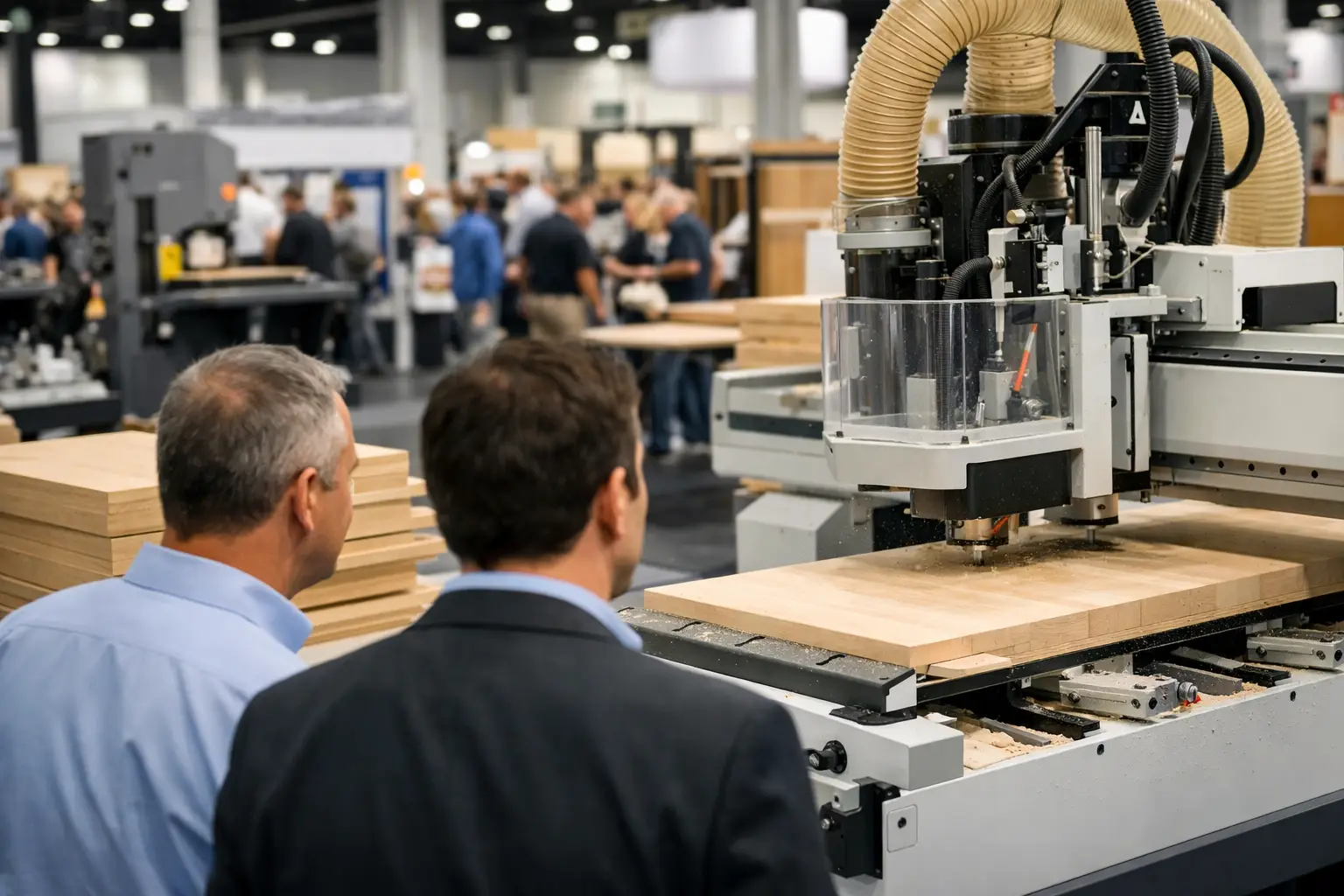
The show floor at IWF Atlanta can create a dangerous kind of optimism. A new saw, software platform, connector solution, or automation cell looks like an immediate answer to a production bottleneck. But for truss plants, component manufacturers, lumber dealers, and construction businesses, the real return from attending the IWF Atlanta wood products show comes from connecting equipment decisions to the people and workflows required to run them.
A machine does not fix a staffing gap. New estimating software does not increase bid volume if nobody has the capacity to build takeoffs, price material, and turn revisions quickly. The companies that leave IWF with momentum are not collecting brochures. They are pressure-testing their growth plan against real operational constraints.
Start With the Production Constraint, Not the Exhibit List
Before booking meetings, identify the exact point where work slows down. For some businesses, it is not manufacturing capacity. It is the estimating department, where quotes sit too long and opportunities go cold. For others, it is truss design, engineering coordination, BIM production, commercial detailing, or material optimization.
Be specific. “We need more capacity” is not a useful show objective. “We need to reduce structural component design turnaround from five days to two while maintaining quality controls” gives your team something concrete to evaluate.
This distinction matters because vendors will naturally frame their solutions around what they sell. A software provider may focus on features. An equipment manufacturer may focus on throughput. A component supplier may focus on product performance. Your job is to determine whether the solution improves the constraint that is costing you bids, margin, or delivery speed.
A productive pre-show discussion with your operations, sales, and production leaders should answer three questions: Where does revenue stall? What work is delayed because skilled technical talent is unavailable? What must change in the next 90 days to support the pipeline?
Those answers should shape every conversation at the event.
How to Approach the IWF Atlanta Wood Products Show
Treat IWF as an operating review conducted across hundreds of supplier conversations. The strongest attendees arrive with targeted questions, a meeting hierarchy, and a way to capture decisions before the noise of the show floor takes over.
Start by separating exhibitors into three groups: companies that can solve an immediate problem, companies worth monitoring for a future investment, and companies that are interesting but not currently relevant. Without this filter, a large trade show can consume three days without producing a single actionable next step.
For each priority meeting, bring the operating data that defines the problem. If you are evaluating estimating technology, know your current quote volume, average turnaround time, revision frequency, and win rate. If you are reviewing manufacturing equipment, know your labor hours per unit, rework levels, current utilization, and expected demand. If your issue is design capacity, quantify the backlog by job type and identify the software environments your team must support.
The best vendor questions are not generic. Ask what implementation looks like during a busy season, what internal roles are required, how long training actually takes, where customers commonly fail, and what performance gains depend on having experienced operators or technical staff in place. Ask for examples involving businesses with a similar production profile, not just a polished success story from a much larger operation.
Equipment Investments Still Depend on Skilled Capacity
The wood products sector has no shortage of technology options. Automation can improve consistency, material utilization, safety, and output. Design platforms can reduce handoffs. Better data can tighten purchasing and planning. These gains are real, but only when implementation is supported by the right technical workforce.
That is the trade-off many companies underestimate. Buying equipment may be easier than building the production team required to program it, feed it accurate information, resolve exceptions, and keep projects moving when volume spikes. The same is true for software investments. A powerful platform will not create takeoffs, truss designs, Revit models, shop drawings, or structural details on its own.
At the show, evaluate the labor requirement behind every investment. Does the solution reduce repetitive production work, or does it shift work upstream into engineering, data entry, design, and planning? Does it require a specialist who is difficult to hire locally? Can your current team absorb the transition while still serving customers?
There is no universal answer. A high-volume plant with predictable work may justify a major capital investment and a dedicated implementation team. A growing dealer or component manufacturer with volatile demand may need flexible technical production capacity first. The correct move depends on what is constraining profitable growth now.
Use Vendor Meetings to Test Your Workflow
The most valuable conversations at IWF are often the ones that expose a gap in your current process. Bring a representative workflow into the discussion: a commercial bid with multiple revisions, a complex truss package, a multi-trade coordination issue, or a drawing set that repeatedly creates rework.
Then ask vendors to walk through how their solution handles that exact scenario. Do not accept broad claims about efficiency. Find out where data enters, who validates it, which formats are supported, how exceptions are handled, and what happens when a job changes after production has started.
For firms using MiTek, Alpine, AutoCAD, Revit, Tekla, Bluebeam, or other specialized tools, compatibility is only the starting point. The more important question is whether the workflow preserves accountability. A disconnected process can create speed at one stage and expensive errors at the next.
This is also the right moment to ask about implementation support after the sale. Many providers are excellent at demonstrations but less clear about the first 30, 60, and 90 days. Demand clarity on onboarding, training, data migration, support response times, and the internal time commitment required from your team.
Build a Staffing Plan Alongside Your Show Plan
IWF is a strong place to source technology, suppliers, and ideas. It is not a substitute for a capacity strategy. If your business plans to increase bids, add accounts, take on larger structural packages, or expand manufacturing output, determine who will execute the technical work before demand arrives.
Traditional hiring often cannot move at the speed of opportunity. Recruiting experienced truss designers, estimators, BIM modelers, detailers, and production support professionals can take months. Meanwhile, your existing team carries the backlog, burns out, or turns away work that should have been profitable.
A dedicated global technical team can change that equation when it is built around defined workflows, software standards, quality checks, and clear ownership. The advantage is not simply lower labor cost. It is the ability to add specialized production capacity without waiting for the local hiring market to cooperate, while maintaining progress across time zones.
All Points Technical helps construction-related businesses build that capacity in disciplines where talent shortages directly limit throughput. The model works best when leaders identify a repeatable workload, validate output through trial work, and scale the team based on real pipeline demand rather than guesswork.
Leave With Commitments, Not Just Contacts
The show is only valuable if it changes what happens when your team returns to the office. Before leaving Atlanta, rank every major conversation by business impact and next action. A vendor follow-up without an owner, deadline, and decision criteria is usually just a business card.
Set a short internal review within 48 hours. Decide which opportunities deserve a technical demonstration, a pricing review, a pilot, or a deeper operational analysis. If an investment requires additional design, estimating, or BIM capacity, assign that workstream at the same time. Do not let a promising equipment or software decision get delayed because the staffing implications were ignored.
The construction businesses that win after IWF will not necessarily be the ones that spend the most. They will be the ones that turn conversations into a production plan, then put capable people behind it before the next wave of work hits.
Leave a Reply