Blog

  • Using CACH Labor to Fill Your Plant’s Staffing

    Using CACH Labor to Fill Your Plant’s Staffing

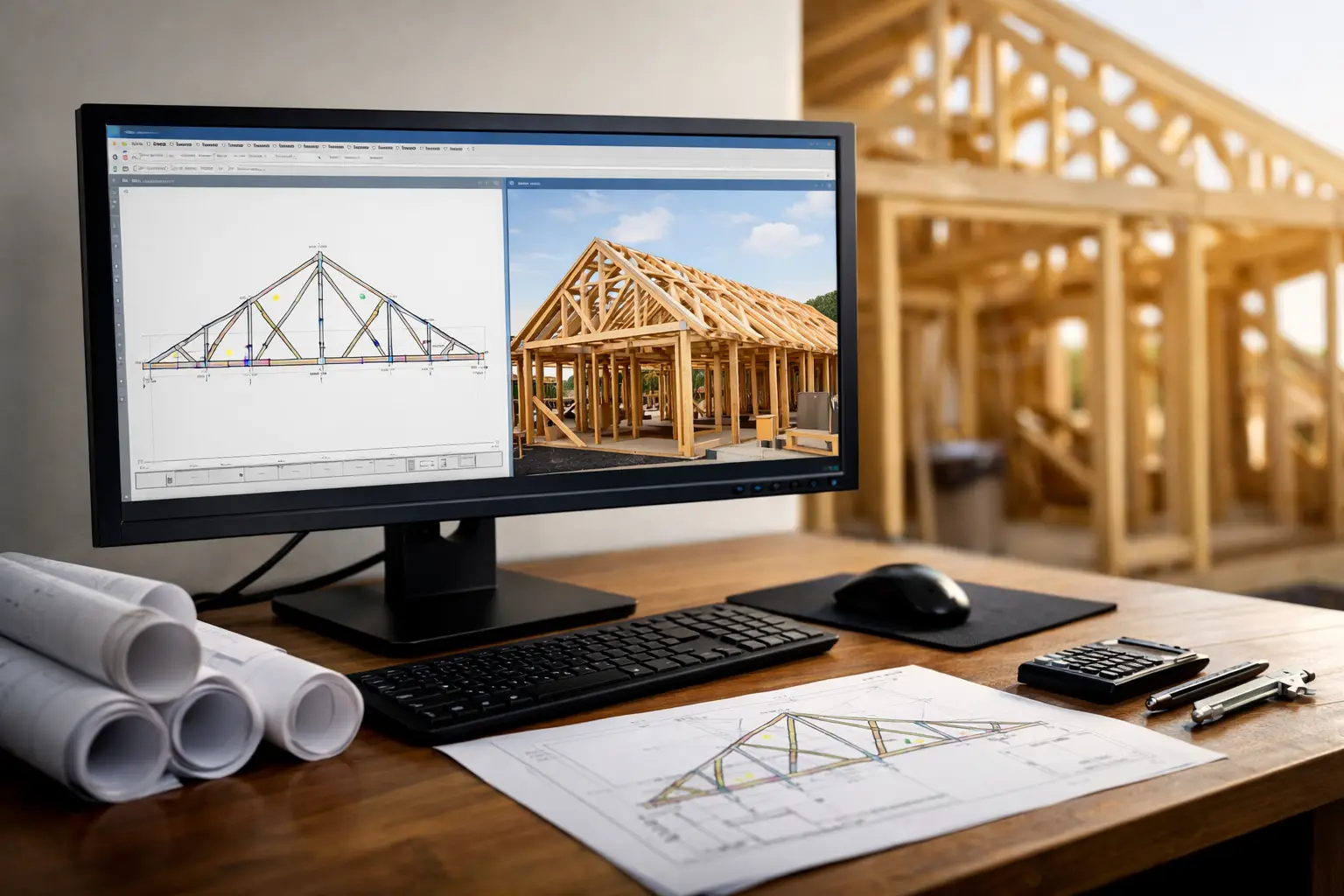
    When a truss plant misses production targets, the problem usually starts long before the saws and presses. It starts with open roles that stay open, design queues that grow, estimates that stall, and supervisors who spend too much time covering gaps instead of running the operation. That is why more operators are looking at using CAC H labor to fill your plant’s staffing needs as a practical way to keep output moving when local hiring cannot keep pace.

    For plant leaders, this is not a theory exercise. Demand changes fast. One month you need more estimating support to keep bids flowing. The next month you need truss designers, detailers, or production-adjacent technical staff who can handle real volume without dragging down quality. If every staffing move depends on finding local talent in a tight market, growth gets capped by labor friction.

    What using CAC H labor to fill your plant’s staffing really means

    The phrase may sound broad, but the operating idea is simple. You use external labor channels to close staffing gaps faster than the domestic market allows, especially in roles where technical accuracy, software skill, and throughput matter. In a plant environment, that often means support in truss design, material takeoffs, estimating, CAD production, BIM coordination, drafting, and other specialized functions tied directly to production capacity.

    This is not the same as throwing temporary labor at a manufacturing line and hoping for the best. Plants in the building materials and component space run on precision. A staffing solution only works if it protects drawing quality, turnaround times, and communication between production, sales, and engineering. That is where many companies get it wrong. They focus only on headcount. Strong operators focus on output.

    Why plants are rethinking staffing models

    The old model assumes you can recruit locally, onboard slowly, and build the team one hire at a time. That approach breaks down when your market cannot supply enough trained people, or when demand spikes faster than your hiring cycle. Every week a role stays open, bid volume suffers, schedules slip, and managers end up working around the problem instead of fixing it.

    Using CAC H labor to fill your plant’s staffing can create a different path. Instead of waiting months for one ideal hire, you build access to trained technical capacity that can be deployed based on workload. That matters most in disciplines that are hard to hire for and even harder to replace quickly.

    For many plants, the biggest pressure points are not always on the shop floor. They show up in the technical pipeline that feeds the floor. If estimating slows down, fewer jobs move forward. If design gets backed up, production release suffers. If detailing accuracy drops, rework climbs. The labor strategy has to address those choke points first.

    Where this model works best in a plant operation

    The best use case is specialized technical work that supports revenue and production but does not require every team member to be physically present inside the facility. Truss design is the obvious example. So are component design support, lumber takeoffs, CAD drafting, Revit production, and structural detailing.

    These roles are difficult because they require both software competence and industry-specific judgment. You are not just buying labor hours. You are buying technical output. That means the staffing source has to understand the standards, the workflow, and the pace of construction-related manufacturing.

    This model can also work for recruiting support, project coordination, and certain back-office functions, but the value is highest when it removes pressure from the production pipeline. If your design desk is the bottleneck, solving that problem creates downstream gains across the plant.

    The real business case: speed, margin, and capacity

    The strongest argument for using CAC H labor to fill your plant’s staffing is not lower cost by itself. Cost matters, but leaders do not win by chasing cheap labor. They win by protecting capacity and margin at the same time.

    A plant that cannot staff design or estimating properly will often turn down work, delay commitments, or overload key people until errors rise. None of those outcomes are cheap. They hit revenue, customer confidence, and team stability. A faster staffing model gives you the ability to take on more bids, maintain release schedules, and scale around project volume without carrying every fixed cost in-house.

    There is also a time advantage. Dedicated offshore and blended staffing models can keep work moving across time zones. That does not eliminate the need for process discipline, but it can compress turnaround windows when the workflow is set up correctly. For plants under pressure to produce more without bloating overhead, that is a serious operational lever.

    The trade-offs leaders need to weigh

    This is not a magic switch. It works well when the work is defined, the standards are clear, and internal leadership is ready to manage output instead of just attendance. It works poorly when a company has undocumented processes, inconsistent review habits, or no real owner for onboarding.

    Communication is another factor. If your team cannot hand off work cleanly, even strong external staff will struggle. The answer is not to reject the model. The answer is to tighten the workflow. Clear scopes, software standards, review checkpoints, and turnaround expectations make the difference between extra capacity and extra noise.

    There is also the question of role fit. Some plant jobs must stay local and hands-on. Others can be supported remotely with little downside. Smart operators separate those categories early. They do not force one staffing model onto every department.

    How to make using CAC H labor to fill your plant’s staffing actually work

    Start with the constraint that is costing you the most money. In many plants, that is estimating backlog, design backlog, or release delays. Do not begin with a vague goal to get help somewhere. Start with a measurable pain point.

    Next, define the work in production terms. What software is used? What outputs are expected? What turnaround time is required? Who reviews the work, and how is feedback delivered? Plants that succeed with external staffing treat onboarding like production setup, not like a casual trial.

    After that, test before you scale. A short validation period shows whether the team can meet your technical standards, communicate clearly, and hit deadlines. This step matters because the right staffing partner is not just filling a seat. They are proving they can produce under your operating conditions.

    Once quality is established, scale based on pipeline. That is where the model becomes commercially powerful. You add capacity when bid volume climbs, hold output steady during labor shortages, and avoid the long lag time of traditional hiring. A specialized staffing partner with real construction experience can get teams up and running in days, not months.

    What to look for in a staffing partner

    Industry specialization comes first. If the partner does not understand construction production workflows, software environments, and quality expectations, you will spend too much time teaching fundamentals. That erodes the value fast.

    Second, look for a delivery model, not just recruiting. Plants need a system for vetting talent, validating output, and scaling teams with consistency. The partner should be able to support trained professionals in disciplines like truss design, estimating, CAD, BIM, and detailing, not just promise resumes.

    Third, look at flexibility. Your workload will move. The partner should be able to help you scale up, scale down, or rebalance support across functions without forcing a complete reset every time the market shifts.

    This is where an experienced construction staffing and production partner stands apart. Companies like All Points Technical built their model around exactly these bottlenecks: hard-to-fill technical roles, variable production demand, and the need for accurate output that supports real plant performance.

    The bigger shift behind this staffing decision

    Plants that keep treating talent shortages like a temporary inconvenience will stay stuck in reactive hiring cycles. The market has already changed. Specialized technical labor is harder to find, more expensive to secure, and too critical to leave to chance.

    The better move is to build a staffing strategy that gives your operation options. Local hiring still has a place. So do dedicated offshore and hybrid teams. The strongest plants use each where it makes the most sense. They do not wait for the labor market to fix itself. They build capacity on purpose.

    If your plant is missing bids, stretching designers too thin, or letting production slow because support roles are vacant, the issue is not just staffing. It is throughput. The companies that grow through labor pressure are the ones willing to rethink how capacity gets built in the first place.

    A good staffing model should do more than fill openings. It should give your plant room to say yes to more work without betting the operation on a hiring market you cannot control.


  • Material Takeoff Outsourcing Services That Scale

    Material Takeoff Outsourcing Services That Scale

    A missed takeoff does not stay small for long. One bad quantity can throw off a bid, squeeze margin, create purchasing headaches, and force your team to spend hours cleaning up a problem that started in preconstruction. That is why material takeoff outsourcing services have moved from a backup option to a serious growth strategy for contractors, lumber dealers, component manufacturers, and estimating teams under pressure to produce more without adding internal bottlenecks.

    For most construction businesses, the real issue is not whether takeoffs matter. It is whether your current staffing model can keep up with bid volume, software demands, schedule compression, and the constant difficulty of hiring qualified estimators. If the answer is no, outsourcing becomes less about cutting cost and more about protecting throughput.

    Why material takeoff outsourcing services are gaining ground

    The labor problem is obvious. Skilled estimating talent is hard to find, expensive to retain, and even harder to scale when work spikes. If you rely only on local hiring, your bid capacity is tied to a labor market you cannot control.

    Material takeoff outsourcing services give construction businesses a different lever. Instead of waiting months to recruit, onboard, and train, you can add production capacity much faster. That matters when your sales team is pushing for more bids, your operations team needs cleaner handoff to purchasing, and your internal estimators are buried in deadlines.

    There is also a margin story here. A full-time domestic hire carries salary, benefits, recruiting costs, management time, and the risk of underutilization when volume dips. Outsourcing can create a more flexible cost structure, especially when your pipeline is uneven or seasonal. You are not just buying labor. You are buying responsiveness.

    That said, not every company should outsource the same way. Some need overflow support during bid surges. Others need dedicated estimators embedded into their workflow every day. The right model depends on complexity, volume, turnaround expectations, and how standardized your estimating process is.

    What these services actually cover

    A lot of buyers hear the phrase and think only of quantity surveys. In practice, material takeoff outsourcing services can support a much broader section of the preconstruction workflow.

    At the core, the work includes extracting quantities from plans, specifications, and models so your team can price labor and materials accurately. Depending on the business, that may include framing packages, lumber lists, sheathing, hardware, drywall, concrete, steel, finishes, roofing, or trade-specific assemblies.

    The better providers do more than count. They follow client-specific naming conventions, unit structures, software workflows, and review procedures. They produce output that fits how your estimators, purchasers, project managers, or production teams already operate. That is the difference between outsourced help that saves time and outsourced help that creates rework.

    For building materials suppliers and component-focused businesses, takeoff support often ties directly into downstream production. A quantity is not just a number on a page. It drives quoting, purchasing, detailing, and manufacturing schedules. If the takeoff team does not understand that operational chain, the value drops fast.

    Where outsourcing creates the biggest payoff

    The strongest case for outsourcing usually shows up in one of three situations.

    The first is bid volume pressure. Your sales team wants more quotes out the door, but your estimating team is already at capacity. In that case, outsourced takeoff support can increase throughput without forcing your senior estimators to spend all day on routine quantity extraction.

    The second is specialization. Some scopes require software fluency, code awareness, or construction knowledge that general administrative support simply does not have. This is where specialized technical partners stand apart from generic staffing models. If a provider understands construction documents, scope logic, and estimating workflows, ramp-up is faster and quality control is stronger.

    The third is labor economics. If you need reliable production but cannot justify hiring several full-time local estimators immediately, outsourcing lets you scale in stages. You can validate quality, refine the workflow, and expand the team as demand proves out.

    What to look for in a provider

    A low hourly rate is not a strategy. If you are evaluating material takeoff outsourcing services, the provider has to fit your operation, not just your budget.

    Industry specialization comes first. Construction estimating is not generic back-office work. Providers should understand plans, revisions, scope gaps, and the reality that small quantity errors can create large commercial consequences. Experience in building materials, structural components, or trade-specific takeoffs is a major advantage because the learning curve is shorter and the output tends to be more usable from day one.

    Process discipline matters just as much. Ask how work is assigned, reviewed, corrected, and escalated. Ask what happens when drawing sets are incomplete or conflicting. Ask how they handle file organization, naming standards, software compatibility, and turnaround scheduling. A provider with strong technical talent but weak workflow management will still create friction.

    Time zone coverage can be a real performance edge if it is managed well. When teams operate across regions, you can extend your estimating day and keep production moving after your local office logs off. But that only works when communication is clear and accountability is tight. Around-the-clock production is valuable. Around-the-clock confusion is expensive.

    Finally, pay attention to how the provider handles ramp-up. The best relationships usually start with trial work, calibration, and a clear quality benchmark. That gives both sides a chance to align before scaling.

    The trade-offs buyers should understand

    Outsourcing is not magic. It is a production strategy, and like any strategy, it works when the operating model is sound.

    The biggest risk is poor scope definition. If your internal team sends vague instructions, inconsistent markups, or incomplete standards, outsourced staff will struggle no matter how capable they are. Good providers can solve labor shortages. They cannot fix a broken estimating process by themselves.

    There is also a management requirement. Even if the provider supplies dedicated technical talent, someone on your side still needs to own priorities, review standards, and workflow coordination. The goal is not to add chaos faster. The goal is to increase output with control.

    Quality can vary early in the relationship. That is normal. Every company has its own assumptions, templates, exclusions, and bid logic. The smart move is to treat the first phase as calibration, not as a final verdict. Buyers who expect instant plug-and-play on complex scopes often set the relationship up to fail.

    How high-performing teams use outsourced takeoff support

    The most effective companies do not replace all internal knowledge. They deploy outsourced production where it creates leverage.

    Senior estimators stay focused on pricing strategy, scope review, client communication, and final bid decisions. Outsourced teams handle repeatable quantity extraction, plan review support, and production-heavy tasks that consume time but do not always require your highest-cost internal talent. That division of labor is where capacity grows without sacrificing control.

    This is especially effective for companies trying to increase bid velocity. If your team can move takeoff production faster, you can quote more work, respond more quickly, and reduce the number of opportunities lost simply because the estimating department was overloaded.

    That is one reason specialized partners such as All Points Technical gain traction with construction businesses under output pressure. The value is not just offshore labor. It is access to trained technical production capacity built around construction workflows, software familiarity, and scalable delivery.

    A smarter way to evaluate ROI

    Too many buyers measure outsourcing only against hourly cost. That is incomplete.

    A better ROI calculation includes how many additional bids your team can submit, how much internal overtime you reduce, how quickly you can respond to customers, and whether your senior staff can spend more time on judgment-driven work instead of repetitive production. It should also include the cost of positions you did not have to recruit for in a tight labor market.

    If outsourced takeoff support helps your business quote faster, win more opportunities, and reduce estimating drag across operations, the commercial impact usually outweighs the basic labor savings.

    The strongest outsourcing relationships are built around throughput, accuracy, and scale. If a provider can help you produce consistent takeoffs, expand capacity without hiring delays, and keep work moving across time zones, that is not a temporary patch. That is a competitive operating model.

    Construction companies do not win because they are busy. They win because they can turn opportunity into accurate, timely output without breaking margins or overloading the team. The right takeoff partner helps you do exactly that.

  • All Points Technical Services That Scale Output

    All Points Technical Services That Scale Output

    When a truss plant has demand in front of it but not enough designers to release jobs, revenue stalls fast. The same thing happens when an estimating team is buried, a BIM backlog grows, or a detailing department becomes the bottleneck between sales and production. That is where all points technical services become a growth lever instead of just a staffing option.

    For construction businesses, the real problem is rarely lack of work. It is lack of specialized technical capacity. Owners and operations leaders do not lose sleep over whether demand exists. They lose sleep over whether they can turn demand into approved drawings, released packages, accurate takeoffs, and profitable production without burning out the team they already have.

    What all points technical services actually solve

    Most firms do not need generic labor. They need trained technical people who can step into real production environments and perform in disciplines that are hard to hire for locally. That includes truss and component design, lumber estimating, CAD production, Revit and BIM modeling, commercial detailing, and project-based technical support that directly affects bid velocity and output.

    That distinction matters. A general staffing model fills seats. A technical production model increases throughput. If your business wins work but cannot process it fast enough, the issue is not headcount on paper. The issue is whether your team can absorb more volume without adding costly delays, quality problems, or management chaos.

    The strongest service partners are built around that operational reality. They are not selling resumes. They are building capacity where your business actually gets stuck.

    Why local hiring alone stops working

    Construction executives already know the pattern. You post for designers, estimators, or detailers. The candidate pool is thin, timelines drag, compensation rises, and the best people are often already employed. Even when you hire successfully, ramp time can be slow, and one bad fit can set a department back for months.

    That does not mean local hiring is wrong. In some cases, it is the right move, especially for leadership roles, customer-facing positions, or highly localized code and field coordination work. But relying on it as the only path to scale is expensive and slow.

    Technical services built around offshore and onshore delivery give firms another option. Instead of waiting months to recruit one person, companies can add trained production support much faster and align capacity with actual pipeline demand. That creates flexibility that traditional hiring usually cannot match.

    There is a trade-off, of course. Offshore or distributed technical production only works when the provider understands the construction workflows, software stack, quality standards, and communication rhythm of the industry. If that expertise is missing, lower labor cost means nothing. You save on salary and lose it back in revisions, delays, and rework.

    Where all points technical services create the most value

    The biggest gains usually show up in departments where work is specialized, repetitive at scale, and directly tied to revenue conversion.

    In truss and component design, added capacity helps plants move jobs through design review and release faster. In estimating, it supports more takeoffs, more quotes, and more opportunities pursued without overloading the in-house team. In CAD, Revit, and BIM environments, it keeps production moving when project schedules tighten and internal teams are already committed.

    This is why technical support should be evaluated through operating metrics, not just labor rates. Can you quote more work this month than last month? Can your design queue stay under control during a demand spike? Can your team maintain release timelines without hiring in panic mode? Those are the questions that matter.

    For many construction businesses, the answer comes down to whether they have access to a dependable production engine behind the scenes.

    The model that works best in practice

    The best technical service model is not fully outsourced in the abstract, and it is not purely staff augmentation with no accountability. It sits in the middle. You need dedicated people who integrate into your workflows, use your software standards, and produce real deliverables, while still benefiting from the scale and structure of an experienced service partner.

    That is a meaningful difference. A dedicated team model creates continuity. Over time, designers, estimators, and detailers learn your preferences, your production pace, your markups, and the way your business handles exceptions. That familiarity improves speed and consistency.

    A trial-based validation process also matters. Before scaling a team, smart firms want proof. They want to see how technical professionals perform against live or sample work, how communication flows, and how quality holds up. That lowers risk and replaces sales claims with evidence.

    After that, scalability becomes the advantage. If the pipeline grows, the team can grow. If work softens, capacity can be adjusted. That kind of elasticity protects margin far better than a fixed overhead structure that assumes perfect forecasting.

    What decision-makers should vet before they commit

    Not all providers are built for construction-specific technical work. Some operate like broad outsourcing companies trying to serve every industry at once. That usually leads to weak onboarding, shallow domain knowledge, and too much client-side handholding.

    A stronger partner should understand the production realities behind the job titles. In truss design, that means knowing software environments, shop drawing expectations, and release sensitivity. In estimating, it means understanding takeoff accuracy, material logic, and turnaround pressure. In BIM and detailing, it means model discipline, clash awareness, and deadline discipline.

    Leadership teams should also look at operational maturity. How quickly can the team be deployed? What quality checks exist? How is work handed off across time zones? What happens when volume doubles for sixty days? These are not side questions. They determine whether the service will reduce friction or add more of it.

    One reason All Points Technical has stayed relevant in this market is simple: construction firms do not need theory. They need trained people, proven workflows, and output they can trust under pressure.

    Speed matters, but control matters more

    A lot of service models sell speed. Speed is valuable, but only if it comes with control. Fast bad work is still bad work. Fast hiring into the wrong structure is still expensive.

    The right technical services setup gives construction businesses both acceleration and visibility. Managers should know who is doing the work, what capacity exists, how production is tracked, and where bottlenecks still live. That is how outside support becomes part of the operating system rather than a temporary patch.

    This is especially important for companies that are trying to grow without damaging customer experience. If a builder, plant, dealer, or contractor increases sales but cannot keep technical production aligned, service degrades. Quotes slow down. Revisions stack up. Deadlines slip. Margin gets squeezed by overtime and preventable errors.

    A disciplined technical services partner helps prevent that chain reaction.

    The bigger strategic advantage

    There is also a longer-term reason construction firms are leaning harder into this model. Talent shortages in specialized technical roles are not a short-term disruption. In many markets, they are structural. That means companies that build flexible production capacity now will be in a stronger position than those still trying to solve every growth problem through local recruiting alone.

    That does not mean replacing your core team. It means protecting it. Your best in-house people should be focused where they create the most value – leading, reviewing, solving exceptions, managing clients, and driving production standards. They should not be trapped in a constant cycle of overload because the business has no scalable bench behind them.

    When all points technical services are set up correctly, they expand what your business can take on without forcing you into permanent overhead or operational strain. That is the real win. More bids pursued. More work processed. Better continuity across time zones. Better margin protection when hiring markets tighten.

    Construction companies that outperform in the next few years will not be the ones with the best recruiting slogans. They will be the ones that built capacity before the bottleneck hit and kept production moving when competitors slowed down.

    If your backlog is growing, your technical team is stretched, or your bid volume keeps outrunning your staffing model, the smartest next move may not be another job posting. It may be building a production engine that is ready before the next wave of work arrives.

  • MiTek Truss Software Designer: What Matters

    MiTek Truss Software Designer: What Matters

    When a truss queue starts backing up, the problem usually is not software alone. It is throughput. You can have demand in hand, sales pressure building, and plant schedules tightening fast, but if your MiTek truss software designer capacity is limited, everything slows down at once – quoting, engineering handoff, production timing, and customer confidence.

    That is why this topic matters to owners, design managers, and operations leaders. MiTek’s design environment is central to how many component businesses price work, produce layouts, and move jobs toward manufacturing. But the real business question is not whether the platform is capable. It is whether your team can use it at the speed and consistency your market requires.

    Where MiTek truss software designer fits in the real workflow

    In a working truss operation, software is not an isolated tool. It sits inside a chain that starts with incoming plans and ends with production-ready output. A designer has to interpret architectural intent, resolve framing conditions, apply loading assumptions, coordinate profiles, and produce clean, buildable designs. The software supports that process, but judgment still drives it.

    That distinction matters. Many companies talk about software proficiency as if knowing the buttons is enough. It is not. A strong MiTek truss software designer understands how to move from incomplete plan sets to practical component solutions without creating downstream chaos for estimating, manufacturing, or field installation.

    When that skill is present, the software becomes a force multiplier. Designers can process more jobs, recover faster from revisions, and maintain consistency across repeat customers. When that skill is missing, even good software turns into a bottleneck.

    What separates an average designer from a high-output one

    The gap usually shows up in speed, accuracy, and decision quality under pressure. Average designers can complete work when the plans are clean, the loads are straightforward, and the timeline is reasonable. High-output designers perform when the package is messy, the details conflict, and the sales team needs answers now.

    A productive MiTek truss software designer does more than generate truss profiles. They know how to reduce unnecessary back-and-forth, flag structural conflicts early, and keep jobs moving with fewer avoidable revisions. They also understand the production side of the business. If a technically valid design creates manufacturing headaches or field confusion, it is not really a win.

    This is where operational leaders should pay attention. The cost of a weak design function rarely appears in one line item. It shows up as delayed bids, overloaded checkers, rushed corrections, missed delivery windows, and margin erosion that compounds over time.

    The software is powerful, but output still depends on people

    MiTek’s design ecosystem is widely used for good reason. It helps standardize truss design workflows, supports engineered component production, and gives teams a structured way to move jobs from concept to fabrication. For many businesses, it is the backbone of component design operations.

    Still, software does not eliminate staffing risk. If you cannot hire enough qualified designers, or if your experienced people are buried under volume, the platform alone will not protect your pipeline. This is where many truss plants and lumber dealers get stuck. They have the tools, the customers, and the opportunity, but not enough trained capacity to keep pace.

    That is also why the hiring market for this skill set stays difficult. Good truss designers are not generic CAD users. They are specialized production professionals who understand structural logic, software execution, and job flow. Replacing that capability is rarely quick.

    Why MiTek truss software designer capacity affects bid velocity

    Most companies first feel the pain at estimating. A delayed design function slows quoting, and slow quoting costs real revenue. If your team needs accurate layouts, reactions, or material assumptions before they can confidently price a package, then design bandwidth directly affects bid velocity.

    This is not just a sales issue. It is a growth issue. The companies that win more work are often the ones that can turn around more opportunities without sacrificing confidence in the numbers. If your design team is overloaded, you may start filtering which jobs you pursue, stretching lead times, or sending out less competitive bids because there is no time to optimize.

    A capable MiTek truss software designer helps keep that from happening. They improve response time, support more parallel work, and create a more stable bridge between the front end of the business and the plant floor.

    Common breakdowns in truss design operations

    The biggest breakdowns are rarely dramatic. They are repetitive and expensive.

    One is revision drag. Plans change, scope shifts, and customers adjust layouts after work is already underway. If your team does not have enough bandwidth, each revision disrupts the queue and pushes everything else back.

    Another is inconsistent design quality across designers. Two people may both know the software, but one produces cleaner output with fewer callbacks and fewer checker interventions. Over time, those differences impact delivery speed and customer trust.

    Then there is dependency risk. Many operations rely too heavily on a few senior people who carry the difficult jobs, train junior staff, and solve edge cases. That works until volume spikes, someone leaves, or the backlog gets too deep to recover quickly.

    How to evaluate MiTek truss software designer support

    If you are trying to strengthen capacity, look past résumés and software claims. The better question is whether a designer can perform inside your production reality.

    That means understanding what kinds of projects they have handled, how they deal with incomplete information, how much checker support they require, and whether they can work within your standards. It also means looking at consistency. One strong week is not enough. You need repeatable output under real deadlines.

    There is a strong case for trial-based validation here. Before scaling any design resource, test it on live or representative work. Measure speed, accuracy, communication quality, and revision handling. A true production partner should be confident enough to prove capability through execution, not just promises.

    For companies scaling aggressively, flexibility matters too. Demand is not flat. Some months require steady baseline support. Others require surge capacity to keep bids moving or clear backlogs. A rigid hiring model struggles with that. A more elastic staffing approach gives operations leaders room to expand or contract without rebuilding the team every quarter.

    What good implementation actually looks like

    The best setup is not simply adding more designers. It is adding the right designers into a controlled workflow.

    That starts with standards. File expectations, design assumptions, communication protocols, and review steps need to be clear. The faster your process moves, the more dangerous ambiguity becomes. Strong systems make outside or distributed design talent easier to integrate.

    Next comes segmentation. Not every job needs your most senior internal people. If simpler or repeatable design work can be handled by qualified production support, your lead designers can stay focused on difficult projects, customer-facing coordination, and exception management.

    Then there is continuity. Teams perform better when they are not starting from scratch on every assignment. Dedicated support models usually outperform random overflow help because they build familiarity with customer preferences, internal standards, and plant constraints. That is one reason specialized staffing models have become so effective in technical construction production.

    For firms that need fast scale without long recruiting cycles, this is where an experienced partner can create immediate leverage. All Points Technical has built its model around exactly that pressure point – helping construction-related businesses add specialized production capacity in days, not months, with teams that already understand truss and component workflows.

    The trade-off leaders should think through

    There is no single right model for every business. Some companies should continue building in-house teams where local recruiting is working and demand is stable. Others need blended teams because volume is growing faster than hiring can keep up. And some need external production support because the market has already made traditional staffing too slow or too expensive.

    The trade-off usually comes down to control, speed, and cost. Internal hiring can offer strong cultural alignment, but it often comes with longer timelines and higher fixed overhead. External technical staffing can increase speed and flexibility, but only if the provider understands your industry deeply enough to deliver real production value.

    That last point is the key. General staffing is not the answer to specialized design bottlenecks. If the work depends on MiTek fluency, truss logic, and construction production discipline, your support model has to match that level of specialization.

    Why this role stays mission-critical

    The market does not reward businesses for having software licenses. It rewards businesses that turn demand into output. That is why the MiTek truss software designer role remains so critical. It sits at the point where opportunity becomes production, and where growth either accelerates or stalls.

    If you are reviewing your operation, do not ask only whether your team has the right software. Ask whether you have enough proven design capacity to protect bid speed, maintain quality, and keep the plant fed when volume rises. That is the question that moves margins.

    The companies that keep winning are usually not guessing here. They treat design capacity as a strategic asset, build around it early, and refuse to let staffing friction cap their growth.

  • Using AI for Material Estimates Right

    Using AI for Material Estimates Right

    Bad estimates do more than miss a number. They choke bid volume, erode margin, tie up senior staff in rework, and create avoidable friction between sales, operations, purchasing, and production.

    That is why using AI for material estimates is getting real attention across construction. Not because it is trendy, but because estimating teams are under pressure to move faster without getting sloppy. If you are a lumber dealer, truss plant, component manufacturer, builder, or GC, the question is no longer whether AI can help. The real question is where it adds speed, where it adds risk, and what kind of operation can actually use it without creating a bigger cleanup job downstream.

    What using AI for material estimates actually means

    For most construction businesses, AI is not a magic estimator that replaces human judgment. It is a layer of automation and pattern recognition that helps teams process drawings, identify assemblies, extract quantities, flag inconsistencies, and accelerate repetitive estimating work.

    In practice, that can mean reading plan sets faster, recognizing framing conditions, suggesting material quantities based on prior jobs, or surfacing scope gaps before they become change orders. It can also help standardize output across estimators, which matters when bid volume is high and your team is stretched.

    The strongest use case is not full autonomy. It is controlled acceleration. AI does the first pass on the heavy repetition, then an experienced estimator or technical reviewer applies job knowledge, local practice, customer requirements, and buildability logic.

    That distinction matters. Material estimating is not just counting. It is interpretation. The plans may be incomplete. The specs may conflict with the drawings. Product substitutions may change waste factors. Regional framing preferences may affect package size and takeoff logic. AI can move quickly through data, but it does not own the commercial risk. Your business does.

    Where AI helps most in the estimating workflow

    The clearest gains show up in high-volume environments where teams process similar project types over and over. Think residential framing packages, truss and component estimates, commercial quantity extraction, and repeatable takeoff scopes tied to standard assemblies.

    AI is especially useful at the front end. It can classify sheets, identify likely scope areas, extract text from schedules, compare drawing revisions, and organize information that estimators usually spend hours hunting down manually. That alone can compress turnaround time.

    It also helps with consistency. A good AI-assisted workflow can reduce the variance between different estimators handling similar jobs. If one estimator carries certain assumptions and another misses them, margin gets unstable. AI can support a more repeatable starting point.

    Then there is throughput. When hiring is slow and experienced estimators are hard to find, AI can let senior people focus on the decisions that actually require senior judgment. Instead of spending half the day on manual quantity extraction, they spend it reviewing exceptions, validating scope, and turning bids faster.

    For companies trying to increase bid capacity without adding overhead at the same pace, that is where AI becomes commercially useful.

    Where using AI for material estimates breaks down

    This is where a lot of hype falls apart.

    AI struggles when the source information is messy, incomplete, or highly custom. If the plans are low quality, if key notes are buried in inconsistent sheets, or if the project includes unusual structural conditions, the model may produce confident output that is still wrong.

    That is dangerous because speed can create false confidence. A bad estimate delivered fast is not operational progress. It is just a faster way to lose money.

    AI also has trouble with business-specific logic. Every supplier, manufacturer, and contractor has its own quoting rules, preferred products, waste assumptions, labor conventions, and customer expectations. Unless the system is tuned to your workflow, it may generate numbers that look clean on paper but do not match how your team actually buys, builds, or bids.

    The same goes for code interpretation and constructability nuance. AI can identify patterns from past data, but it does not replace a professional who understands how real jobs go sideways. Experienced estimators catch things because they have seen them before in production, in the field, or in the submittal process. That knowledge does not disappear because a model can parse PDFs quickly.

    The real operating model: AI plus trained estimators

    The companies getting the best results are not handing estimating over to software. They are building a production model around AI-assisted teams.

    That model usually starts with a defined scope. Which estimate types are repeatable enough for AI support? Which inputs are standardized? Which outputs need human signoff? If those rules are fuzzy, performance will be inconsistent.

    Next comes workflow design. AI should sit inside a process that includes intake review, drawing normalization, quantity extraction, exception handling, and final estimator validation. The point is not to automate everything. The point is to shorten the low-value work and protect the high-value decisions.

    Then comes staffing. This is the part many firms underestimate. AI works better when supported by technically trained production teams who understand construction documents, material logic, and estimating software. Without that layer, the burden just shifts back to your senior staff.

    That is why AI often delivers the strongest return when paired with dedicated technical resources who can run first-pass production, manage data hygiene, and keep work moving across time zones. You do not just need a tool. You need a machine around the tool.

    What to fix before you invest heavily

    If your estimating operation is already inconsistent, AI will expose it.

    Start with your inputs. Standard drawing intake, file naming, scope definitions, and revision control matter more than most teams want to admit. If estimators are working from different assumptions or pulling from disorganized plan sets, no software layer will solve the underlying issue.

    Then look at your historical data. AI systems learn and improve from patterns, but only if the prior estimates and actual outcomes are clean enough to trust. If your job history is fragmented or your closeout data never connects back to the estimate, the feedback loop is weak.

    Finally, define review thresholds. Decide what AI can draft, what requires estimator validation, and what always stays fully manual. Simple, repetitive packages may be ideal for AI support. One-off projects with unusual structural complexity may still need a traditional estimating path.

    This is not a weakness. It is operational discipline.

    What decision-makers should ask before rolling it out

    Do not ask whether the tool is impressive. Ask whether it improves bid velocity without increasing downstream corrections.

    Ask how it handles incomplete drawings, revision comparisons, alternates, and scope gaps. Ask whether it can align with your existing estimating platforms and production process. Ask how much human review is still required and who owns that review. Ask how performance will be measured – not just speed, but estimate accuracy, win rate, margin protection, and rework reduction.

    Most of all, ask whether your team has the bandwidth to implement it properly. Even strong technology fails when no one owns the workflow.

    For many companies, the better move is not building an internal AI estimating experiment from scratch. It is partnering with a specialized production team that already understands the construction side, the software side, and the operational side. That is where execution separates itself from theory.

    All Points Technical has built its reputation in exactly that gap – helping construction businesses scale technical output without waiting months to recruit scarce domestic talent. In an AI-assisted estimating environment, that kind of production depth matters even more.

    The bottom line on AI and estimating

    Using AI for material estimates can absolutely create an edge. It can reduce turnaround time, support higher bid volume, and free up senior estimators for work that actually protects margin. But only when it is deployed inside a disciplined estimating operation with trained people reviewing the result.

    If you treat AI like a shortcut, it will punish you. If you treat it like a force multiplier, it can change the economics of your estimating department.

    The winners will not be the companies with the flashiest software demo. They will be the ones that combine smart automation, clean process, and experienced technical talent to produce more estimates, with fewer misses, at a speed their competitors cannot match.

  • BIM Modeling Outsourcing That Scales

    BIM Modeling Outsourcing That Scales

    When a project pipeline expands faster than your hiring pipeline, BIM becomes a bottleneck. Models stall, coordination slips, RFIs pile up, and your senior team starts spending time on production instead of decisions. That is where bim modeling outsourcing stops being a cost conversation and becomes an operations strategy.

    For construction firms, fabricators, design teams, and building product companies, the issue is not whether BIM matters. It does. The real question is whether you can keep BIM production moving at the speed your business needs without overloading local staff or waiting months to recruit specialized talent. In many cases, outsourcing is the fastest path to more output, better coverage, and stronger margins.

    Why BIM modeling outsourcing is gaining ground

    Most firms do not struggle because they lack software. They struggle because experienced BIM talent is hard to hire, expensive to retain, and rarely available exactly when workload spikes. Demand is uneven. One quarter is manageable, the next quarter is packed with deadlines, revisions, and coordination demands across multiple active jobs.

    Traditional hiring does not solve that fast enough. Even when you find the right person, onboarding takes time, and one hire rarely fixes a production bottleneck across estimating, modeling, clash review, sheet setup, and revisions. BIM modeling outsourcing gives firms a way to add capacity without building a larger fixed payroll every time the market gets busy.

    That matters most when speed drives revenue. If your team can produce more models, more shop drawings, more coordinated sets, or more bid support in less time, you can pursue more work without weakening execution. That is the business case.

    What good outsourcing actually looks like

    The best outsourcing models are not anonymous drafting farms. They function like an extension of your production team, with trained specialists working inside your standards, software stack, file protocols, and review process.

    That distinction matters. Plenty of firms have had a bad outsourcing experience because they bought labor instead of a workflow. The result is familiar: inconsistent families, poor naming conventions, coordination misses, rework, and a local team that has to spend extra time fixing deliverables. That is not scale. That is outsourced cleanup.

    A strong BIM outsourcing partner starts with process discipline. They align to your modeling standards, your level of development requirements, your turnaround expectations, and your QA checkpoints. They also understand the construction context behind the model. A technically clean model that ignores fabrication constraints or field sequencing is still a weak deliverable.

    For decision-makers, this is the shift to look for: not just lower hourly cost, but dependable production capacity that protects schedule and reduces internal strain.

    Where bim modeling outsourcing delivers the most value

    Not every BIM task should leave your office. That is the wrong mindset. The better approach is to separate strategic work from scalable production work.

    Internal teams are usually best used for client-facing coordination, design intent decisions, high-risk reviews, and issue resolution with project stakeholders. Outsourced teams are often strongest in repeatable, high-volume technical production such as model creation, drafting support, Revit production, sheet generation, clash preparation, content updates, and revision cycles.

    This split gives senior staff more room to lead while production keeps moving. It also helps firms avoid a common profitability problem: using high-cost domestic talent for work that can be completed accurately by a dedicated external team at a lower delivery cost.

    The biggest wins usually show up in four areas: workload surge support, extended time-zone coverage, lower production cost per project, and improved bid capacity. If your business wins work in bursts, or if deadlines compress near submittal, those gains are not minor. They can directly affect whether you keep jobs on track and whether you have the confidence to take on more.

    The trade-offs leaders should evaluate

    BIM modeling outsourcing is not magic, and it is not a fit for every situation.

    If your internal standards are vague, your markups are inconsistent, or your PMs change direction constantly without documentation, outsourcing can expose those weaknesses fast. External teams need clarity. When the client-side process is chaotic, the results will be inconsistent no matter how skilled the production team is.

    There is also a ramp-up curve. Even strong partners need time to learn your templates, expectations, and review habits. That is why trial work and phased onboarding matter. Start with a manageable package, validate quality, refine communication, then scale.

    Security, file control, and communication cadence also matter. Firms handling sensitive projects or highly customized workflows need tighter controls. That does not mean outsourcing is off the table. It means the delivery model has to be built deliberately, with defined permissions, version control, and review ownership.

    The companies that benefit most are usually the ones that treat outsourcing as a managed production system, not an emergency handoff.

    How to choose a BIM modeling outsourcing partner

    The first filter is industry specialization. A team that understands construction production will outperform a generalist resource pool every time. Software proficiency matters, but context matters more. You need people who understand what the model is for, who will use it next, and what errors create downstream cost.

    The second filter is process maturity. Ask how work is assigned, reviewed, revised, and delivered. Ask how the team handles standards, QA, schedule shifts, and communication overlap with your office. If the answer is vague, expect friction later.

    The third filter is scalability. One freelancer may help with a short-term overflow problem, but that is not the same as having access to a structured team that can grow with your backlog. If your volume changes, your partner should be able to scale up or down without forcing you into a fresh recruiting cycle.

    The fourth filter is proof. Trial work is one of the most practical ways to reduce risk. It shows how well a team follows direction, how quickly they adapt to standards, and how much management effort is required from your side. Good outsourcing should reduce operational drag, not create more of it.

    BIM modeling outsourcing and margin protection

    Most firms first look at outsourcing through labor rate comparisons. That is understandable, but incomplete.

    The larger opportunity is margin protection through throughput. If outsourcing helps you turn around production faster, avoid missed deadlines, reduce overtime, and pursue more bid opportunities, the financial impact goes well beyond wage savings. Capacity has value. Predictability has value. A production engine that keeps running across time zones has value.

    This is especially true for firms stuck in a cycle of turning down work, overworking core staff, or hiring reactively after the backlog is already hurting delivery. Those are expensive patterns. BIM modeling outsourcing creates a more flexible operating model, where production can expand without requiring permanent overhead every time demand rises.

    That does not mean every outsourced hour is automatically cheaper in practice. If oversight is poor or scopes are badly defined, rework can erase savings. But when the model is structured correctly, outsourced BIM support becomes a lever for better cost control and stronger project economics.

    What a smart rollout looks like

    The safest way to begin is not with your most complex project. Start with a defined scope, documented standards, and measurable output targets. Set review checkpoints early. Tighten communication. Evaluate not just technical accuracy, but responsiveness and consistency.

    Once the workflow is proven, expand into recurring production tasks and then into larger program support. This staged approach gives your team confidence while building a repeatable system. It also reveals whether the partner can truly operate as a dependable extension of your business.

    Companies like All Points Technical have built entire delivery models around this reality: clients do not just need labor, they need trained production teams that can get up and running fast, work inside real construction workflows, and scale with demand without months of hiring friction.

    The firms that win with outsourcing are usually not the ones chasing the lowest rate. They are the ones building a better operating model – one that keeps BIM production aligned with growth instead of letting staffing constraints dictate the pace of the business.

    The bottom line on BIM modeling outsourcing

    If BIM output is limiting your ability to bid, coordinate, fabricate, or deliver on time, the answer may not be another round of recruiting. It may be a better production structure.

    BIM modeling outsourcing works when it gives you more capacity, more control, and more speed without lowering technical standards. That requires the right partner, clear workflows, and disciplined onboarding. Get those pieces right, and outsourcing stops being a backup plan. It becomes a serious growth tool.

    The strongest construction businesses are not waiting for the labor market to fix their capacity problem. They are building systems that let them move now.

  • Commercial Construction Detailing Support That Scales

    Commercial Construction Detailing Support That Scales

    A detailing backlog does not show up politely. It hits when bid volume is up, RFIs are stacking, field teams need answers now, and your senior people are already covering too much ground. That is exactly where commercial construction detailing support becomes a growth lever instead of a nice-to-have. When detailing capacity is tight, schedules slip, coordination suffers, and margin starts bleeding in places most firms do not catch until the project is already under pressure.

    For commercial contractors, fabricators, specialty trades, and engineering-driven construction teams, detailing is not just documentation. It is production. It drives procurement, fabrication, sequencing, installation, and coordination across disciplines. If the detailing function is understaffed or inconsistent, the entire operation slows down.

    Why commercial construction detailing support matters more now

    The labor shortage is only part of the story. The bigger issue is specialization. Commercial detailing work now sits at the intersection of design intent, constructability, software fluency, and deadline discipline. You need people who can work inside live project environments, understand how details affect field execution, and produce output that supports downstream teams instead of creating rework.

    That is getting harder to build internally. Hiring locally for experienced detailers can take months. Training junior staff takes longer. Meanwhile, projects do not pause. Owners still expect aggressive schedules, estimators still need capacity to pursue more work, and operations leaders still need predictable output.

    This is where commercial construction detailing support earns its keep. The right support model gives you trained production capacity without forcing your business into a long recruiting cycle or a fixed overhead commitment that does not match your pipeline.

    What good detailing support actually delivers

    A lot of firms think about support in terms of labor hours. That is too narrow. Strong detailing support should improve throughput, not just add hands.

    At a practical level, that means producing accurate, production-ready drawings and models that align with your standards, software environment, and review process. It also means understanding submittal cycles, revision control, coordination workflows, and the very real cost of incomplete information.

    In commercial work, the details matter because every gap gets paid for somewhere. A poorly resolved connection, an unclear section, or a coordination miss between trades can trigger field delays, change exposure, or fabrication waste. Support only creates value when it reduces those risks while helping your team move faster.

    That is why the best partners are not generic drafting vendors. They are specialized technical production teams that understand how commercial construction actually works.

    Capacity is the obvious win

    If your in-house team is solid but overloaded, external support lets you expand output fast. You can clear drawing backlogs, keep up with project demand, and avoid forcing senior staff into constant overtime.

    This matters most when work volume is uneven. Some months you need a full bench. Other months you do not. A flexible support model lets you scale around active demand instead of staffing permanently for peak load.

    Speed matters, but control matters more

    Fast output is valuable only if it fits your workflow. The support team should be able to follow your redline process, naming conventions, software standards, and communication cadence. If every deliverable needs a full rebuild after review, you did not solve a capacity problem. You just moved it.

    That is the trade-off many firms miss. The lowest-cost resource is not always the best fit. Commercial detailing support has to be operationally aligned, not just technically available.

    Where firms usually break down

    Most detailing bottlenecks come from one of three issues. The first is reliance on a handful of key people. When tribal knowledge sits with two senior detailers, every vacation, resignation, or urgent project becomes a business risk.

    The second is inconsistent workload. Internal teams get flooded during award spikes and sit underused when projects taper. That creates a margin problem either way. You are either understaffed and missing opportunities, or overstaffed and carrying unnecessary fixed cost.

    The third is a mismatch between project complexity and available talent. Commercial projects often require people who can think beyond drafting. They need to understand assemblies, tolerances, coordination logic, and build sequence. If your available labor can model but not interpret, production slows and review cycles expand.

    Commercial construction detailing support works best when it addresses all three. It should reduce dependency on key individuals, flex with changing volume, and give you access to people who are productive in real-world construction environments.

    How to evaluate commercial construction detailing support

    If you are considering outside detailing capacity, the first question is not price. It is fit.

    Start with discipline-specific experience. Commercial work is broad, and not every detailing team can handle every scope equally well. Review whether the provider has experience in your exact lane, whether that is structural detailing, architectural drafting, BIM production, deck design, or trade-specific detailing.

    Then look at software depth. Familiarity with CAD, Revit, and BIM tools is baseline. What matters more is whether the team can work inside your systems without slowing down your existing operation.

    The next checkpoint is process maturity. Ask how teams are onboarded, how quality is validated, how revisions are tracked, and how capacity is scaled. If the answer is vague, expect friction.

    Finally, test before you commit too deeply. A trial scope tells you more than a polished sales pitch. You will see communication quality, turnaround speed, adherence to standards, and how much oversight the team really requires.

    That trial stage is where experienced partners separate themselves. They know buyers are not looking for promises. They are looking for proof.

    The offshore and hybrid question

    Some firms still hesitate around offshore production support. That hesitation is understandable. Bad outsourcing models created a lot of distrust in this industry.

    But the question is not offshore versus domestic in the abstract. The question is whether the team is specialized, managed well, and structured to support your operation. A strong global delivery model can give you meaningful advantages. It can reduce labor cost pressure, extend production hours across time zones, and give you access to trained technical staff in hard-to-fill roles.

    It also comes with requirements. You need clear standards, defined review loops, and leadership that understands both technical production and client-side accountability. Without those controls, lower cost can disappear fast through rework and delays.

    That is why hybrid models often work well. Core client-facing leadership and process ownership stay tightly aligned with the customer, while trained production teams expand execution capacity behind the scenes. When done right, that model increases output without weakening control.

    What high-performing firms do differently

    The firms that get the most out of detailing support do not treat it as emergency overflow forever. They build it into their operating model.

    They define standards early. They document workflows. They decide what should stay internal and what can be delegated. They use outside support to protect core staff from routine overload, expand bid capacity, and keep project delivery moving during peak demand.

    They also measure the right things. Not just hourly cost, but turnaround time, revision rate, throughput, and impact on awarded work. That is how detailing support becomes a strategic production function instead of a temporary patch.

    In practice, that can mean using external teams for repeatable production work while senior in-house staff focus on complex coordination, client communication, and final technical review. It can also mean standing up dedicated support that grows with the business, rather than scrambling every time volume spikes.

    For companies trying to scale without adding hiring friction, that approach is hard to ignore. It is one reason specialized partners like All Points Technical have gained traction with firms that need output fast, need quality to hold, and cannot afford months-long recruiting cycles.

    The real business case

    Commercial construction detailing support is not about replacing your team. It is about protecting your operation from capacity failure.

    When detailing stalls, the cost is bigger than delayed drawings. You lose bid opportunities, stretch internal leaders too thin, increase burnout risk, and create production instability across the business. Those are growth problems, margin problems, and customer experience problems all at once.

    The right support model gives you another path. It helps you add technical production capacity when you need it, hold quality standards under pressure, and keep the business moving without waiting for the local hiring market to cooperate.

    That does not mean every firm needs the same setup. Some need occasional surge support. Some need a dedicated team. Some need discipline-specific help tied to one software environment and one review chain. It depends on project mix, internal bench strength, and growth goals.

    But one point is clear: if detailing capacity is limiting your bids, your schedule, or your margins, that is no longer a back-office issue. It is an operational constraint worth fixing decisively.

    The strongest construction businesses do not wait for bottlenecks to become damage. They build capacity before the next wave of work makes that decision for them.

  • Architectural Deck Design Services That Scale

    Architectural Deck Design Services That Scale

    A deck package should not be the reason a permit stalls, a bid slips, or a project manager starts chasing revisions at 6:30 p.m. Yet that is exactly what happens when architectural deck design services are treated like overflow drafting instead of a production function tied directly to schedule, margin, and client confidence.

    For builders, dealers, and design-driven construction teams, deck work sits in an awkward space. It looks straightforward until it is not. One job needs a clean permit set for a simple rear addition. The next includes multi-level geometry, custom stairs, roof transitions, drainage considerations, railing coordination, and code-driven details that vary by jurisdiction. The workload spikes fast. Internal teams get stretched. Turn times suffer. The sales side feels it first.

    Why architectural deck design services matter more than most teams expect

    Most companies do not lose money on deck design because one drawing is expensive. They lose money because inconsistent production slows everything around it. Estimating waits on usable documents. Sales cannot move from concept to quote with confidence. Operations inherits avoidable RFIs. Field crews spend time interpreting intent instead of building.

    Good architectural deck design services fix that by turning deck design into a repeatable, scalable workflow. That means design output is not dependent on whichever in-house person happens to have time this week. It means details are produced with the same logic every time, software standards stay intact, and review cycles become manageable instead of chaotic.

    That matters most when demand is uneven. Many construction businesses do not need another full-time local hire for deck design year-round. They need dependable capacity when jobs stack up, and they need it without carrying overhead during slower periods. That is where a specialized production partner changes the economics.

    What strong deck design services actually include

    Architectural deck design services should do more than put lines on a page. If the output is going to support permits, client approvals, coordination, and downstream production, the scope has to be practical.

    At a minimum, the service should cover plan development, elevations, section details, framing layouts, stair and railing coordination, and document organization that fits how your team builds and reviews. Depending on the project, it may also include concept support, redraws from marked-up plans, revisions for municipal comments, and drafting aligned to internal standards.

    The right level of service depends on your business model. A lumber dealer supporting multiple outside builders may need fast-turn permit-ready packages with disciplined formatting and repeatable details. A design-build contractor may need more front-end collaboration to move a customer from idea to signed job. A manufacturer or structural-focused team may need deck plans that coordinate tightly with truss, component, or broader framing workflows.

    That is the key distinction. Architectural deck design services are valuable when they fit the way your operation actually sells and builds. A beautiful drawing that does not support your process is still a production problem.

    Where bottlenecks usually show up

    Most deck design bottlenecks are not caused by lack of effort. They come from three predictable pressure points.

    The first is fragmented ownership. Sales gathers rough inputs, someone in design interprets them, another person cleans up the file, and a manager reviews it late because higher-priority work got in the way. Every handoff introduces delay and inconsistency.

    The second is hiring friction. Skilled technical production talent is hard to find, harder to train, and expensive to keep underutilized. If your deck volume rises and falls with seasonality or market demand, building a local bench for every specialty can hurt margins as much as understaffing hurts throughput.

    The third is software and standards inconsistency. Even experienced drafters can create headaches if file setup, layer use, annotation logic, and construction detailing vary from one job to the next. Review time expands because managers are correcting production habits, not evaluating design intent.

    These are operational issues, not creative ones. That is why the fix is usually not “find a better drafter.” The fix is a delivery model built for volume, standards, and speed.

    When outsourcing deck design makes business sense

    Not every company should outsource every deck package. If your in-house team has stable capacity, low turnover, and enough specialized bench strength to absorb peaks, keeping production internal may be the right move.

    But that is not the reality for many growing construction businesses. If your backlog is healthy, bid demand is rising, and technical recruiting keeps slowing expansion, outsourced architectural deck design services can be the faster path.

    The strongest use cases are clear. You need to increase bid capacity without waiting months to hire. You need overnight or extended-hour production support. You need to protect internal senior staff from getting buried in routine drafting. Or you need a trialable way to add capacity before committing to permanent headcount.

    This is also where trade-offs matter. Outsourcing works best when the partner understands construction production, not just drafting software. A low-cost drafting vendor may generate files, but if they do not understand buildability, code-sensitive details, revision flow, or discipline-specific expectations, you may save on hourly rate and lose on rework.

    What to look for in an architectural deck design partner

    The first requirement is specialization. Deck design is adjacent to broader architectural drafting, but it is not identical. You want a team that understands framing logic, stair geometry, structural coordination, and the practical needs of permit and construction documents.

    The second is onboarding speed. If a provider needs months to understand your templates, standards, and review process, they are not solving your capacity problem. The right partner gets productive quickly, proves quality through real work, and scales with demand.

    The third is operational flexibility. Some weeks you need two projects turned fast. Other weeks you need a steady pipeline. Your provider should be able to support both without forcing a rigid staffing model that does not match your workload.

    The fourth is quality control. Ask how work is checked, how revisions are tracked, who owns standards compliance, and how communication flows when comments come back. Strong production teams do not rely on heroics. They run on process.

    This is where an industry-specific partner stands apart. All Points Technical built its model around technical construction production, not generic outsourcing. That difference matters when the goal is to increase output without creating another layer of management burden.

    How architectural deck design services improve margin and bid velocity

    Most buyers initially think about labor savings. That matters, but it is only part of the value.

    Faster architectural deck design services increase bid velocity because your team can move from intake to usable documents without stalling. That keeps sales momentum alive. It improves close rates because customers are not waiting while competitors respond faster.

    Better production consistency also protects margin. Fewer redraws mean less non-billable management time. Cleaner plans reduce back-and-forth between estimating, sales, and operations. More predictable review cycles let senior staff focus on higher-value tasks like approvals, client relationships, and complex exception handling.

    There is also a capacity advantage. When your design pipeline is no longer capped by local hiring constraints, you can pursue more work with confidence. That changes growth planning. Instead of saying no to overflow or slowing intake to protect the team, you can scale production to meet demand.

    The best model is usually hybrid, not all-or-nothing

    For many companies, the smartest setup is a hybrid one. Keep client-facing design judgment, approvals, and edge-case decisions in-house. Push repeatable production, drafting, revisions, and volume work to a specialized external team.

    That model protects control while removing the workload that typically clogs the system. It also gives you options. You can scale support up during peak season, pull it back when volume softens, and avoid locking your cost structure to a demand curve that changes month to month.

    It depends on your internal maturity. If your standards are documented and your review process is disciplined, outsourcing can ramp quickly. If everything lives in one senior designer’s head, any external support will struggle until your process is cleaned up. The service can still help, but the business has to be ready to use it well.

    Architectural deck design services are not just about drafting support. They are a lever for faster throughput, stronger margins, and fewer growth bottlenecks. If deck work keeps piling up, the right move is not to ask your current team to work harder. It is to build a production model that can actually keep up.

  • Construction Staffing Shortage Solutions

    Construction Staffing Shortage Solutions

    A truss plant wins more work than expected, then hits the wall in two weeks. Estimating backs up. Design queues grow. PMs start triaging instead of producing. That is exactly where construction staffing shortage solutions stop being an HR topic and become an operations priority.

    For most construction businesses, the shortage is not just about headcount. It is about specialized headcount in the roles that control throughput – truss design, component modeling, estimating, BIM production, detailing, drafting, and project support. When those seats stay open, bid volume drops, turnaround slows, overtime rises, and margins get squeezed from both sides.

    The companies that handle this well are not waiting for the local labor market to fix itself. They are redesigning how production gets done.

    Why the old hiring playbook is breaking down

    If you are trying to solve a technical production bottleneck with the same recruiting model you used ten years ago, the math is working against you. Niche design and estimating roles take longer to fill, cost more to recruit, and often require software fluency that is hard to verify in a resume screen. By the time you find the right person, your pipeline may have already shifted.

    There is also a capacity mismatch built into traditional hiring. Most firms hire for average demand, then scramble when volume spikes. That creates a familiar cycle: undercapacity during busy periods, overstaffing risk during slow periods, and constant pressure on the people you already trust.

    The result is not just stress. It is lost revenue. If your team cannot price, design, model, or detail work fast enough, you cannot convert opportunities at the rate your market will support.

    The most effective construction staffing shortage solutions

    Strong construction staffing shortage solutions do not start with a job post. They start with a hard look at where production gets stuck and what kind of talent actually moves the constraint.

    For some businesses, the constraint is estimating. They have demand, but not enough estimators to turn drawings into quotes fast enough. For others, the bottleneck is technical design – truss layouts, panel modeling, shop drawings, steel or wood detailing, CAD cleanup, or BIM coordination. In larger operations, the issue may be management bandwidth, where senior people are spending too much time on repeatable production work instead of customer-facing decisions.

    That is why the best solution is usually a blended model, not a single hire.

    1. Build around production roles, not generic labor categories

    A lot of firms say they need “more people” when what they really need is more output in one or two high-impact disciplines. That distinction matters. Hiring a general drafter will not solve a truss design backlog. Hiring a coordinator without software depth will not fix a BIM production issue.

    The first move is role precision. Define the exact technical function, software stack, expected daily output, and review path. If a new team member cannot plug into live work quickly, you are not solving the shortage. You are just moving the delay.

    2. Use dedicated remote or offshore technical teams where the work allows it

    This is where many firms are still leaving capacity on the table. Not every role needs to sit in your office to deliver value. Design support, estimating, CAD production, detailing, BIM modeling, and documentation workflows can often be handled by trained remote teams with the right process, QA structure, and communication rhythm.

    The trade-off is straightforward. You gain speed, scalability, and cost control, but only if the provider knows your sector, your standards, and your software environment. Generic staffing firms tend to fail here because they understand placement, not production. Construction businesses need partners who understand wall panels, trusses, takeoffs, structural sheets, RFIs, submittals, and the pace of a live backlog.

    When done right, this model does more than reduce labor pressure. It can extend your operating day across time zones and keep work moving while your domestic team is offline.

    3. Separate core leadership from scalable execution

    A common mistake is trying to hire every role as if it were equally strategic. It is not. Your senior estimator, lead designer, operations manager, and client-facing PM carry institutional judgment that should stay close to the business. But many supporting tasks around them are repeatable, trainable, and scalable.

    That creates a better staffing architecture. Keep the high-leverage decision-makers in-house. Surround them with flexible technical production capacity that can scale with demand. That model protects quality while increasing throughput.

    What good staffing strategy looks like in real operations

    The strongest operators treat staffing like capacity planning. They do not wait until a backlog becomes a crisis. They map production stages, identify where margin gets stuck, and assign talent based on speed-to-output.

    In practical terms, that means reviewing a few hard questions.

    Where are projects slowing down right now? Which role is creating the longest queue? Which tasks truly require local staff, and which can be standardized and handed off? How much revenue is delayed because work is sitting unquoted, undesigned, or undetailed?

    Those answers usually point to one of three staffing paths.

    The first is direct hiring when the role is leadership-heavy, highly relational, or deeply embedded in field operations. The second is contract or contract-to-hire support when demand is real but not yet stable enough for a permanent seat. The third is a dedicated remote production model when the business needs immediate throughput in technical disciplines and wants flexibility without the full burden of domestic recruiting.

    No single path wins every time. It depends on your volume, complexity, review structure, and growth horizon.

    How to evaluate construction staffing shortage solutions without wasting months

    Speed matters, but bad speed is expensive. If you bring in talent that cannot hit your standards, your senior team becomes the cleanup crew. That defeats the point.

    Start with trial work or a controlled onboarding scope. Give candidates or teams a real sample of the work they would own – not a generic skills conversation. That might be a truss package, a takeoff set, a BIM modeling segment, or a detailing task tied to your standards. You need proof of production, not just proof of experience.

    Then assess three things. First, technical accuracy. Second, communication discipline. Third, how much supervision is required before useful output appears. Fast scaling only works when quality holds.

    This is one reason specialized partners outperform broad labor vendors in construction-adjacent technical roles. They know what success looks like before the first file is assigned.

    The margin story most companies miss

    Labor shortages are usually discussed as a hiring problem. In reality, they are a margin problem.

    When estimating slows, bid volume drops. When design slows, production gets delayed. When detailing falls behind, downstream teams wait. When key people stay overloaded, errors rise and retention gets worse. The cost is not limited to payroll. It shows up in missed opportunities, compressed schedules, rework, and leadership distraction.

    That is why effective construction staffing shortage solutions should be measured against business outcomes, not just hourly rates. Are you bidding more jobs? Turning work faster? Reducing backlog age? Protecting gross margin? Freeing up senior staff to handle higher-value decisions?

    Those are the numbers that matter.

    For many firms, a blended staffing model produces the strongest result because it aligns labor cost with actual production demand. You avoid the drag of carrying too much fixed overhead, while still having access to trained technical capacity when the market moves.

    What to look for in a staffing partner

    If you go outside your local hiring market, choose a partner built for construction production, not generic talent supply. The difference is huge.

    You want industry specialization, software fluency, clear QA procedures, flexible scaling, and a process that gets teams up and running in days, not months. You also want a provider that understands this is not about filling seats. It is about increasing bid capacity, maintaining throughput, and keeping standards intact under pressure.

    That is the real benchmark. Not whether a resume looks strong, but whether the work gets done accurately, consistently, and at the speed your pipeline demands.

    All Points Technical built its model around exactly that reality: specialized technical teams for construction businesses that need output now, not after a six-month recruiting cycle.

    The shortage is real, and it is not disappearing soon. But the companies that win through it are not the ones waiting for talent to show up locally. They are the ones building smarter capacity, protecting their core team, and treating staffing as a growth system instead of a recurring emergency.

    The smartest next move is usually not hiring more the old way. It is building a production model that can keep up with the work you are trying to win.

  • Offshore Construction Drafting Services

    Offshore Construction Drafting Services

    When a project stalls, it usually is not because demand disappeared. It is because production did. Drawings pile up, revisions lag, estimators wait on updated plans, and your in-house team gets buried. Offshore construction drafting services solve that bottleneck by giving construction businesses a faster way to add technical output without waiting months to recruit locally.

    For companies under pressure to bid more work, hit submittal dates, and protect margins, drafting capacity is no longer a back-office issue. It is a growth issue. If your team cannot turn plans, markups, shop drawings, models, or revisions fast enough, you do not just lose time. You lose revenue, flexibility, and confidence in your pipeline.

    What offshore construction drafting services actually do

    This is not a generic outsourcing play. In construction, drafting work touches production, estimating, procurement, fabrication, and field coordination. That means the people doing it need more than CAD access. They need trade context, software fluency, and the discipline to work inside real construction workflows.

    Offshore construction drafting services typically support CAD production, Revit modeling, BIM coordination, shop drawings, structural detailing, architectural drafting, deck design, redline updates, as-builts, and other drawing-intensive tasks. In the right setup, they also support adjacent production functions like material takeoffs, lumber estimating, and component design.

    That range matters because many companies do not have one staffing problem. They have several at once. The detailing team is overloaded, estimating needs help, and operations cannot afford delays between sales and production. A capable offshore drafting team can reduce pressure across the full chain instead of solving only one isolated task.

    Why demand for offshore construction drafting services is rising

    The labor shortage in technical construction roles is not theoretical. Owners, design managers, and operations leaders have been dealing with the same reality for years: qualified people are hard to find, expensive to hire, and slow to onboard. Even when you find good talent, demand can shift before the team is fully productive.

    That creates a bad cycle. Companies either overhire to prepare for future volume or stay lean and risk missing deadlines when work spikes. Neither option is great. One increases overhead. The other limits growth.

    Offshore construction drafting services create a third option. You can add trained production support faster, keep costs more predictable, and scale based on actual workload. For companies with fluctuating bid volume or seasonal swings, that flexibility is a serious operational advantage.

    Time zone coverage is another factor. A well-managed offshore team can keep work moving after your domestic office signs off for the day. That does not eliminate the need for strong internal direction, but it can compress turnaround cycles in a way local-only staffing often cannot.

    Where offshore drafting works best

    Not every drafting function is equally suited for offshore delivery. The best results usually come from work that is process-driven, repeatable, software-based, and tied to documented standards. Think construction documents, permit sets, BIM production support, structural details, framing layouts, truss and component drafting, and revision-heavy tasks that consume skilled hours but do not always require local face time.

    It also works well when your team already has defined review procedures. Offshore teams perform best when expectations are clear – drawing standards, naming conventions, turnaround targets, quality checks, and communication protocols. If your internal process is chaotic, adding offshore support will expose that quickly.

    That is the trade-off buyers need to understand. Offshore drafting is not a shortcut around management. It is a force multiplier for companies that know how they want work delivered.

    The real business case: speed, margin, and bid capacity

    Most companies first look at offshore drafting for labor savings. That is fair, but it is not the full picture. The stronger business case is production leverage.

    If your team can push more drawings through the system, you can bid more work. If revisions come back faster, project managers spend less time chasing technical deliverables. If detailing queues shrink, fabrication and field teams get what they need sooner. Those gains affect top-line revenue and project flow, not just payroll.

    Margin protection matters too. Domestic technical labor is expensive, and replacing a departed detailer or CAD technician can take months. During that gap, work still has to move. Many firms end up paying overtime, missing opportunities, or shifting senior staff into production work they should not be doing. That is an expensive way to run.

    Offshore support gives leaders more control. Instead of gambling on a thin labor market, they can build capacity deliberately and scale it when needed. That is one reason experienced construction firms treat offshore drafting as part of their operating model, not just an emergency patch.

    What separates a strong provider from a cheap one

    This is where buyers either win or create bigger problems for themselves. A low hourly rate means very little if the team does not understand construction logic, US drafting standards, or the software stack your business relies on.

    A strong offshore partner brings industry specialization. That includes people who know the difference between generic drafting and production work tied to real schedules, coordination issues, and fabrication downstream. It also includes quality control, training, documentation, and leadership that can scale beyond one or two individual contributors.

    You should also look closely at onboarding. The best providers do not ask you to bet everything upfront. They validate fit through trial work, establish standards early, and build around your workflow. That reduces risk and gives your team a clean way to assess speed, communication, and technical accuracy before scaling.

    Software capability is another obvious filter. If your work depends on AutoCAD, Revit, BIM platforms, structural detailing tools, or industry-specific design systems, your offshore team needs real production experience in those environments. General design talent is not enough.

    How to make offshore drafting work inside your operation

    Success depends less on geography and more on structure. Companies that get strong results usually do a few things well from the start.

    First, they assign ownership. One person on the client side should control standards, review cycles, and task flow. Without that, work gets fragmented and feedback gets inconsistent.

    Second, they start with the right scope. Do not begin with your messiest project or your least documented process. Start where the work is clear, repeatable, and easy to measure. Once the team proves itself, expand into more complex assignments.

    Third, they build communication rhythms that match production reality. Daily handoffs, redline reviews, scheduled check-ins, and clear turnaround expectations matter more than endless meetings. Construction teams need fast decisions, not bloated process.

    Fourth, they treat the offshore team like a production unit, not a disposable vendor pool. When the team understands your templates, preferences, and review standards, output improves. Repetition creates speed. Familiarity creates fewer errors.

    This is one reason dedicated-team models often outperform random task-based outsourcing. If the same drafters stay aligned to your business, they build institutional knowledge. That makes the work better and the relationship more valuable over time.

    Common concerns and what is actually true

    The first concern is quality. Fair question. Poorly managed offshore work can create rework and frustration. But poor local hiring can do the same. The issue is not offshore versus domestic. The issue is whether the team is trained, specialized, reviewed properly, and held to clear standards.

    The second concern is communication. Yes, time zones and language can create friction if the process is weak. But disciplined workflows often solve that quickly. In many cases, overnight production becomes an advantage rather than a complication.

    The third concern is control. Some leaders worry that sending drafting work offshore means losing visibility. In practice, a dedicated offshore structure can create more control if tasks, review checkpoints, and deliverables are defined clearly. You can see output, measure throughput, and expand with fewer hiring variables.

    That said, offshore drafting is not ideal for every situation. If a role depends heavily on spontaneous field coordination, frequent in-person site interaction, or highly local code interpretation without documented standards, a domestic resource may still be the better fit. Smart operators know when to use both.

    Why specialized partners outperform generic staffing firms

    Construction drafting is too technical to hand off to a general labor supplier and hope for the best. The firms that create real value in this space know the production side of construction, understand staffing pressure, and can stand up teams fast without sacrificing technical depth.

    That is the difference between filling seats and increasing capacity. A serious partner helps you move more work, not just add headcount. For companies that need truss design, estimating support, CAD production, BIM detailing, or structural drafting at scale, that distinction matters.

    All Points Technical has built its model around that exact need – helping construction businesses get up and running in days, not months, with specialized technical teams that support output, speed, and margin.

    The companies that win the next phase of construction growth will not be the ones waiting for the perfect local hire. They will be the ones that build capacity on purpose, with the right structure behind it.