Blog

  • MiTek Truss Software Designer: What Matters

    MiTek Truss Software Designer: What Matters

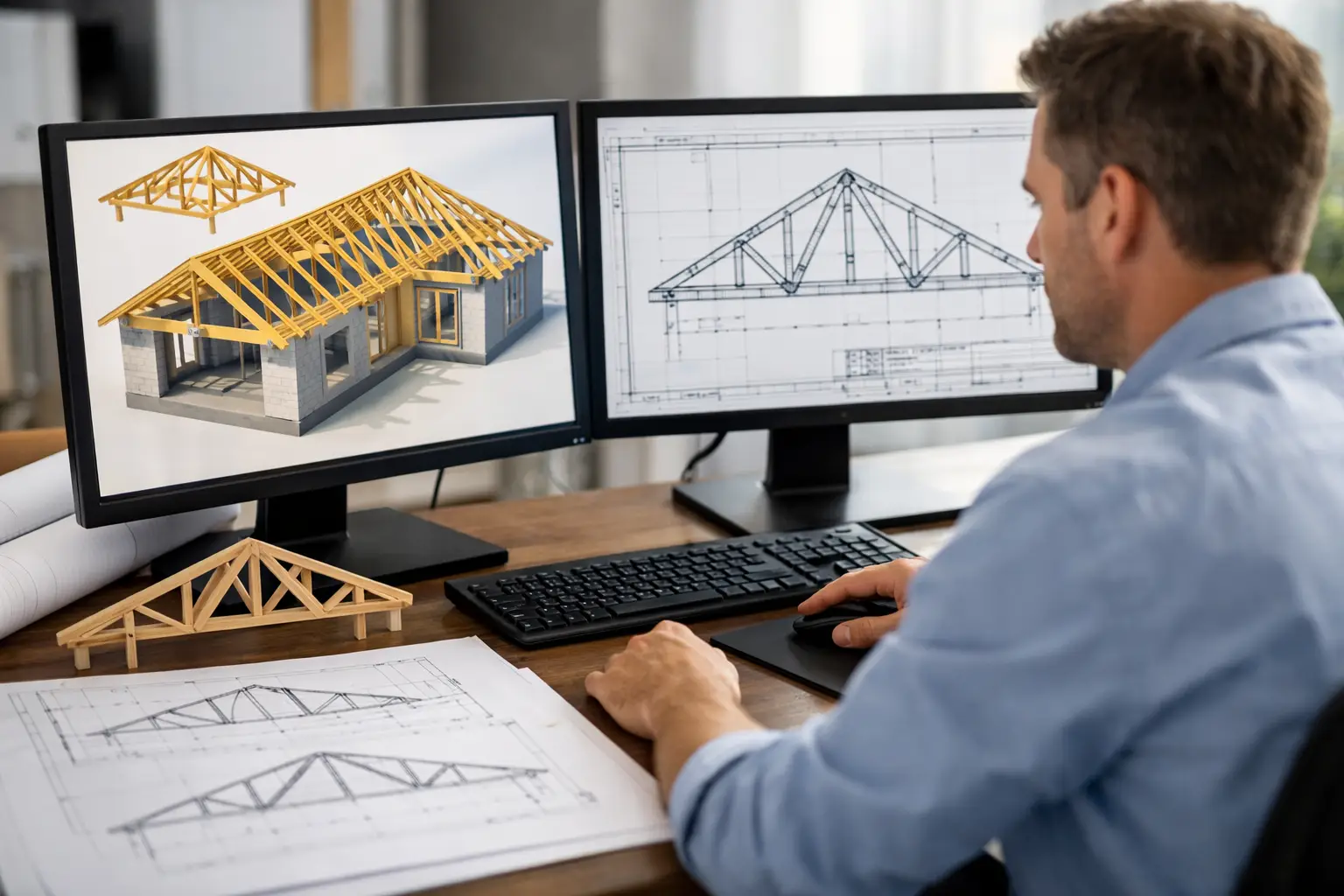
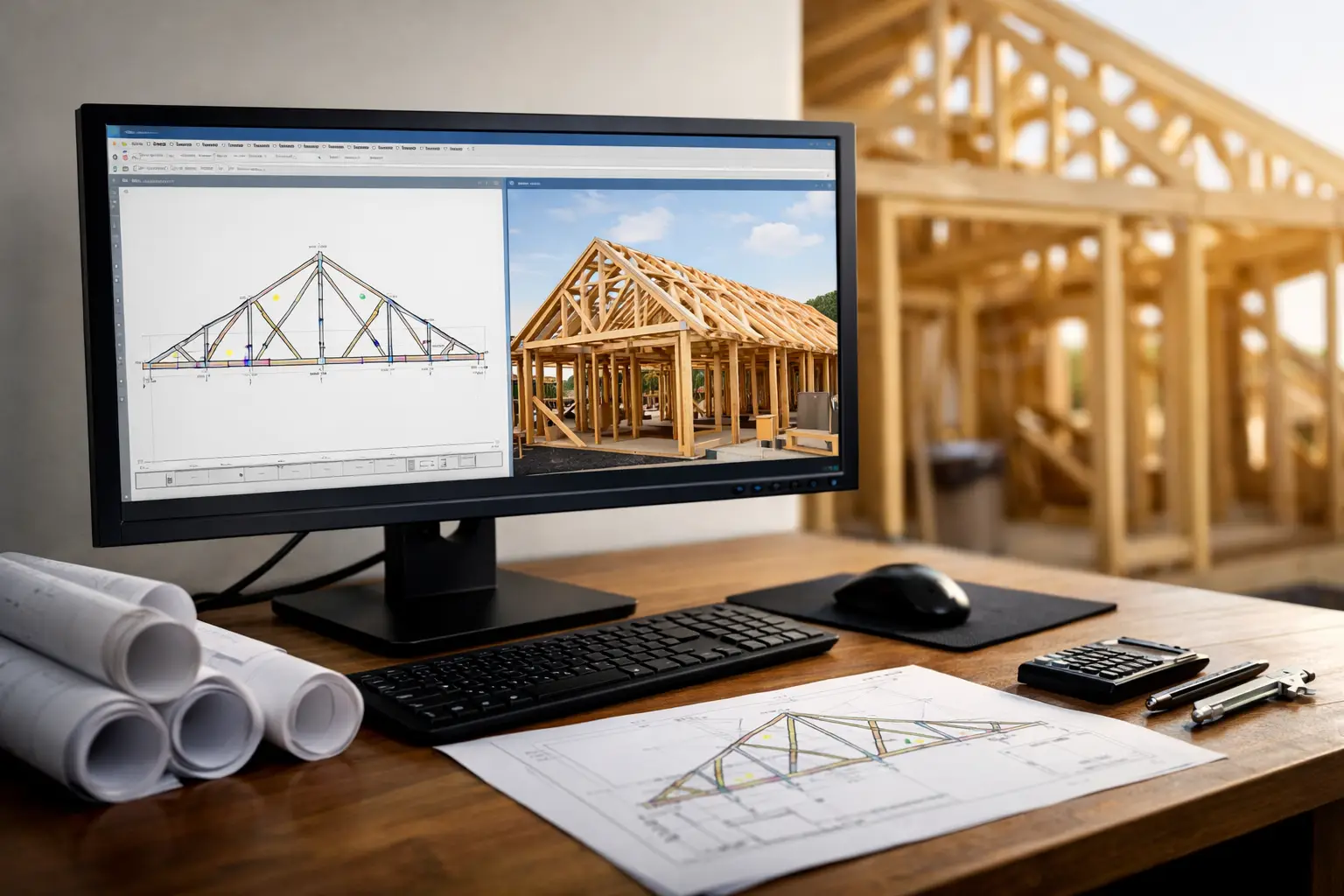
    When a truss queue starts backing up, the problem usually is not software alone. It is throughput. You can have demand in hand, sales pressure building, and plant schedules tightening fast, but if your MiTek truss software designer capacity is limited, everything slows down at once – quoting, engineering handoff, production timing, and customer confidence.

    That is why this topic matters to owners, design managers, and operations leaders. MiTek’s design environment is central to how many component businesses price work, produce layouts, and move jobs toward manufacturing. But the real business question is not whether the platform is capable. It is whether your team can use it at the speed and consistency your market requires.

    Where MiTek truss software designer fits in the real workflow

    In a working truss operation, software is not an isolated tool. It sits inside a chain that starts with incoming plans and ends with production-ready output. A designer has to interpret architectural intent, resolve framing conditions, apply loading assumptions, coordinate profiles, and produce clean, buildable designs. The software supports that process, but judgment still drives it.

    That distinction matters. Many companies talk about software proficiency as if knowing the buttons is enough. It is not. A strong MiTek truss software designer understands how to move from incomplete plan sets to practical component solutions without creating downstream chaos for estimating, manufacturing, or field installation.

    When that skill is present, the software becomes a force multiplier. Designers can process more jobs, recover faster from revisions, and maintain consistency across repeat customers. When that skill is missing, even good software turns into a bottleneck.

    What separates an average designer from a high-output one

    The gap usually shows up in speed, accuracy, and decision quality under pressure. Average designers can complete work when the plans are clean, the loads are straightforward, and the timeline is reasonable. High-output designers perform when the package is messy, the details conflict, and the sales team needs answers now.

    A productive MiTek truss software designer does more than generate truss profiles. They know how to reduce unnecessary back-and-forth, flag structural conflicts early, and keep jobs moving with fewer avoidable revisions. They also understand the production side of the business. If a technically valid design creates manufacturing headaches or field confusion, it is not really a win.

    This is where operational leaders should pay attention. The cost of a weak design function rarely appears in one line item. It shows up as delayed bids, overloaded checkers, rushed corrections, missed delivery windows, and margin erosion that compounds over time.

    The software is powerful, but output still depends on people

    MiTek’s design ecosystem is widely used for good reason. It helps standardize truss design workflows, supports engineered component production, and gives teams a structured way to move jobs from concept to fabrication. For many businesses, it is the backbone of component design operations.

    Still, software does not eliminate staffing risk. If you cannot hire enough qualified designers, or if your experienced people are buried under volume, the platform alone will not protect your pipeline. This is where many truss plants and lumber dealers get stuck. They have the tools, the customers, and the opportunity, but not enough trained capacity to keep pace.

    That is also why the hiring market for this skill set stays difficult. Good truss designers are not generic CAD users. They are specialized production professionals who understand structural logic, software execution, and job flow. Replacing that capability is rarely quick.

    Why MiTek truss software designer capacity affects bid velocity

    Most companies first feel the pain at estimating. A delayed design function slows quoting, and slow quoting costs real revenue. If your team needs accurate layouts, reactions, or material assumptions before they can confidently price a package, then design bandwidth directly affects bid velocity.

    This is not just a sales issue. It is a growth issue. The companies that win more work are often the ones that can turn around more opportunities without sacrificing confidence in the numbers. If your design team is overloaded, you may start filtering which jobs you pursue, stretching lead times, or sending out less competitive bids because there is no time to optimize.

    A capable MiTek truss software designer helps keep that from happening. They improve response time, support more parallel work, and create a more stable bridge between the front end of the business and the plant floor.

    Common breakdowns in truss design operations

    The biggest breakdowns are rarely dramatic. They are repetitive and expensive.

    One is revision drag. Plans change, scope shifts, and customers adjust layouts after work is already underway. If your team does not have enough bandwidth, each revision disrupts the queue and pushes everything else back.

    Another is inconsistent design quality across designers. Two people may both know the software, but one produces cleaner output with fewer callbacks and fewer checker interventions. Over time, those differences impact delivery speed and customer trust.

    Then there is dependency risk. Many operations rely too heavily on a few senior people who carry the difficult jobs, train junior staff, and solve edge cases. That works until volume spikes, someone leaves, or the backlog gets too deep to recover quickly.

    How to evaluate MiTek truss software designer support

    If you are trying to strengthen capacity, look past résumés and software claims. The better question is whether a designer can perform inside your production reality.

    That means understanding what kinds of projects they have handled, how they deal with incomplete information, how much checker support they require, and whether they can work within your standards. It also means looking at consistency. One strong week is not enough. You need repeatable output under real deadlines.

    There is a strong case for trial-based validation here. Before scaling any design resource, test it on live or representative work. Measure speed, accuracy, communication quality, and revision handling. A true production partner should be confident enough to prove capability through execution, not just promises.

    For companies scaling aggressively, flexibility matters too. Demand is not flat. Some months require steady baseline support. Others require surge capacity to keep bids moving or clear backlogs. A rigid hiring model struggles with that. A more elastic staffing approach gives operations leaders room to expand or contract without rebuilding the team every quarter.

    What good implementation actually looks like

    The best setup is not simply adding more designers. It is adding the right designers into a controlled workflow.

    That starts with standards. File expectations, design assumptions, communication protocols, and review steps need to be clear. The faster your process moves, the more dangerous ambiguity becomes. Strong systems make outside or distributed design talent easier to integrate.

    Next comes segmentation. Not every job needs your most senior internal people. If simpler or repeatable design work can be handled by qualified production support, your lead designers can stay focused on difficult projects, customer-facing coordination, and exception management.

    Then there is continuity. Teams perform better when they are not starting from scratch on every assignment. Dedicated support models usually outperform random overflow help because they build familiarity with customer preferences, internal standards, and plant constraints. That is one reason specialized staffing models have become so effective in technical construction production.

    For firms that need fast scale without long recruiting cycles, this is where an experienced partner can create immediate leverage. All Points Technical has built its model around exactly that pressure point – helping construction-related businesses add specialized production capacity in days, not months, with teams that already understand truss and component workflows.

    The trade-off leaders should think through

    There is no single right model for every business. Some companies should continue building in-house teams where local recruiting is working and demand is stable. Others need blended teams because volume is growing faster than hiring can keep up. And some need external production support because the market has already made traditional staffing too slow or too expensive.

    The trade-off usually comes down to control, speed, and cost. Internal hiring can offer strong cultural alignment, but it often comes with longer timelines and higher fixed overhead. External technical staffing can increase speed and flexibility, but only if the provider understands your industry deeply enough to deliver real production value.

    That last point is the key. General staffing is not the answer to specialized design bottlenecks. If the work depends on MiTek fluency, truss logic, and construction production discipline, your support model has to match that level of specialization.

    Why this role stays mission-critical

    The market does not reward businesses for having software licenses. It rewards businesses that turn demand into output. That is why the MiTek truss software designer role remains so critical. It sits at the point where opportunity becomes production, and where growth either accelerates or stalls.

    If you are reviewing your operation, do not ask only whether your team has the right software. Ask whether you have enough proven design capacity to protect bid speed, maintain quality, and keep the plant fed when volume rises. That is the question that moves margins.

    The companies that keep winning are usually not guessing here. They treat design capacity as a strategic asset, build around it early, and refuse to let staffing friction cap their growth.


  • Using AI for Material Estimates Right

    Using AI for Material Estimates Right

    Bad estimates do more than miss a number. They choke bid volume, erode margin, tie up senior staff in rework, and create avoidable friction between sales, operations, purchasing, and production.

    That is why using AI for material estimates is getting real attention across construction. Not because it is trendy, but because estimating teams are under pressure to move faster without getting sloppy. If you are a lumber dealer, truss plant, component manufacturer, builder, or GC, the question is no longer whether AI can help. The real question is where it adds speed, where it adds risk, and what kind of operation can actually use it without creating a bigger cleanup job downstream.

    What using AI for material estimates actually means

    For most construction businesses, AI is not a magic estimator that replaces human judgment. It is a layer of automation and pattern recognition that helps teams process drawings, identify assemblies, extract quantities, flag inconsistencies, and accelerate repetitive estimating work.

    In practice, that can mean reading plan sets faster, recognizing framing conditions, suggesting material quantities based on prior jobs, or surfacing scope gaps before they become change orders. It can also help standardize output across estimators, which matters when bid volume is high and your team is stretched.

    The strongest use case is not full autonomy. It is controlled acceleration. AI does the first pass on the heavy repetition, then an experienced estimator or technical reviewer applies job knowledge, local practice, customer requirements, and buildability logic.

    That distinction matters. Material estimating is not just counting. It is interpretation. The plans may be incomplete. The specs may conflict with the drawings. Product substitutions may change waste factors. Regional framing preferences may affect package size and takeoff logic. AI can move quickly through data, but it does not own the commercial risk. Your business does.

    Where AI helps most in the estimating workflow

    The clearest gains show up in high-volume environments where teams process similar project types over and over. Think residential framing packages, truss and component estimates, commercial quantity extraction, and repeatable takeoff scopes tied to standard assemblies.

    AI is especially useful at the front end. It can classify sheets, identify likely scope areas, extract text from schedules, compare drawing revisions, and organize information that estimators usually spend hours hunting down manually. That alone can compress turnaround time.

    It also helps with consistency. A good AI-assisted workflow can reduce the variance between different estimators handling similar jobs. If one estimator carries certain assumptions and another misses them, margin gets unstable. AI can support a more repeatable starting point.

    Then there is throughput. When hiring is slow and experienced estimators are hard to find, AI can let senior people focus on the decisions that actually require senior judgment. Instead of spending half the day on manual quantity extraction, they spend it reviewing exceptions, validating scope, and turning bids faster.

    For companies trying to increase bid capacity without adding overhead at the same pace, that is where AI becomes commercially useful.

    Where using AI for material estimates breaks down

    This is where a lot of hype falls apart.

    AI struggles when the source information is messy, incomplete, or highly custom. If the plans are low quality, if key notes are buried in inconsistent sheets, or if the project includes unusual structural conditions, the model may produce confident output that is still wrong.

    That is dangerous because speed can create false confidence. A bad estimate delivered fast is not operational progress. It is just a faster way to lose money.

    AI also has trouble with business-specific logic. Every supplier, manufacturer, and contractor has its own quoting rules, preferred products, waste assumptions, labor conventions, and customer expectations. Unless the system is tuned to your workflow, it may generate numbers that look clean on paper but do not match how your team actually buys, builds, or bids.

    The same goes for code interpretation and constructability nuance. AI can identify patterns from past data, but it does not replace a professional who understands how real jobs go sideways. Experienced estimators catch things because they have seen them before in production, in the field, or in the submittal process. That knowledge does not disappear because a model can parse PDFs quickly.

    The real operating model: AI plus trained estimators

    The companies getting the best results are not handing estimating over to software. They are building a production model around AI-assisted teams.

    That model usually starts with a defined scope. Which estimate types are repeatable enough for AI support? Which inputs are standardized? Which outputs need human signoff? If those rules are fuzzy, performance will be inconsistent.

    Next comes workflow design. AI should sit inside a process that includes intake review, drawing normalization, quantity extraction, exception handling, and final estimator validation. The point is not to automate everything. The point is to shorten the low-value work and protect the high-value decisions.

    Then comes staffing. This is the part many firms underestimate. AI works better when supported by technically trained production teams who understand construction documents, material logic, and estimating software. Without that layer, the burden just shifts back to your senior staff.

    That is why AI often delivers the strongest return when paired with dedicated technical resources who can run first-pass production, manage data hygiene, and keep work moving across time zones. You do not just need a tool. You need a machine around the tool.

    What to fix before you invest heavily

    If your estimating operation is already inconsistent, AI will expose it.

    Start with your inputs. Standard drawing intake, file naming, scope definitions, and revision control matter more than most teams want to admit. If estimators are working from different assumptions or pulling from disorganized plan sets, no software layer will solve the underlying issue.

    Then look at your historical data. AI systems learn and improve from patterns, but only if the prior estimates and actual outcomes are clean enough to trust. If your job history is fragmented or your closeout data never connects back to the estimate, the feedback loop is weak.

    Finally, define review thresholds. Decide what AI can draft, what requires estimator validation, and what always stays fully manual. Simple, repetitive packages may be ideal for AI support. One-off projects with unusual structural complexity may still need a traditional estimating path.

    This is not a weakness. It is operational discipline.

    What decision-makers should ask before rolling it out

    Do not ask whether the tool is impressive. Ask whether it improves bid velocity without increasing downstream corrections.

    Ask how it handles incomplete drawings, revision comparisons, alternates, and scope gaps. Ask whether it can align with your existing estimating platforms and production process. Ask how much human review is still required and who owns that review. Ask how performance will be measured – not just speed, but estimate accuracy, win rate, margin protection, and rework reduction.

    Most of all, ask whether your team has the bandwidth to implement it properly. Even strong technology fails when no one owns the workflow.

    For many companies, the better move is not building an internal AI estimating experiment from scratch. It is partnering with a specialized production team that already understands the construction side, the software side, and the operational side. That is where execution separates itself from theory.

    All Points Technical has built its reputation in exactly that gap – helping construction businesses scale technical output without waiting months to recruit scarce domestic talent. In an AI-assisted estimating environment, that kind of production depth matters even more.

    The bottom line on AI and estimating

    Using AI for material estimates can absolutely create an edge. It can reduce turnaround time, support higher bid volume, and free up senior estimators for work that actually protects margin. But only when it is deployed inside a disciplined estimating operation with trained people reviewing the result.

    If you treat AI like a shortcut, it will punish you. If you treat it like a force multiplier, it can change the economics of your estimating department.

    The winners will not be the companies with the flashiest software demo. They will be the ones that combine smart automation, clean process, and experienced technical talent to produce more estimates, with fewer misses, at a speed their competitors cannot match.

  • BIM Modeling Outsourcing That Scales

    BIM Modeling Outsourcing That Scales

    When a project pipeline expands faster than your hiring pipeline, BIM becomes a bottleneck. Models stall, coordination slips, RFIs pile up, and your senior team starts spending time on production instead of decisions. That is where bim modeling outsourcing stops being a cost conversation and becomes an operations strategy.

    For construction firms, fabricators, design teams, and building product companies, the issue is not whether BIM matters. It does. The real question is whether you can keep BIM production moving at the speed your business needs without overloading local staff or waiting months to recruit specialized talent. In many cases, outsourcing is the fastest path to more output, better coverage, and stronger margins.

    Why BIM modeling outsourcing is gaining ground

    Most firms do not struggle because they lack software. They struggle because experienced BIM talent is hard to hire, expensive to retain, and rarely available exactly when workload spikes. Demand is uneven. One quarter is manageable, the next quarter is packed with deadlines, revisions, and coordination demands across multiple active jobs.

    Traditional hiring does not solve that fast enough. Even when you find the right person, onboarding takes time, and one hire rarely fixes a production bottleneck across estimating, modeling, clash review, sheet setup, and revisions. BIM modeling outsourcing gives firms a way to add capacity without building a larger fixed payroll every time the market gets busy.

    That matters most when speed drives revenue. If your team can produce more models, more shop drawings, more coordinated sets, or more bid support in less time, you can pursue more work without weakening execution. That is the business case.

    What good outsourcing actually looks like

    The best outsourcing models are not anonymous drafting farms. They function like an extension of your production team, with trained specialists working inside your standards, software stack, file protocols, and review process.

    That distinction matters. Plenty of firms have had a bad outsourcing experience because they bought labor instead of a workflow. The result is familiar: inconsistent families, poor naming conventions, coordination misses, rework, and a local team that has to spend extra time fixing deliverables. That is not scale. That is outsourced cleanup.

    A strong BIM outsourcing partner starts with process discipline. They align to your modeling standards, your level of development requirements, your turnaround expectations, and your QA checkpoints. They also understand the construction context behind the model. A technically clean model that ignores fabrication constraints or field sequencing is still a weak deliverable.

    For decision-makers, this is the shift to look for: not just lower hourly cost, but dependable production capacity that protects schedule and reduces internal strain.

    Where bim modeling outsourcing delivers the most value

    Not every BIM task should leave your office. That is the wrong mindset. The better approach is to separate strategic work from scalable production work.

    Internal teams are usually best used for client-facing coordination, design intent decisions, high-risk reviews, and issue resolution with project stakeholders. Outsourced teams are often strongest in repeatable, high-volume technical production such as model creation, drafting support, Revit production, sheet generation, clash preparation, content updates, and revision cycles.

    This split gives senior staff more room to lead while production keeps moving. It also helps firms avoid a common profitability problem: using high-cost domestic talent for work that can be completed accurately by a dedicated external team at a lower delivery cost.

    The biggest wins usually show up in four areas: workload surge support, extended time-zone coverage, lower production cost per project, and improved bid capacity. If your business wins work in bursts, or if deadlines compress near submittal, those gains are not minor. They can directly affect whether you keep jobs on track and whether you have the confidence to take on more.

    The trade-offs leaders should evaluate

    BIM modeling outsourcing is not magic, and it is not a fit for every situation.

    If your internal standards are vague, your markups are inconsistent, or your PMs change direction constantly without documentation, outsourcing can expose those weaknesses fast. External teams need clarity. When the client-side process is chaotic, the results will be inconsistent no matter how skilled the production team is.

    There is also a ramp-up curve. Even strong partners need time to learn your templates, expectations, and review habits. That is why trial work and phased onboarding matter. Start with a manageable package, validate quality, refine communication, then scale.

    Security, file control, and communication cadence also matter. Firms handling sensitive projects or highly customized workflows need tighter controls. That does not mean outsourcing is off the table. It means the delivery model has to be built deliberately, with defined permissions, version control, and review ownership.

    The companies that benefit most are usually the ones that treat outsourcing as a managed production system, not an emergency handoff.

    How to choose a BIM modeling outsourcing partner

    The first filter is industry specialization. A team that understands construction production will outperform a generalist resource pool every time. Software proficiency matters, but context matters more. You need people who understand what the model is for, who will use it next, and what errors create downstream cost.

    The second filter is process maturity. Ask how work is assigned, reviewed, revised, and delivered. Ask how the team handles standards, QA, schedule shifts, and communication overlap with your office. If the answer is vague, expect friction later.

    The third filter is scalability. One freelancer may help with a short-term overflow problem, but that is not the same as having access to a structured team that can grow with your backlog. If your volume changes, your partner should be able to scale up or down without forcing you into a fresh recruiting cycle.

    The fourth filter is proof. Trial work is one of the most practical ways to reduce risk. It shows how well a team follows direction, how quickly they adapt to standards, and how much management effort is required from your side. Good outsourcing should reduce operational drag, not create more of it.

    BIM modeling outsourcing and margin protection

    Most firms first look at outsourcing through labor rate comparisons. That is understandable, but incomplete.

    The larger opportunity is margin protection through throughput. If outsourcing helps you turn around production faster, avoid missed deadlines, reduce overtime, and pursue more bid opportunities, the financial impact goes well beyond wage savings. Capacity has value. Predictability has value. A production engine that keeps running across time zones has value.

    This is especially true for firms stuck in a cycle of turning down work, overworking core staff, or hiring reactively after the backlog is already hurting delivery. Those are expensive patterns. BIM modeling outsourcing creates a more flexible operating model, where production can expand without requiring permanent overhead every time demand rises.

    That does not mean every outsourced hour is automatically cheaper in practice. If oversight is poor or scopes are badly defined, rework can erase savings. But when the model is structured correctly, outsourced BIM support becomes a lever for better cost control and stronger project economics.

    What a smart rollout looks like

    The safest way to begin is not with your most complex project. Start with a defined scope, documented standards, and measurable output targets. Set review checkpoints early. Tighten communication. Evaluate not just technical accuracy, but responsiveness and consistency.

    Once the workflow is proven, expand into recurring production tasks and then into larger program support. This staged approach gives your team confidence while building a repeatable system. It also reveals whether the partner can truly operate as a dependable extension of your business.

    Companies like All Points Technical have built entire delivery models around this reality: clients do not just need labor, they need trained production teams that can get up and running fast, work inside real construction workflows, and scale with demand without months of hiring friction.

    The firms that win with outsourcing are usually not the ones chasing the lowest rate. They are the ones building a better operating model – one that keeps BIM production aligned with growth instead of letting staffing constraints dictate the pace of the business.

    The bottom line on BIM modeling outsourcing

    If BIM output is limiting your ability to bid, coordinate, fabricate, or deliver on time, the answer may not be another round of recruiting. It may be a better production structure.

    BIM modeling outsourcing works when it gives you more capacity, more control, and more speed without lowering technical standards. That requires the right partner, clear workflows, and disciplined onboarding. Get those pieces right, and outsourcing stops being a backup plan. It becomes a serious growth tool.

    The strongest construction businesses are not waiting for the labor market to fix their capacity problem. They are building systems that let them move now.

  • Commercial Construction Detailing Support That Scales

    Commercial Construction Detailing Support That Scales

    A detailing backlog does not show up politely. It hits when bid volume is up, RFIs are stacking, field teams need answers now, and your senior people are already covering too much ground. That is exactly where commercial construction detailing support becomes a growth lever instead of a nice-to-have. When detailing capacity is tight, schedules slip, coordination suffers, and margin starts bleeding in places most firms do not catch until the project is already under pressure.

    For commercial contractors, fabricators, specialty trades, and engineering-driven construction teams, detailing is not just documentation. It is production. It drives procurement, fabrication, sequencing, installation, and coordination across disciplines. If the detailing function is understaffed or inconsistent, the entire operation slows down.

    Why commercial construction detailing support matters more now

    The labor shortage is only part of the story. The bigger issue is specialization. Commercial detailing work now sits at the intersection of design intent, constructability, software fluency, and deadline discipline. You need people who can work inside live project environments, understand how details affect field execution, and produce output that supports downstream teams instead of creating rework.

    That is getting harder to build internally. Hiring locally for experienced detailers can take months. Training junior staff takes longer. Meanwhile, projects do not pause. Owners still expect aggressive schedules, estimators still need capacity to pursue more work, and operations leaders still need predictable output.

    This is where commercial construction detailing support earns its keep. The right support model gives you trained production capacity without forcing your business into a long recruiting cycle or a fixed overhead commitment that does not match your pipeline.

    What good detailing support actually delivers

    A lot of firms think about support in terms of labor hours. That is too narrow. Strong detailing support should improve throughput, not just add hands.

    At a practical level, that means producing accurate, production-ready drawings and models that align with your standards, software environment, and review process. It also means understanding submittal cycles, revision control, coordination workflows, and the very real cost of incomplete information.

    In commercial work, the details matter because every gap gets paid for somewhere. A poorly resolved connection, an unclear section, or a coordination miss between trades can trigger field delays, change exposure, or fabrication waste. Support only creates value when it reduces those risks while helping your team move faster.

    That is why the best partners are not generic drafting vendors. They are specialized technical production teams that understand how commercial construction actually works.

    Capacity is the obvious win

    If your in-house team is solid but overloaded, external support lets you expand output fast. You can clear drawing backlogs, keep up with project demand, and avoid forcing senior staff into constant overtime.

    This matters most when work volume is uneven. Some months you need a full bench. Other months you do not. A flexible support model lets you scale around active demand instead of staffing permanently for peak load.

    Speed matters, but control matters more

    Fast output is valuable only if it fits your workflow. The support team should be able to follow your redline process, naming conventions, software standards, and communication cadence. If every deliverable needs a full rebuild after review, you did not solve a capacity problem. You just moved it.

    That is the trade-off many firms miss. The lowest-cost resource is not always the best fit. Commercial detailing support has to be operationally aligned, not just technically available.

    Where firms usually break down

    Most detailing bottlenecks come from one of three issues. The first is reliance on a handful of key people. When tribal knowledge sits with two senior detailers, every vacation, resignation, or urgent project becomes a business risk.

    The second is inconsistent workload. Internal teams get flooded during award spikes and sit underused when projects taper. That creates a margin problem either way. You are either understaffed and missing opportunities, or overstaffed and carrying unnecessary fixed cost.

    The third is a mismatch between project complexity and available talent. Commercial projects often require people who can think beyond drafting. They need to understand assemblies, tolerances, coordination logic, and build sequence. If your available labor can model but not interpret, production slows and review cycles expand.

    Commercial construction detailing support works best when it addresses all three. It should reduce dependency on key individuals, flex with changing volume, and give you access to people who are productive in real-world construction environments.

    How to evaluate commercial construction detailing support

    If you are considering outside detailing capacity, the first question is not price. It is fit.

    Start with discipline-specific experience. Commercial work is broad, and not every detailing team can handle every scope equally well. Review whether the provider has experience in your exact lane, whether that is structural detailing, architectural drafting, BIM production, deck design, or trade-specific detailing.

    Then look at software depth. Familiarity with CAD, Revit, and BIM tools is baseline. What matters more is whether the team can work inside your systems without slowing down your existing operation.

    The next checkpoint is process maturity. Ask how teams are onboarded, how quality is validated, how revisions are tracked, and how capacity is scaled. If the answer is vague, expect friction.

    Finally, test before you commit too deeply. A trial scope tells you more than a polished sales pitch. You will see communication quality, turnaround speed, adherence to standards, and how much oversight the team really requires.

    That trial stage is where experienced partners separate themselves. They know buyers are not looking for promises. They are looking for proof.

    The offshore and hybrid question

    Some firms still hesitate around offshore production support. That hesitation is understandable. Bad outsourcing models created a lot of distrust in this industry.

    But the question is not offshore versus domestic in the abstract. The question is whether the team is specialized, managed well, and structured to support your operation. A strong global delivery model can give you meaningful advantages. It can reduce labor cost pressure, extend production hours across time zones, and give you access to trained technical staff in hard-to-fill roles.

    It also comes with requirements. You need clear standards, defined review loops, and leadership that understands both technical production and client-side accountability. Without those controls, lower cost can disappear fast through rework and delays.

    That is why hybrid models often work well. Core client-facing leadership and process ownership stay tightly aligned with the customer, while trained production teams expand execution capacity behind the scenes. When done right, that model increases output without weakening control.

    What high-performing firms do differently

    The firms that get the most out of detailing support do not treat it as emergency overflow forever. They build it into their operating model.

    They define standards early. They document workflows. They decide what should stay internal and what can be delegated. They use outside support to protect core staff from routine overload, expand bid capacity, and keep project delivery moving during peak demand.

    They also measure the right things. Not just hourly cost, but turnaround time, revision rate, throughput, and impact on awarded work. That is how detailing support becomes a strategic production function instead of a temporary patch.

    In practice, that can mean using external teams for repeatable production work while senior in-house staff focus on complex coordination, client communication, and final technical review. It can also mean standing up dedicated support that grows with the business, rather than scrambling every time volume spikes.

    For companies trying to scale without adding hiring friction, that approach is hard to ignore. It is one reason specialized partners like All Points Technical have gained traction with firms that need output fast, need quality to hold, and cannot afford months-long recruiting cycles.

    The real business case

    Commercial construction detailing support is not about replacing your team. It is about protecting your operation from capacity failure.

    When detailing stalls, the cost is bigger than delayed drawings. You lose bid opportunities, stretch internal leaders too thin, increase burnout risk, and create production instability across the business. Those are growth problems, margin problems, and customer experience problems all at once.

    The right support model gives you another path. It helps you add technical production capacity when you need it, hold quality standards under pressure, and keep the business moving without waiting for the local hiring market to cooperate.

    That does not mean every firm needs the same setup. Some need occasional surge support. Some need a dedicated team. Some need discipline-specific help tied to one software environment and one review chain. It depends on project mix, internal bench strength, and growth goals.

    But one point is clear: if detailing capacity is limiting your bids, your schedule, or your margins, that is no longer a back-office issue. It is an operational constraint worth fixing decisively.

    The strongest construction businesses do not wait for bottlenecks to become damage. They build capacity before the next wave of work makes that decision for them.

  • Architectural Deck Design Services That Scale

    Architectural Deck Design Services That Scale

    A deck package should not be the reason a permit stalls, a bid slips, or a project manager starts chasing revisions at 6:30 p.m. Yet that is exactly what happens when architectural deck design services are treated like overflow drafting instead of a production function tied directly to schedule, margin, and client confidence.

    For builders, dealers, and design-driven construction teams, deck work sits in an awkward space. It looks straightforward until it is not. One job needs a clean permit set for a simple rear addition. The next includes multi-level geometry, custom stairs, roof transitions, drainage considerations, railing coordination, and code-driven details that vary by jurisdiction. The workload spikes fast. Internal teams get stretched. Turn times suffer. The sales side feels it first.

    Why architectural deck design services matter more than most teams expect

    Most companies do not lose money on deck design because one drawing is expensive. They lose money because inconsistent production slows everything around it. Estimating waits on usable documents. Sales cannot move from concept to quote with confidence. Operations inherits avoidable RFIs. Field crews spend time interpreting intent instead of building.

    Good architectural deck design services fix that by turning deck design into a repeatable, scalable workflow. That means design output is not dependent on whichever in-house person happens to have time this week. It means details are produced with the same logic every time, software standards stay intact, and review cycles become manageable instead of chaotic.

    That matters most when demand is uneven. Many construction businesses do not need another full-time local hire for deck design year-round. They need dependable capacity when jobs stack up, and they need it without carrying overhead during slower periods. That is where a specialized production partner changes the economics.

    What strong deck design services actually include

    Architectural deck design services should do more than put lines on a page. If the output is going to support permits, client approvals, coordination, and downstream production, the scope has to be practical.

    At a minimum, the service should cover plan development, elevations, section details, framing layouts, stair and railing coordination, and document organization that fits how your team builds and reviews. Depending on the project, it may also include concept support, redraws from marked-up plans, revisions for municipal comments, and drafting aligned to internal standards.

    The right level of service depends on your business model. A lumber dealer supporting multiple outside builders may need fast-turn permit-ready packages with disciplined formatting and repeatable details. A design-build contractor may need more front-end collaboration to move a customer from idea to signed job. A manufacturer or structural-focused team may need deck plans that coordinate tightly with truss, component, or broader framing workflows.

    That is the key distinction. Architectural deck design services are valuable when they fit the way your operation actually sells and builds. A beautiful drawing that does not support your process is still a production problem.

    Where bottlenecks usually show up

    Most deck design bottlenecks are not caused by lack of effort. They come from three predictable pressure points.

    The first is fragmented ownership. Sales gathers rough inputs, someone in design interprets them, another person cleans up the file, and a manager reviews it late because higher-priority work got in the way. Every handoff introduces delay and inconsistency.

    The second is hiring friction. Skilled technical production talent is hard to find, harder to train, and expensive to keep underutilized. If your deck volume rises and falls with seasonality or market demand, building a local bench for every specialty can hurt margins as much as understaffing hurts throughput.

    The third is software and standards inconsistency. Even experienced drafters can create headaches if file setup, layer use, annotation logic, and construction detailing vary from one job to the next. Review time expands because managers are correcting production habits, not evaluating design intent.

    These are operational issues, not creative ones. That is why the fix is usually not “find a better drafter.” The fix is a delivery model built for volume, standards, and speed.

    When outsourcing deck design makes business sense

    Not every company should outsource every deck package. If your in-house team has stable capacity, low turnover, and enough specialized bench strength to absorb peaks, keeping production internal may be the right move.

    But that is not the reality for many growing construction businesses. If your backlog is healthy, bid demand is rising, and technical recruiting keeps slowing expansion, outsourced architectural deck design services can be the faster path.

    The strongest use cases are clear. You need to increase bid capacity without waiting months to hire. You need overnight or extended-hour production support. You need to protect internal senior staff from getting buried in routine drafting. Or you need a trialable way to add capacity before committing to permanent headcount.

    This is also where trade-offs matter. Outsourcing works best when the partner understands construction production, not just drafting software. A low-cost drafting vendor may generate files, but if they do not understand buildability, code-sensitive details, revision flow, or discipline-specific expectations, you may save on hourly rate and lose on rework.

    What to look for in an architectural deck design partner

    The first requirement is specialization. Deck design is adjacent to broader architectural drafting, but it is not identical. You want a team that understands framing logic, stair geometry, structural coordination, and the practical needs of permit and construction documents.

    The second is onboarding speed. If a provider needs months to understand your templates, standards, and review process, they are not solving your capacity problem. The right partner gets productive quickly, proves quality through real work, and scales with demand.

    The third is operational flexibility. Some weeks you need two projects turned fast. Other weeks you need a steady pipeline. Your provider should be able to support both without forcing a rigid staffing model that does not match your workload.

    The fourth is quality control. Ask how work is checked, how revisions are tracked, who owns standards compliance, and how communication flows when comments come back. Strong production teams do not rely on heroics. They run on process.

    This is where an industry-specific partner stands apart. All Points Technical built its model around technical construction production, not generic outsourcing. That difference matters when the goal is to increase output without creating another layer of management burden.

    How architectural deck design services improve margin and bid velocity

    Most buyers initially think about labor savings. That matters, but it is only part of the value.

    Faster architectural deck design services increase bid velocity because your team can move from intake to usable documents without stalling. That keeps sales momentum alive. It improves close rates because customers are not waiting while competitors respond faster.

    Better production consistency also protects margin. Fewer redraws mean less non-billable management time. Cleaner plans reduce back-and-forth between estimating, sales, and operations. More predictable review cycles let senior staff focus on higher-value tasks like approvals, client relationships, and complex exception handling.

    There is also a capacity advantage. When your design pipeline is no longer capped by local hiring constraints, you can pursue more work with confidence. That changes growth planning. Instead of saying no to overflow or slowing intake to protect the team, you can scale production to meet demand.

    The best model is usually hybrid, not all-or-nothing

    For many companies, the smartest setup is a hybrid one. Keep client-facing design judgment, approvals, and edge-case decisions in-house. Push repeatable production, drafting, revisions, and volume work to a specialized external team.

    That model protects control while removing the workload that typically clogs the system. It also gives you options. You can scale support up during peak season, pull it back when volume softens, and avoid locking your cost structure to a demand curve that changes month to month.

    It depends on your internal maturity. If your standards are documented and your review process is disciplined, outsourcing can ramp quickly. If everything lives in one senior designer’s head, any external support will struggle until your process is cleaned up. The service can still help, but the business has to be ready to use it well.

    Architectural deck design services are not just about drafting support. They are a lever for faster throughput, stronger margins, and fewer growth bottlenecks. If deck work keeps piling up, the right move is not to ask your current team to work harder. It is to build a production model that can actually keep up.

  • Construction Staffing Shortage Solutions

    Construction Staffing Shortage Solutions

    A truss plant wins more work than expected, then hits the wall in two weeks. Estimating backs up. Design queues grow. PMs start triaging instead of producing. That is exactly where construction staffing shortage solutions stop being an HR topic and become an operations priority.

    For most construction businesses, the shortage is not just about headcount. It is about specialized headcount in the roles that control throughput – truss design, component modeling, estimating, BIM production, detailing, drafting, and project support. When those seats stay open, bid volume drops, turnaround slows, overtime rises, and margins get squeezed from both sides.

    The companies that handle this well are not waiting for the local labor market to fix itself. They are redesigning how production gets done.

    Why the old hiring playbook is breaking down

    If you are trying to solve a technical production bottleneck with the same recruiting model you used ten years ago, the math is working against you. Niche design and estimating roles take longer to fill, cost more to recruit, and often require software fluency that is hard to verify in a resume screen. By the time you find the right person, your pipeline may have already shifted.

    There is also a capacity mismatch built into traditional hiring. Most firms hire for average demand, then scramble when volume spikes. That creates a familiar cycle: undercapacity during busy periods, overstaffing risk during slow periods, and constant pressure on the people you already trust.

    The result is not just stress. It is lost revenue. If your team cannot price, design, model, or detail work fast enough, you cannot convert opportunities at the rate your market will support.

    The most effective construction staffing shortage solutions

    Strong construction staffing shortage solutions do not start with a job post. They start with a hard look at where production gets stuck and what kind of talent actually moves the constraint.

    For some businesses, the constraint is estimating. They have demand, but not enough estimators to turn drawings into quotes fast enough. For others, the bottleneck is technical design – truss layouts, panel modeling, shop drawings, steel or wood detailing, CAD cleanup, or BIM coordination. In larger operations, the issue may be management bandwidth, where senior people are spending too much time on repeatable production work instead of customer-facing decisions.

    That is why the best solution is usually a blended model, not a single hire.

    1. Build around production roles, not generic labor categories

    A lot of firms say they need “more people” when what they really need is more output in one or two high-impact disciplines. That distinction matters. Hiring a general drafter will not solve a truss design backlog. Hiring a coordinator without software depth will not fix a BIM production issue.

    The first move is role precision. Define the exact technical function, software stack, expected daily output, and review path. If a new team member cannot plug into live work quickly, you are not solving the shortage. You are just moving the delay.

    2. Use dedicated remote or offshore technical teams where the work allows it

    This is where many firms are still leaving capacity on the table. Not every role needs to sit in your office to deliver value. Design support, estimating, CAD production, detailing, BIM modeling, and documentation workflows can often be handled by trained remote teams with the right process, QA structure, and communication rhythm.

    The trade-off is straightforward. You gain speed, scalability, and cost control, but only if the provider knows your sector, your standards, and your software environment. Generic staffing firms tend to fail here because they understand placement, not production. Construction businesses need partners who understand wall panels, trusses, takeoffs, structural sheets, RFIs, submittals, and the pace of a live backlog.

    When done right, this model does more than reduce labor pressure. It can extend your operating day across time zones and keep work moving while your domestic team is offline.

    3. Separate core leadership from scalable execution

    A common mistake is trying to hire every role as if it were equally strategic. It is not. Your senior estimator, lead designer, operations manager, and client-facing PM carry institutional judgment that should stay close to the business. But many supporting tasks around them are repeatable, trainable, and scalable.

    That creates a better staffing architecture. Keep the high-leverage decision-makers in-house. Surround them with flexible technical production capacity that can scale with demand. That model protects quality while increasing throughput.

    What good staffing strategy looks like in real operations

    The strongest operators treat staffing like capacity planning. They do not wait until a backlog becomes a crisis. They map production stages, identify where margin gets stuck, and assign talent based on speed-to-output.

    In practical terms, that means reviewing a few hard questions.

    Where are projects slowing down right now? Which role is creating the longest queue? Which tasks truly require local staff, and which can be standardized and handed off? How much revenue is delayed because work is sitting unquoted, undesigned, or undetailed?

    Those answers usually point to one of three staffing paths.

    The first is direct hiring when the role is leadership-heavy, highly relational, or deeply embedded in field operations. The second is contract or contract-to-hire support when demand is real but not yet stable enough for a permanent seat. The third is a dedicated remote production model when the business needs immediate throughput in technical disciplines and wants flexibility without the full burden of domestic recruiting.

    No single path wins every time. It depends on your volume, complexity, review structure, and growth horizon.

    How to evaluate construction staffing shortage solutions without wasting months

    Speed matters, but bad speed is expensive. If you bring in talent that cannot hit your standards, your senior team becomes the cleanup crew. That defeats the point.

    Start with trial work or a controlled onboarding scope. Give candidates or teams a real sample of the work they would own – not a generic skills conversation. That might be a truss package, a takeoff set, a BIM modeling segment, or a detailing task tied to your standards. You need proof of production, not just proof of experience.

    Then assess three things. First, technical accuracy. Second, communication discipline. Third, how much supervision is required before useful output appears. Fast scaling only works when quality holds.

    This is one reason specialized partners outperform broad labor vendors in construction-adjacent technical roles. They know what success looks like before the first file is assigned.

    The margin story most companies miss

    Labor shortages are usually discussed as a hiring problem. In reality, they are a margin problem.

    When estimating slows, bid volume drops. When design slows, production gets delayed. When detailing falls behind, downstream teams wait. When key people stay overloaded, errors rise and retention gets worse. The cost is not limited to payroll. It shows up in missed opportunities, compressed schedules, rework, and leadership distraction.

    That is why effective construction staffing shortage solutions should be measured against business outcomes, not just hourly rates. Are you bidding more jobs? Turning work faster? Reducing backlog age? Protecting gross margin? Freeing up senior staff to handle higher-value decisions?

    Those are the numbers that matter.

    For many firms, a blended staffing model produces the strongest result because it aligns labor cost with actual production demand. You avoid the drag of carrying too much fixed overhead, while still having access to trained technical capacity when the market moves.

    What to look for in a staffing partner

    If you go outside your local hiring market, choose a partner built for construction production, not generic talent supply. The difference is huge.

    You want industry specialization, software fluency, clear QA procedures, flexible scaling, and a process that gets teams up and running in days, not months. You also want a provider that understands this is not about filling seats. It is about increasing bid capacity, maintaining throughput, and keeping standards intact under pressure.

    That is the real benchmark. Not whether a resume looks strong, but whether the work gets done accurately, consistently, and at the speed your pipeline demands.

    All Points Technical built its model around exactly that reality: specialized technical teams for construction businesses that need output now, not after a six-month recruiting cycle.

    The shortage is real, and it is not disappearing soon. But the companies that win through it are not the ones waiting for talent to show up locally. They are the ones building smarter capacity, protecting their core team, and treating staffing as a growth system instead of a recurring emergency.

    The smartest next move is usually not hiring more the old way. It is building a production model that can keep up with the work you are trying to win.

  • Offshore Construction Drafting Services

    Offshore Construction Drafting Services

    When a project stalls, it usually is not because demand disappeared. It is because production did. Drawings pile up, revisions lag, estimators wait on updated plans, and your in-house team gets buried. Offshore construction drafting services solve that bottleneck by giving construction businesses a faster way to add technical output without waiting months to recruit locally.

    For companies under pressure to bid more work, hit submittal dates, and protect margins, drafting capacity is no longer a back-office issue. It is a growth issue. If your team cannot turn plans, markups, shop drawings, models, or revisions fast enough, you do not just lose time. You lose revenue, flexibility, and confidence in your pipeline.

    What offshore construction drafting services actually do

    This is not a generic outsourcing play. In construction, drafting work touches production, estimating, procurement, fabrication, and field coordination. That means the people doing it need more than CAD access. They need trade context, software fluency, and the discipline to work inside real construction workflows.

    Offshore construction drafting services typically support CAD production, Revit modeling, BIM coordination, shop drawings, structural detailing, architectural drafting, deck design, redline updates, as-builts, and other drawing-intensive tasks. In the right setup, they also support adjacent production functions like material takeoffs, lumber estimating, and component design.

    That range matters because many companies do not have one staffing problem. They have several at once. The detailing team is overloaded, estimating needs help, and operations cannot afford delays between sales and production. A capable offshore drafting team can reduce pressure across the full chain instead of solving only one isolated task.

    Why demand for offshore construction drafting services is rising

    The labor shortage in technical construction roles is not theoretical. Owners, design managers, and operations leaders have been dealing with the same reality for years: qualified people are hard to find, expensive to hire, and slow to onboard. Even when you find good talent, demand can shift before the team is fully productive.

    That creates a bad cycle. Companies either overhire to prepare for future volume or stay lean and risk missing deadlines when work spikes. Neither option is great. One increases overhead. The other limits growth.

    Offshore construction drafting services create a third option. You can add trained production support faster, keep costs more predictable, and scale based on actual workload. For companies with fluctuating bid volume or seasonal swings, that flexibility is a serious operational advantage.

    Time zone coverage is another factor. A well-managed offshore team can keep work moving after your domestic office signs off for the day. That does not eliminate the need for strong internal direction, but it can compress turnaround cycles in a way local-only staffing often cannot.

    Where offshore drafting works best

    Not every drafting function is equally suited for offshore delivery. The best results usually come from work that is process-driven, repeatable, software-based, and tied to documented standards. Think construction documents, permit sets, BIM production support, structural details, framing layouts, truss and component drafting, and revision-heavy tasks that consume skilled hours but do not always require local face time.

    It also works well when your team already has defined review procedures. Offshore teams perform best when expectations are clear – drawing standards, naming conventions, turnaround targets, quality checks, and communication protocols. If your internal process is chaotic, adding offshore support will expose that quickly.

    That is the trade-off buyers need to understand. Offshore drafting is not a shortcut around management. It is a force multiplier for companies that know how they want work delivered.

    The real business case: speed, margin, and bid capacity

    Most companies first look at offshore drafting for labor savings. That is fair, but it is not the full picture. The stronger business case is production leverage.

    If your team can push more drawings through the system, you can bid more work. If revisions come back faster, project managers spend less time chasing technical deliverables. If detailing queues shrink, fabrication and field teams get what they need sooner. Those gains affect top-line revenue and project flow, not just payroll.

    Margin protection matters too. Domestic technical labor is expensive, and replacing a departed detailer or CAD technician can take months. During that gap, work still has to move. Many firms end up paying overtime, missing opportunities, or shifting senior staff into production work they should not be doing. That is an expensive way to run.

    Offshore support gives leaders more control. Instead of gambling on a thin labor market, they can build capacity deliberately and scale it when needed. That is one reason experienced construction firms treat offshore drafting as part of their operating model, not just an emergency patch.

    What separates a strong provider from a cheap one

    This is where buyers either win or create bigger problems for themselves. A low hourly rate means very little if the team does not understand construction logic, US drafting standards, or the software stack your business relies on.

    A strong offshore partner brings industry specialization. That includes people who know the difference between generic drafting and production work tied to real schedules, coordination issues, and fabrication downstream. It also includes quality control, training, documentation, and leadership that can scale beyond one or two individual contributors.

    You should also look closely at onboarding. The best providers do not ask you to bet everything upfront. They validate fit through trial work, establish standards early, and build around your workflow. That reduces risk and gives your team a clean way to assess speed, communication, and technical accuracy before scaling.

    Software capability is another obvious filter. If your work depends on AutoCAD, Revit, BIM platforms, structural detailing tools, or industry-specific design systems, your offshore team needs real production experience in those environments. General design talent is not enough.

    How to make offshore drafting work inside your operation

    Success depends less on geography and more on structure. Companies that get strong results usually do a few things well from the start.

    First, they assign ownership. One person on the client side should control standards, review cycles, and task flow. Without that, work gets fragmented and feedback gets inconsistent.

    Second, they start with the right scope. Do not begin with your messiest project or your least documented process. Start where the work is clear, repeatable, and easy to measure. Once the team proves itself, expand into more complex assignments.

    Third, they build communication rhythms that match production reality. Daily handoffs, redline reviews, scheduled check-ins, and clear turnaround expectations matter more than endless meetings. Construction teams need fast decisions, not bloated process.

    Fourth, they treat the offshore team like a production unit, not a disposable vendor pool. When the team understands your templates, preferences, and review standards, output improves. Repetition creates speed. Familiarity creates fewer errors.

    This is one reason dedicated-team models often outperform random task-based outsourcing. If the same drafters stay aligned to your business, they build institutional knowledge. That makes the work better and the relationship more valuable over time.

    Common concerns and what is actually true

    The first concern is quality. Fair question. Poorly managed offshore work can create rework and frustration. But poor local hiring can do the same. The issue is not offshore versus domestic. The issue is whether the team is trained, specialized, reviewed properly, and held to clear standards.

    The second concern is communication. Yes, time zones and language can create friction if the process is weak. But disciplined workflows often solve that quickly. In many cases, overnight production becomes an advantage rather than a complication.

    The third concern is control. Some leaders worry that sending drafting work offshore means losing visibility. In practice, a dedicated offshore structure can create more control if tasks, review checkpoints, and deliverables are defined clearly. You can see output, measure throughput, and expand with fewer hiring variables.

    That said, offshore drafting is not ideal for every situation. If a role depends heavily on spontaneous field coordination, frequent in-person site interaction, or highly local code interpretation without documented standards, a domestic resource may still be the better fit. Smart operators know when to use both.

    Why specialized partners outperform generic staffing firms

    Construction drafting is too technical to hand off to a general labor supplier and hope for the best. The firms that create real value in this space know the production side of construction, understand staffing pressure, and can stand up teams fast without sacrificing technical depth.

    That is the difference between filling seats and increasing capacity. A serious partner helps you move more work, not just add headcount. For companies that need truss design, estimating support, CAD production, BIM detailing, or structural drafting at scale, that distinction matters.

    All Points Technical has built its model around that exact need – helping construction businesses get up and running in days, not months, with specialized technical teams that support output, speed, and margin.

    The companies that win the next phase of construction growth will not be the ones waiting for the perfect local hire. They will be the ones that build capacity on purpose, with the right structure behind it.

  • Truss Designers Who Use Paragon Truss Software

    Truss Designers Who Use Paragon Truss Software

    If your plant runs on tight lead times, aggressive bid schedules, and constant redraws, truss designers who use Paragon Truss Software are not a nice-to-have. They are a production asset. The difference shows up fast – cleaner layouts, fewer back-and-forth revisions, stronger coordination with estimating and manufacturing, and a design pipeline that does not stall every time demand spikes.

    That matters because software familiarity alone is not the win. Plenty of people can say they have touched Paragon. Far fewer can use it at a level that protects margin, keeps output moving, and supports the real pace of a component operation. For truss plants, lumber dealers, and building product teams trying to grow without adding hiring drag, that distinction is where the business case lives.

    What truss designers who use Paragon Truss Software actually bring

    Paragon is not just another line on a resume. In the right hands, it becomes a production engine that supports design speed, job consistency, and downstream coordination. A capable designer is not simply drafting truss profiles. They are building usable output that fits plant standards, shop flow, customer expectations, and engineering requirements.

    That means they understand how to move from layout intent to production-ready design without creating avoidable friction. They know where common design conflicts show up. They understand loading conditions, bearing issues, heel constraints, and the realities of field installation. They can work inside established conventions instead of reinventing the process on every job.

    For operations leaders, this is the real value. Good Paragon users do not just complete files. They reduce rework. They help your internal team stay focused on exceptions, customer communication, and throughput instead of constant correction.

    Why software proficiency is only part of the equation

    A lot of hiring conversations get stuck on a simple question: does the designer know Paragon? That is a fair screening point, but it is not enough to predict performance.

    The better question is whether the designer can produce at your pace and within your standards. A Paragon user working in a high-volume environment needs to handle repetitive work efficiently, but also know when a job needs extra scrutiny. Some teams struggle here. They either move too slowly because every file gets overworked, or they move too fast and push errors downstream.

    The strongest designers know how to balance speed and control. They understand that not every project has the same risk profile. A straightforward residential package is different from a mixed roof system with unusual loading, custom framing conditions, or a builder who changes plans midstream. The software supports the process, but judgment drives the result.

    Where the bottlenecks usually show up

    When a company says it needs truss designers who use Paragon Truss Software, the request is usually tied to a broader operational problem. Maybe quotes are stacking up. Maybe engineering review is getting buried under preventable design issues. Maybe sales is winning work faster than the design department can release it.

    In most cases, the bottleneck is not one single gap. It is a chain reaction. A shortage of qualified designers slows first-pass output. That creates pressure on senior staff. Senior staff spend more time fixing and less time leading. Turn times stretch. Bid capacity drops. Customer confidence starts to slip.

    This is where many businesses make a costly mistake. They assume the answer is to hire one more local designer and hope the pressure eases. Sometimes that works. Often it does not, especially when the labor market is thin and training lead times are long.

    The real issue is capacity design. If your workflow depends on a small number of hard-to-replace people, your operation is exposed. You do not just need talent. You need talent coverage, system consistency, and enough bench strength to absorb volume swings.

    What good Paragon talent looks like in practice

    The best Paragon-based design support is visible in the metrics your team already cares about. Turnaround improves. Revision cycles tighten. Production managers spend less time chasing clarifications. Estimating and design stop working at cross purposes.

    A strong designer should be able to step into your environment and adapt to your standards quickly. That includes naming conventions, loading assumptions, design preferences, communication habits, and release expectations. Technical skill matters, but so does operational fit.

    There is also a difference between someone who can work independently on routine projects and someone who can contribute across a broader production mix. Depending on your business, that may include tract housing, custom residential work, builder packages, or support for lumber and component sales teams. It depends on volume, complexity, and how your internal workflow is structured.

    That is why trial work matters. On paper, many candidates look similar. In production, the separation is obvious. Can they follow standards? Can they hit the pace? Can they flag issues early? Can they produce work your team trusts?

    The case for flexible staffing instead of fixed hiring

    For many construction businesses, the hardest part is not identifying the need. It is solving it without creating a new problem. Recruiting local design talent takes time. Training takes longer. Payroll is fixed even when demand is not.

    That is why flexible production staffing has become a more serious strategy, especially for technical roles tied directly to output. If your work volume moves with seasons, regional demand, builder activity, or large bid opportunities, a fixed headcount model can leave you either understaffed or overcommitted.

    A scalable team model gives you another option. You can add Paragon-capable design support when bid volume increases, maintain continuity across time zones, and avoid the stop-start cycle that slows growth. For companies trying to protect margin while increasing throughput, that model is often more practical than chasing scarce local hires one at a time.

    There is a trade-off, of course. External design support only works when onboarding is disciplined. Standards have to be documented. Communication has to be tight. Quality checks cannot be vague. But when those pieces are in place, the upside is significant: faster ramp-up, broader capacity, and less dependence on a fragile labor market.

    How to evaluate truss designers who use Paragon Truss Software

    If you are vetting design support, focus on evidence that connects directly to output. Ask what project types the designer has handled and at what volume. Ask how they manage revisions, loading changes, and plan discrepancies. Ask how quickly they can adapt to house standards and what kind of review process they are used to.

    Most important, test with real work. A controlled sample tells you more than an interview ever will. You will see whether the designer understands your expectations, whether communication is clear, and whether the file quality holds up under normal production pressure.

    It also helps to evaluate the support structure behind the designer. One individual may be strong, but if there is no process for training, backup coverage, or quality control, scaling gets harder. Businesses that need consistent technical output should think beyond the individual contributor and look at the delivery model around them.

    That is one reason experienced partners stand out. A company like All Points Technical is not just placing resumes. It is building production capacity around specialized construction workflows, with teams that can be validated through trial work and scaled based on demand.

    Why this role has become harder to fill

    The market has changed. Skilled technical production roles in construction are harder to recruit, slower to train, and more expensive to replace. At the same time, customers expect faster turn times and builders do not slow down because your design department is short-staffed.

    Paragon experience narrows the field even further. You are not looking for generic CAD labor. You are looking for people who can work inside a specific software environment while understanding how truss design decisions affect quoting, manufacturing, and field success.

    That combination is why this role keeps landing on the critical path. When it is covered well, the business moves. When it is not, every other department feels it.

    The practical move is to treat Paragon-capable design talent as a capacity lever, not just a hiring line item. Build access to it before the backlog gets painful. Put validation into the process. Keep your standards tight. And choose support that can expand with your pipeline instead of forcing your growth to wait on the next difficult hire.

    The companies that win in this market are not the ones hoping the labor shortage eases up. They are the ones that build a production model strong enough to keep moving anyway.

  • Revit Drafting Services for Construction

    Revit Drafting Services for Construction

    A deadline gets missed, and the real problem usually started weeks earlier – not in the field, but in production. A model was behind, sheets were incomplete, revisions piled up, and your team spent more time catching up than moving forward. That is exactly where revit drafting services for construction create leverage. They give builders, contractors, manufacturers, and design-driven construction firms a way to keep documentation moving without waiting on a difficult local hire.

    For companies trying to increase bid volume, deliver cleaner drawing sets, and protect margins, this is not just a software conversation. It is an operations decision. Revit production capacity affects how fast you can respond, how accurately teams coordinate, and how much work your business can realistically take on.

    Why revit drafting services for construction matter now

    The labor shortage in construction is not limited to the field. It is just as real in drafting, detailing, modeling, and documentation. Many firms are trying to grow with a technical back office that is already stretched thin. One estimator is waiting on updated backgrounds. A project manager needs revised sheets for a submittal. Design staff are buried in redlines. Leadership wants more bids out the door, but the production engine cannot keep pace.

    That pressure shows up in predictable ways. Turnaround slows down. Revisions get rushed. Senior staff spend too much time on production work that should be delegated. Hiring locally takes months, and even when you find someone, software skill does not always equal construction fluency.

    Revit drafting services solve a specific business problem: they add production horsepower without forcing your company into the full cost and delay of traditional recruiting. When done right, they also improve consistency. A trained drafting team working inside defined standards can produce predictable output at scale.

    What these services actually include

    Some buyers hear “Revit drafting” and think only of sheet creation or basic modeling support. In practice, the scope can be much broader. It often includes construction document production, model development, view creation, annotation, family placement, clash-aware drawing updates, redline incorporation, and coordination support across architectural, structural, and MEP workflows.

    For construction-focused firms, the real value is not the model by itself. The value is usable production output. That means sheets that help teams build, quantities that support estimating, and revisions that keep projects moving instead of stalling in back-and-forth.

    It also means understanding the difference between software skill and industry skill. A drafter may know Revit commands and still struggle with constructability, sequencing, or the standards your team expects. The strongest service partners do not just provide operators. They provide production staff who understand how construction documents are used downstream by estimators, PMs, fabricators, and field teams.

    Where companies get the biggest return

    The best use case for revit drafting services for construction is not a one-off emergency, although they can absolutely help in one. The bigger return comes when a company treats drafting support as part of its production strategy.

    If your pipeline swings month to month, flexible drafting capacity keeps you from overhiring in busy periods and underdelivering when volume spikes. If your internal team is strong but overloaded, outside support can handle repeatable production work while senior staff focus on design decisions, client communication, and issue resolution. If your business wants to increase bid velocity, added drafting capacity can shorten the time between concept, revision, and deliverable.

    This matters even more for firms that manage multiple project types or geographies. A scalable drafting bench helps smooth out the variability that normally creates bottlenecks. Instead of asking whether your current staff can absorb one more project, you can build a model where additional work does not automatically mean internal overload.

    The trade-off: speed vs control

    There is a reason some construction businesses hesitate to outsource drafting work. They worry about quality drift, communication gaps, and rework. Those concerns are valid.

    Adding outside production support without standards is a mess. If sheet setups vary, markups are unclear, or project managers give conflicting direction, even a highly capable Revit team will produce inconsistent results. The issue is not the concept of external drafting support. The issue is weak operational structure.

    Control comes from process. Clear templates, model standards, review checkpoints, markup protocols, file naming conventions, and defined scopes are what turn drafting capacity into usable output. The fastest provider is not always the best provider. If speed creates rework, you are not actually gaining capacity.

    That is why the right fit depends on your internal maturity. Some firms need a true extension of their department, integrated into daily workflows. Others need task-based production support under tighter internal review. It depends on project complexity, documentation standards, and how much management bandwidth you have available.

    What to look for in a drafting partner

    A capable Revit drafting partner should understand construction, not just drafting. That sounds obvious, but many service providers still position themselves around generic CAD output rather than production impact.

    Look for three things. First, industry specialization. A team that has worked in construction, structural documentation, building products, or related disciplines will ramp faster than a general drafting resource. Second, workflow discipline. You want a partner that can follow standards, incorporate review cycles, and scale output without introducing chaos. Third, staffing depth. One good drafter helps. A provider with bench strength gives you continuity when volume changes.

    Software proficiency matters, but it is table stakes. Revit skill alone does not tell you whether a team can support deadlines, absorb changing priorities, or operate inside your quality expectations. The better question is whether they can become part of your production system quickly.

    That is where experienced staffing and production partners stand apart. A company like All Points Technical is built around a simple commercial advantage: getting specialized technical teams up and running in days, not months, so construction businesses can add output without adding hiring friction.

    How onboarding should work

    If onboarding a drafting team feels complicated, adoption usually stalls. The process should be straightforward.

    Start with a narrow scope. A trial project, redline package, sheet set update, or model support assignment gives both sides a clean way to test standards, communication, and turnaround. This reduces risk and exposes gaps before volume increases.

    Then move into structured integration. The drafting team should receive your templates, standards, sample deliverables, and review preferences early. A production lead on your side should own feedback, especially in the first few weeks. Fast feedback loops matter more than perfect documentation at the start.

    Once quality is validated, scale deliberately. Add project volume, broaden scope, or assign dedicated staff based on real production data. This model is far more effective than trying to force a full handoff on day one.

    The offshore question

    Many firms still ask whether offshore Revit drafting support can meet US construction standards. The answer is yes – if the provider is specialized, trained correctly, and managed through the right workflow.

    The real issue is not geography. It is operational design. Offshore teams can create major advantages in cost control, turnaround, and time-zone coverage, especially when revisions need to keep moving after US offices close. But low-cost labor without construction-specific training is not a strategy. It is a gamble.

    The better model combines offshore scale with industry-specific oversight, validated production quality, and a clear communication structure. When that is in place, offshore drafting support becomes a growth tool rather than a compromise.

    Revit drafting as a capacity strategy

    Construction firms that win more work usually have one thing in common: they protect production capacity like it is revenue infrastructure, because it is. If your drafting and modeling function is overloaded, growth stalls long before the market does.

    Revit drafting services for construction should be evaluated the same way you would evaluate estimating support, component design, or project management capacity. Can this help your team move faster? Can it increase output without increasing chaos? Can it reduce the cost of production while maintaining quality?

    If the answer is yes, then drafting support is not overhead. It is leverage.

    The companies that gain the most from this are not waiting for a staffing crisis to force action. They are building production systems that can absorb demand, extend working hours across time zones, and keep documents moving when competitors are still trying to fill one open role. That is how capacity turns into bids, and bids turn into growth.

    The smart move is not to ask whether your current team can keep carrying the load. It is to ask how much more your business could produce with the right drafting engine behind it.

  • Truss Designers Who Use Simpson Truss Software

    Truss Designers Who Use Simpson Truss Software

    When a truss queue starts backing up, software familiarity stops being a nice-to-have and becomes a production issue. That is exactly why truss designers who use Simpson truss software are in such high demand. Plants, lumber dealers, and component manufacturers do not need general drafting help. They need designers who can step into active production, work inside established workflows, and keep jobs moving without a long learning curve.

    This is not a small distinction. In truss operations, the difference between a designer who knows the platform and one who needs weeks of ramp-up time can show up in missed bid windows, delayed approvals, overloaded internal checkers, and margin erosion. If your business runs on throughput, software-specific capability matters.

    Why software-specific truss design talent matters

    Truss design is never just about drawing a profile. It sits at the intersection of engineering rules, manufacturing constraints, customer deadlines, pricing pressure, and plant capacity. A designer who understands truss loading and layout but does not know your software environment can still slow production. They may understand the theory and still struggle with the actual output your operation depends on.

    That is why hiring managers increasingly look for truss designers who use Simpson truss software instead of casting a wide net for generic design talent. The goal is not just to fill a seat. The goal is to add useful capacity.

    Useful capacity means a designer can read plans quickly, build accurate models, respond to revisions, coordinate with estimators and sales teams, and produce files that fit downstream production requirements. If they can do that inside the software your team already uses, the value is immediate.

    What operations leaders are really buying

    Most companies say they need designers. What they actually need is output. They need more quotes turned around, more jobs released, fewer bottlenecks in checking, and less overtime pressure on senior team members.

    That changes how you should evaluate talent. The strongest candidates are not always the ones with the longest resume. They are the ones who can work in your production rhythm. They understand how truss packages move from plan intake to design to review to manufacturing release. They know that accuracy matters, but speed matters too. And they can balance both without creating cleanup work for the rest of the team.

    This is where software experience becomes commercial, not just technical. A designer who already works in Simpson truss software can reduce friction across the whole chain. Fewer clarifications. Faster edits. Better consistency. Less time spent on avoidable corrections.

    Where companies get stuck hiring truss designers who use Simpson truss software

    The market is tight, and it has been for a while. Good truss designers are hard to find. Good truss designers with direct platform experience are even harder to hire locally, especially if you need more than one.

    The first problem is supply. Experienced component design talent is limited in many US markets, and the same employers are often competing for the same people. The second problem is timing. Recruiting, interviewing, training, and onboarding can take months, while backlog pressure builds in real time. The third problem is variability. Even when a candidate has truss experience, their software background may not match your environment closely enough to create immediate value.

    This is why many operations teams stall out. They know they need production support, but traditional hiring moves too slowly. By the time a role is filled, the business has already lost speed, stretched managers thin, or passed on work it could have won.

    What strong Simpson truss software designers look like

    A solid hire does more than open files and place members. They understand production logic. They can interpret architectural and structural documents without constant hand-holding. They know when a condition needs escalation and when it simply needs efficient resolution.

    They also respect the reality of plant operations. Designs are not created in a vacuum. Plate selection, material availability, lead times, manufacturing preferences, and internal standards all shape the final output. Designers who perform well in real businesses understand those constraints and do not treat them as afterthoughts.

    Communication is another separator. In high-volume environments, the best designers are concise, responsive, and easy to manage. They flag issues early. They do not bury risk. They do not disappear when revisions hit. They help keep the line moving.

    The trade-off between hiring locally and scaling differently

    For some companies, a local full-time hire is still the right move. If you need on-site collaboration every day, have a stable long-term backlog, and can absorb the recruiting timeline, building internally may make sense.

    But that model has limits. It is expensive, slow to scale, and vulnerable to turnover. It also creates pressure when workload swings. If demand drops, fixed labor costs remain. If demand spikes, one or two internal hires rarely solve the problem fast enough.

    That is why many firms now use a blended model. They keep core leadership, checking, and customer-facing roles in-house while expanding design capacity through specialized external teams. In truss design, that approach often delivers better operational control than waiting on the local labor market to cooperate.

    How to evaluate outside design support

    If you are considering external truss designers who use Simpson truss software, the first question is not price. It is readiness. Can they step into your workflow without creating management drag?

    Look at software fluency, yes, but also ask how the team handles markups, revisions, internal QC, and communication across time zones. Ask how work is validated before scaling. Ask whether you are getting a generic staffing vendor or a partner that actually understands truss production.

    That distinction matters. In specialized construction workflows, general staffing models tend to break down. The learning curve is too steep, the quality risk is too high, and the cost of errors shows up fast. You want a team that already knows the discipline, the pace, and the standards.

    A serious provider should be able to show a clear ramp process. Trial work. Measurable output. Flexible staffing levels. Fast adjustment if your pipeline changes. This is where experienced technical production partners separate themselves from resume brokers.

    Why offshore and distributed teams are now a practical option

    There was a time when offshore technical support sounded risky to many construction businesses. That time is over. The model works when it is built around process, software proficiency, and industry-specific management.

    For truss businesses, the upside is straightforward. You gain access to trained designers without waiting months for local recruiting. You create more production continuity across time zones. You increase bid and design capacity without building an oversized fixed-cost team.

    Of course, it depends on execution. Offshore support only works if the partner understands US construction documents, truss workflows, customer expectations, and quality control. If that foundation is weak, lower labor cost does not help. If the foundation is strong, the model can outperform traditional hiring on speed, flexibility, and margin protection.

    That is why companies with sustained backlog pressure are moving toward specialized technical staffing partners, not generic outsourcing shops. Firms such as All Points Technical built their model around exactly this problem: finding and deploying trained production talent in hard-to-fill disciplines fast enough to matter.

    How the best companies use truss design capacity

    High-performing truss businesses do not wait until they are overwhelmed to solve capacity issues. They treat design bandwidth as a growth lever. If they can quote faster, release work faster, and maintain quality under load, they can pursue more business with confidence.

    That mindset changes the conversation. Instead of asking, “Can we find one more designer?” they ask, “How do we build a design engine that scales with demand?” Sometimes that means adding in-house talent. Sometimes it means augmenting with external software-ready designers. Often it means both.

    The point is not to protect an old staffing model. The point is to keep production moving and margins intact.

    A better standard for hiring truss design talent

    If your operation depends on speed, software-specific capability should be a baseline requirement, not a bonus. Truss designers who use Simpson truss software can contribute faster, reduce friction sooner, and help your team absorb more work without the same level of operational strain.

    That does not mean every candidate with platform experience is the right fit. It means your evaluation criteria should reflect the real job: production throughput, technical accuracy, communication discipline, and the ability to perform inside your workflow from day one.

    The companies winning more work right now are not just hiring designers. They are building capacity on purpose, with the tools, systems, and people that let them stay aggressive when the market gets tight.