Blog

  • How to Increase Bid Capacity Fast

    How to Increase Bid Capacity Fast

    When estimators are buried, takeoffs are backed up, and design support is stretched thin, growth stalls long before the market does. If you want to know how to increase bid capacity, start here: capacity is not just about bidding more jobs. It is about building a system that can price, review, and turn around opportunities fast enough to win profitable work without breaking your team.

    A lot of construction businesses think bid capacity is a sales problem. It usually is not. More often, it is an operations problem hiding inside preconstruction. You may have demand. You may have customer relationships. You may even have qualified opportunities coming in every week. But if your estimating and technical production teams cannot process volume at speed, your pipeline gets choked at the exact point where revenue should be accelerating.

    How to increase bid capacity without lowering standards

    The fastest way to lose money is to chase more bids with the same broken process. More volume only helps if your team can maintain scope accuracy, pricing discipline, and turnaround time. That is the trade-off many companies miss.

    Increasing bid capacity means removing the constraints that slow estimating down. In most organizations, those constraints show up in five places: labor, information, workflow, review time, and handoff friction between estimating and design. If even one of those is unstable, your bid team spends the day reacting instead of producing.

    That is why the real goal is not just more bids. The goal is more qualified bids completed on time, with enough accuracy to protect margin and enough speed to stay competitive.

    Start by finding the actual bottleneck

    If your estimating manager says the team is overloaded, that is not yet a diagnosis. You need to know what overloaded means in production terms.

    Are estimators spending too much time on raw takeoffs instead of pricing strategy? Are senior people reviewing work that should have been handled earlier in the process? Are design teams waiting on missing information, then forcing last-minute revisions before submission? Are opportunities being declined because nobody has the hours to touch them?

    These details matter because the fix depends on the constraint. If the issue is a shortage of trained estimators, more software will not solve it. If the issue is poor bid/no-bid discipline, adding staff may simply help you process bad opportunities faster. If the issue is late drawing interpretation or inconsistent quantity extraction, then workflow redesign matters more than headcount alone.

    The best operators measure capacity in practical terms: number of bids completed per week, average turnaround time, hit rate by job type, revision volume, and gross margin performance after award. Once those numbers are visible, it becomes easier to decide where to invest.

    Build capacity where it pays off most

    Not every bid requires the same level of effort, and not every task requires your highest-cost people. That sounds obvious, but many teams still run preconstruction as if every opportunity deserves the full attention of senior estimators.

    That model does not scale. High-value estimating talent should spend more time on pricing decisions, risk evaluation, value engineering, and customer-specific strategy. Lower-complexity production work such as quantity takeoffs, drawing organization, material counts, and support drafting can often be shifted to dedicated technical resources.

    This is where serious capacity gains happen. When you separate strategic estimating work from production-heavy technical tasks, senior staff get time back immediately. That does two things at once: it increases total bid volume and improves bid quality on the jobs that matter most.

    For truss plants, lumber dealers, component manufacturers, and design-driven construction firms, this split is especially powerful because estimating is rarely isolated. It touches truss design, material estimating, CAD production, BIM coordination, and structural detailing. If those functions are understaffed, bid capacity drops even when the sales pipeline is strong.

    Staffing is usually the biggest lever

    If you are serious about how to increase bid capacity, you have to address staffing with the same urgency as backlog. Most companies know they need more production support, but they default to local hiring first. In specialized construction disciplines, that can mean months of recruiting with no guarantee of a strong hire.

    That delay is expensive. While you are waiting to fill a seat, bids are still coming in. Opportunities are still expiring. Your current team is still getting pulled into overtime, which often leads to burnout, mistakes, and turnover. Then capacity gets worse, not better.

    A more scalable approach is to build dedicated technical support around the estimator instead of waiting for the perfect local candidate. Offshore and blended onshore-offshore teams are no longer a workaround. In many construction businesses, they are the reason bid operations stay productive when domestic labor is tight.

    The model works when the partner understands construction workflows, software environments, drawing standards, and quality control. It fails when companies treat technical production like generic back-office outsourcing. Estimating support, truss design, detailing, and BIM production are specialized disciplines. You need people who can actually operate inside your production environment, not just fill hours.

    That is the difference between adding bodies and adding capacity.

    Tighten the workflow before you scale it

    More people do not automatically create more throughput. If your intake process is messy, your file structure is inconsistent, or your scope assumptions are buried in email chains, added staffing can create just as much confusion as relief.

    Clean bid operations are built on standardization. Every incoming opportunity should follow a defined intake path. Plans, specs, addenda, due dates, scope notes, alternates, and customer requirements should be captured in one place. Estimating assignments should be visible. Review steps should be scheduled, not improvised.

    This does not need to be complicated. It needs to be repeatable. When teams know exactly how a project enters the system, where production work happens, and when review occurs, turnaround gets faster and quality becomes easier to manage.

    The same goes for templates, assemblies, pricing libraries, and historical job data. If every estimator builds from scratch, capacity stays capped. Standard tools reduce rework and make it easier to onboard support staff quickly.

    Protect speed with clear review rules

    A common reason bid departments slow down is that review happens too late or too broadly. If every job waits for one overloaded senior leader to check every detail, work piles up fast.

    Better review systems match the level of scrutiny to the complexity and risk of the bid. High-value, high-exposure jobs should get deeper review. Repeat scopes and lower-risk work should move through a lighter approval path. That kind of triage protects quality without turning senior review into a bottleneck.

    It also helps to define what “done” means before a bid reaches final review. If takeoffs are incomplete, assumptions are undocumented, or alternates are not clearly separated, reviewers end up cleaning up production work instead of checking strategy and risk. That is a poor use of senior time.

    Use time zones as an advantage

    One of the most overlooked ways to increase bid capacity is to keep work moving after your local team logs off. For companies running high-volume estimating, detailing, or design production, a global team can create near 24-hour workflow continuity.

    That does not mean forcing overnight chaos. It means setting up a disciplined handoff. Your daytime team defines scope, priorities, and deliverables. Your extended team advances takeoffs, drafting, modeling, or material estimates while your office is closed. The next morning, progress is already waiting.

    For deadline-driven environments, that speed matters. It shortens cycle times, absorbs demand spikes, and gives internal teams more room to focus on judgment-heavy work. The companies that win more bids are often not the ones with the biggest estimating department. They are the ones with the best production coverage.

    Capacity should improve margin, not just volume

    There is no value in increasing bid count if win quality drops or pricing discipline weakens. More opportunities are only useful if your team has enough capacity to pursue the right ones well.

    That means your bid strategy has to stay selective. Track which jobs convert, which customers buy on value instead of lowest number, and which project types consistently damage margins. Then direct your added capacity toward the work you actually want.

    This is where an experienced production partner can create leverage. All Points Technical has built its model around exactly this pressure point: helping construction businesses increase output in estimating, design, and detailing without waiting months to recruit specialized talent. When the support structure is right, capacity stops being a ceiling and starts becoming a growth engine.

    If your team is good enough to win more work but too stretched to pursue it, the issue is not market demand. It is production design. Fix that, and bid capacity starts moving in the right direction for the right reasons.

    The smart play is not to ask how many bids your team can survive. Ask how many profitable opportunities your operation is built to process well, then build from there.

  • Why Truss Designers Who Use Eagle Truss Win

    Why Truss Designers Who Use Eagle Truss Win

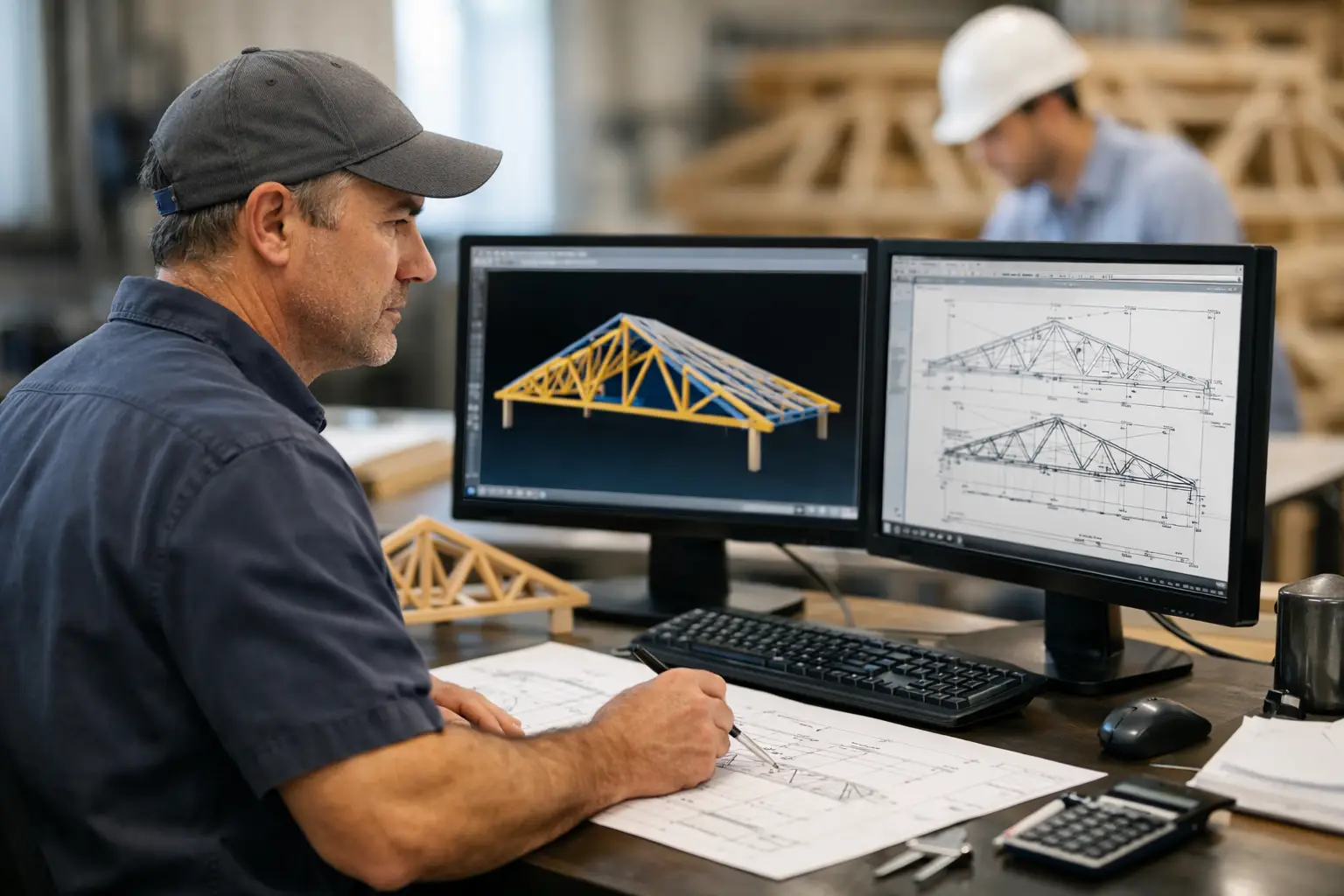
    A backed-up design queue does not care that your hiring market is tight. It does not care that one senior designer is covering for two open seats, or that sales keeps pushing for faster turnarounds. For truss designers who use Eagle Truss software, the real issue is not just design speed. It is whether your operation can keep moving when volume spikes, deadlines tighten, and experienced talent is hard to find.

    That is where software skill stops being a line on a resume and starts becoming a production advantage. Eagle Truss is not useful because it is popular. It is useful because the right designer can turn that platform into output, consistency, and fewer handoff problems between estimating, design, and manufacturing. If you run a truss plant, supply components, or manage technical production, that distinction matters.

    Why truss designers who use Eagle Truss software matter

    Eagle Truss proficiency has direct operational value because truss design is not a generic drafting job. The software is part of a production chain that touches layout interpretation, load handling, plate selection, manufacturing logic, and communication with downstream teams. A designer who knows the tool but does not understand the plant environment will still create friction. A designer who understands both can increase throughput fast.

    That is the difference many businesses miss. They hire for software familiarity when they should be hiring for usable production capacity. A capable Eagle Truss designer should not only build designs. They should help reduce redraws, support cleaner reviews, and keep projects moving without constant supervision.

    When the right people are in place, the benefits show up quickly. Turnaround times become more predictable. Senior staff spend less time correcting avoidable errors. Managers gain room to take on more bid activity without gambling on quality. Those are not soft gains. They hit margin, scheduling, and customer confidence.

    Eagle Truss skill alone is not enough

    There is a big gap between knowing where the buttons are and being production-ready. Many operations have learned this the hard way. Someone can interview well, claim software experience, and still struggle once live jobs start coming in at real pace.

    The stronger measure is whether the designer can work inside your standards. Can they read plans the way your team reads them? Can they apply loading and design criteria consistently? Can they deliver files and details in a format that your reviewers and production teams can use without cleanup? If not, software knowledge is only partial value.

    This is why staffing truss design is harder than many adjacent technical roles. You are not filling a CAD seat. You are protecting a workflow that directly affects fabrication and field performance. The cost of a mismatch is not just a slow onboarding cycle. It is lost capacity at the exact moment you were trying to create more of it.

    What strong Eagle Truss designers actually bring to the table

    The best truss designers who use Eagle Truss software usually stand out in three ways. First, they understand design intent and plant realities at the same time. Second, they work with enough speed to support volume without forcing quality trade-offs. Third, they need less management drag because they already know how component workflows operate.

    That last point matters more than people admit. A designer who constantly needs clarification can consume the time of your most valuable internal leaders. On paper, you added headcount. In practice, you shifted senior production hours into training, corrections, and follow-up. That is not scale.

    A stronger designer lowers the burden on the rest of the system. Reviews get tighter. Communication gets cleaner. Jobs move with less rework. If your business is trying to increase bid velocity or extend output without adding domestic overhead at full cost, that kind of support becomes a real lever.

    Where the payoff shows up fastest

    Most companies see the biggest payoff in backlog relief and scheduling control. If your current team is overloaded, even one capable Eagle Truss designer can stabilize lead times. That alone can protect customer relationships and keep sales from promising dates production cannot support.

    The second payoff is in capacity planning. Once design resources become more reliable, you can make better decisions about what work to pursue. You stop treating every new project as a staffing risk. That changes how aggressively you can grow.

    The third payoff is cost discipline. Not every business needs another domestic full-time hire with a long recruiting cycle and premium salary burden. Sometimes the smarter move is flexible technical production support that matches your pipeline.

    The hiring problem is bigger than software availability

    There is no shortage of people who can claim software exposure. There is a shortage of truss designers who can perform in a live production environment, inside US-driven standards, with enough consistency to matter. That is the actual bottleneck.

    For many truss plants and component manufacturers, the challenge is timing as much as talent. You do not need help six months from now. You need production support while work is in front of you. Traditional hiring often moves too slowly for that. By the time a local search is complete, trained, and productive, the backlog has already done damage.

    This is why more companies are rethinking how they access technical talent. Instead of treating truss design staffing like a standard recruiting exercise, they are treating it like an operations decision. They want proven software users, tested in real workflows, who can plug into active demand with less delay.

    How to evaluate truss designers who use Eagle Truss software

    If you are assessing talent, start with workflow evidence, not broad claims. Ask what kind of projects the designer has handled, what review structure they worked under, and how they managed revisions, loading criteria, and production coordination. The goal is to understand whether they have lived in a real truss environment.

    A practical test is usually more revealing than an interview. Give the candidate a representative scope. Review not just the final output, but also how they interpret plans, flag issues, and respond to corrections. Good designers do more than complete a task. They show judgment.

    It also helps to evaluate communication early. Even highly technical roles affect speed through handoffs. If a designer can produce acceptable work but struggles to communicate assumptions, changes, or open questions, cycle times still suffer.

    What decision-makers should watch for

    Owners and operations leaders should watch for hidden management cost. A lower-cost hire is not cheaper if they require constant senior oversight. Estimating managers and design managers should watch for review burden, revision quality, and consistency across similar jobs. Executives should focus on a larger question: does this resource increase throughput in a measurable way?

    That framing keeps the conversation where it belongs. The point is not to collect resumes with software keywords. The point is to add dependable capacity.

    Why flexible production teams are changing the equation

    The market has pushed many businesses to move beyond one-at-a-time hiring. When demand shifts quickly, rigid staffing models create risk. You either overhire and carry excess cost, or underhire and leave revenue on the table.

    A more effective model is access to dedicated technical talent that can scale with volume. For businesses that rely on Eagle Truss, that means bringing in trained designers who can support current production standards without forcing a complete rebuild of internal processes. It is a practical answer to a practical problem.

    This is one reason specialized partners have gained traction. Companies like All Points Technical built their model around hard-to-fill technical production roles, not generic staffing. That matters because truss design is too specialized for trial-and-error recruiting. When the resource is already trained, tested, and aligned to industry workflows, onboarding gets shorter and output starts faster.

    There is still a trade-off to manage. Not every outside resource will fit every internal process on day one. Expectations, QA standards, and communication routines still need to be clear. But that is a manageable issue. A prolonged shortage of qualified design capacity is far more expensive.

    The real question is not software. It is scale.

    Eagle Truss is part of the equation, but it is not the whole equation. The businesses that win with it are the ones that pair software proficiency with production discipline, quality control, and a staffing strategy built for demand swings.

    If your pipeline is growing, your local talent market is thin, or your senior team is buried in review work, this is the moment to get more specific about what kind of help you actually need. Not another resume. Not another vague promise of CAD support. You need truss designers who use Eagle Truss software well enough to create usable capacity.

    That standard is higher, but the payoff is bigger. When design resources are right, everything downstream gets easier.

  • Truss Designers Who Use Alpine Software

    Truss Designers Who Use Alpine Software

    When a truss plant has sales in hand but design seats sitting empty, the problem is not demand. It is throughput. That is where truss designers who use Alpine software become a serious operational advantage. If your team runs Alpine and you cannot hire fast enough, every delayed layout, every backed-up queue, and every missed delivery window starts showing up in margin.

    This is not just a software conversation. It is a capacity conversation. Alpine proficiency matters because your production flow depends on people who can work inside the platform without a long ramp-up, without constant correction, and without slowing down your in-house team. In a market where experienced truss talent is still hard to find, that kind of readiness changes the math.

    Why truss designers who use Alpine software matter

    Alpine is not a line item on a resume. For truss operations, it is part of the engine that drives quoting, design turnaround, manufacturing coordination, and downstream delivery. A designer who already knows the environment can contribute faster than a general CAD user or a structural professional trying to learn truss workflows on the fly.

    That distinction matters most when volume spikes. If your plant is quoting aggressively, expanding into new builder relationships, or trying to clean up a backlog, you do not have time to teach platform basics while orders stack up. You need designers who understand the software and the production context around it.

    Good Alpine designers also reduce friction between departments. Sales wants fast turnaround. Production wants designs that reflect reality on the floor. Management wants fewer redesign loops and cleaner output. A capable designer operating inside Alpine helps connect those priorities instead of forcing one department to absorb the cost of another department’s delays.

    Alpine skill alone is not enough

    A lot of companies make the same mistake. They look for software familiarity and stop there. But truss design is a production role, not a software demo.

    The best truss designers who use Alpine software bring three things at once. First, they know the platform well enough to work efficiently. Second, they understand truss design principles, loading logic, and component behavior. Third, they can function inside a real operating environment where deadlines, revisions, and builder expectations are moving at full speed.

    That combination is what separates usable talent from expensive headcount. Someone may know where the buttons are in Alpine and still create bottlenecks if they do not understand plant standards, engineering review expectations, or how to produce clean, buildable work. On the other hand, a strong designer with real truss experience can often adapt quickly to company-specific rules, naming conventions, and customer preferences.

    Where the business impact shows up

    If you are an owner, operations manager, or design lead, the value is not abstract. It shows up in output.

    When Alpine-capable designers are in place, bid capacity improves because estimating and design do not choke at the same point every week. Turnaround improves because fewer jobs are waiting for scarce internal staff. Your lead team gets breathing room because senior people can focus on exceptions, problem jobs, and customer escalation instead of spending all day trying to keep the queue alive.

    Margins improve too, but only if the staffing model is right. A bad hire burns money in training time, rework, and internal supervision. A productive Alpine designer increases billable throughput and helps the business take on more work without forcing a full local recruiting cycle every time volume rises.

    There is also a less obvious gain: continuity. Plants that depend on a small number of local designers are exposed when one person quits, takes leave, or gets overloaded. Expanding access to trained Alpine talent gives your operation more resilience. That matters just as much as speed.

    Hiring locally vs. adding external Alpine design capacity

    For some businesses, local hiring is still the right move. If you need a long-term design manager, deep customer-facing coordination, or someone physically embedded in plant operations, an in-market hire may be the best fit.

    But many companies are not dealing with a strategy problem. They are dealing with a timing problem. They need production now. They need jobs designed while recruiting continues, not after. In those cases, adding external design capacity can outperform traditional hiring because it removes months of delay.

    This is where offshore and distributed production models have become far more practical than many decision-makers assume. The old concern was quality control. The current reality is that specialized partners with truss-specific recruiting, training, and workflow discipline can deliver Alpine-ready designers much faster than most companies can hire on their own.

    That does not mean every offshore model is equal. It depends on how well the provider understands truss operations, how they screen software skill, how trial work is handled, and how quickly they can match designers to your standards. If the provider is just filling seats, you will feel it immediately. If they are built around construction technical production, the difference is obvious.

    What to look for in truss designers who use Alpine software

    If you are evaluating candidates or outside support, look beyond the software label. Ask how they handle design revisions, loading changes, and coordination with internal engineering or production teams. Ask what kind of truss volume they have supported. Ask how they manage plant standards and QC.

    You are trying to measure operational fit, not just digital familiarity.

    A strong Alpine designer should be able to enter your process with minimal drag. That includes understanding how to read incoming information, how to flag missing data early, how to keep work moving without creating risk, and how to work within your turnaround expectations. Speed matters, but clean speed matters more.

    Communication also matters more than some teams admit. Truss design is technical, but it is still collaborative. If a designer cannot surface issues clearly, ask the right questions, or document changes properly, your in-house team ends up doing cleanup work. That defeats the point of adding capacity.

    The best use case: scale without adding bottlenecks

    The strongest case for Alpine-proficient design support is not replacing your internal team. It is extending it.

    Most truss businesses already have experienced people in place. The issue is that those people are overloaded. They are handling design, customer questions, internal approvals, exception cases, and production support at the same time. Adding more work to the same core team does not create growth. It creates fatigue.

    External truss designers who use Alpine software let you redistribute the load. Routine production can move faster. Internal experts can focus on supervision, higher-value review, and process control. That structure usually performs better than trying to solve every capacity problem with one more hard-to-find local hire.

    It also gives management more flexibility. You can scale up when order volume rises, stabilize when it fluctuates, and avoid carrying unnecessary fixed overhead when demand softens. For businesses trying to protect margin while staying aggressive in the market, that flexibility is a real advantage.

    Why onboarding speed changes the decision

    A slow onboarding process kills momentum. If a staffing solution takes months to become useful, it is not a solution.

    That is why specialized truss support partners outperform general staffing models. They know how to validate software proficiency, test technical fit, and get people into production quickly. The point is not to make a hire and hope for the best. The point is to prove capability early, reduce risk, and build a team that can actually carry work.

    This is one area where companies like All Points Technical have changed buyer expectations. Instead of treating truss design like a generic recruiting function, they treat it like a production pipeline problem that needs a faster answer. That is the right lens.

    The real question is not software. It is output.

    Yes, Alpine knowledge matters. But the companies that win with this model are not obsessing over software in isolation. They are asking a harder and more useful question: can this person or team help us design more jobs, turn work faster, reduce strain on our key people, and support growth without dragging down quality?

    That is the standard.

    If the answer is yes, Alpine proficiency becomes part of a bigger business result. More bids out the door. Better use of internal leadership. More stable production. Less dependence on a painfully tight local labor market.

    For truss operations under pressure to move faster, that is not a nice-to-have. It is the difference between capping growth and staying built for it.

    The strongest operators do not wait for the hiring market to improve before they expand capacity. They build a model that keeps work moving anyway.

  • Paragon Truss Design Software Explained

    Paragon Truss Design Software Explained

    A truss plant can lose margin long before the saw ever starts. It happens in design backlog, rework, bottlenecks between sales and engineering, and software limitations that show up only when volume spikes. That is why paragon truss design software matters. For many component manufacturers and design teams, it is not just another program on the desktop. It is part of the production system.

    The real question is not whether software can draw trusses. Most platforms can do that. The question is whether the system supports speed, accuracy, standardization, and scale when your team is under pressure to turn quotes into approved layouts and released jobs without choking the pipeline.

    What paragon truss design software is built to do

    Paragon truss design software is used to design wood truss components, generate engineered outputs, and support the workflow between estimating, layout, design, and production. In practical terms, it gives truss designers a working environment to model components, apply loading and span conditions, check designs against engineering rules, and produce the documents the plant and field teams need.

    That sounds straightforward. In reality, software performance shows up in the details. How quickly can a trained designer move through repetitive work? How much manual cleanup is required after initial design? How easy is it to standardize output across multiple designers? How much friction exists when customer revisions hit late in the day and production is already queued?

    Those questions matter more than feature checklists because truss operations live or die on throughput.

    Where Paragon truss design software fits in the workflow

    In most operations, software does not work alone. It sits inside a larger chain that includes takeoffs, estimating, sales support, design review, production release, and coordination with builders, framers, and engineers. If one link breaks, the whole schedule slips.

    Paragon usually delivers the most value when the company already has disciplined design standards and a clear review process. Strong software in a weak production environment does not create consistency by itself. It can help trained people move faster, but it does not replace process control.

    That is where a lot of companies get this wrong. They treat software selection like the main decision and ignore staffing depth, training quality, queue management, and revision control. Then they wonder why turnaround times still lag.

    The upside: speed, structure, and repeatability

    When used by experienced designers, paragon truss design software can support a faster design cycle. Repeatable design logic, standardized outputs, and familiar workflows reduce decision fatigue and shorten production time on common residential and light commercial truss packages.

    It also helps create more predictable deliverables. For operations leaders, that matters because consistency is what allows review teams, plant staff, and field partners to trust the package coming out of design. If every designer builds jobs differently, even good software turns into a cleanup project.

    There is also a staffing benefit. When your operation uses a recognized truss platform, it becomes easier to onboard people who already understand truss design conventions and software-driven production. That reduces ramp time compared with building a process around custom workarounds or disconnected systems.

    For companies trying to increase bid velocity, those gains are not minor. They directly affect how many jobs your team can touch in a week.

    The limits: software does not fix a capacity problem

    This is the part buyers need to hear clearly. Paragon truss design software can improve execution, but it does not create production capacity on its own.

    If you have two overloaded designers, adding better workflows inside the software may help, but it will not solve a ten-job backlog if customer demand keeps climbing. If your review process is inconsistent, software will not prevent avoidable revisions. If you do not have enough trained people to absorb rush work, the program becomes another tool sitting inside an understaffed system.

    That is why the strongest operators think about software and staffing together. They ask whether the team behind the platform can scale with demand, maintain quality, and support overnight progress when local recruiting dries up.

    For many truss businesses, that is the real constraint. The labor market for experienced truss designers is tight. Plants need people who can think structurally, work quickly, understand production realities, and stay accurate under deadline. Those people are hard to find and harder to retain.

    Choosing Paragon based on your business model

    Whether paragon truss design software is the right fit depends on the type of work you do and how your operation is organized.

    If your business runs high-volume residential packages with repeatable framing conditions, efficiency and standardization may be the main priority. In that environment, the value of the software is tied closely to speed and output consistency.

    If your pipeline includes more custom roof geometry, mixed-use projects, or complex coordination with other trades, the software still matters, but designer skill matters more. Complex work exposes every weakness in process, review, and communication. The platform can support the work, but it cannot carry weak execution.

    If you are a lumber dealer or component manufacturer trying to expand design capacity without adding domestic headcount at the same pace, software compatibility becomes a strategic issue. You need designers who can step into your environment and produce inside your standards fast. That is where experienced outsourced support can outperform the slow cycle of posting jobs, interviewing candidates, and hoping they can handle volume after training.

    What to evaluate before you commit

    The better question is not, “Is this good software?” The better question is, “Can this software help my operation produce more accurate work, faster, with less friction?”

    Start with output. Look at the quality of actual truss design packages, not demo screens. Review how revisions are handled. Check whether the software supports the type of jobs you actually sell, not the idealized jobs shown in presentations.

    Then look at team dependency. Some platforms perform well only when a few highly experienced people are driving them. That creates risk. If one person leaves, throughput drops. A stronger setup is one where standards, training, and review processes allow multiple designers to produce consistent work.

    Finally, evaluate scalability. Can your current team increase production when bid activity surges? Can the design function continue overnight or across time zones when deadlines stack up? If the answer is no, software alone is not the growth plan.

    Why staffing strategy matters as much as the platform

    The top truss operations do not just buy software. They build production systems around it.

    That means documented standards, trained design talent, quality checkpoints, and flexible capacity. It also means leadership stops treating design as a fixed overhead function and starts treating it as a growth lever. If design output expands, bid volume can rise. If bid volume rises with control, plant utilization and revenue can rise with it.

    This is exactly where specialized production partners can change the equation. A company like All Points Technical does not sell software. It helps businesses get more from the systems they already use by putting trained technical production behind them. For a truss plant or component manufacturer, that can mean faster scaling, better overnight workflow coverage, and a way to increase output without waiting months to hire locally.

    That is a practical advantage, not a branding claim. If your software is solid but your queue is still jammed, the problem is usually capacity and execution.

    The bottom line on Paragon truss design software

    Paragon truss design software can be a strong operational tool when it is paired with the right people and the right process. It supports consistency, helps experienced designers move efficiently, and can strengthen design production when standards are clear.

    But there is no software shortcut around weak staffing, poor workflow discipline, or inconsistent review. Truss businesses that win on speed and margin understand this. They invest in the platform, then they invest in the team that turns the platform into output.

    If you are evaluating your next move, look past the screen. Look at turnaround time, revision load, labor depth, and how quickly your design operation can respond when sales volume jumps. That is where the real return shows up.

    The companies that keep growing are not the ones with the fanciest tools. They are the ones that keep production moving when everyone else is stuck waiting for talent.

  • Why an Offshore Truss Design Team Wins

    Why an Offshore Truss Design Team Wins

    When your sales team is closing work faster than your design department can release it, the bottleneck is no longer the market. It is capacity. That is exactly where an offshore truss design team changes the math. Instead of waiting months to recruit locally, you can add trained production support fast, protect your turnaround times, and keep more revenue moving through the business.

    For truss plants, lumber dealers, and component manufacturers, this is not a theory exercise. It is an operations decision. Every delayed layout, every backed-up queue, and every bid that sits too long puts margin at risk. The companies pulling ahead are the ones that treat design capacity as a scalable production function, not a fixed headcount problem.

    What an offshore truss design team actually solves

    Most companies do not start looking offshore because they want a new staffing model. They start because the domestic model stops working at the speed the business requires. Open roles stay open. Senior designers spend too much time on volume work. Estimating and design teams compete for the same limited talent pool. The result is familiar: longer lead times, stressed managers, and missed opportunities.

    An offshore truss design team addresses those pressure points directly. It gives you access to dedicated technical professionals who can handle production work, support overflow demand, and extend output beyond the standard workday. That matters when your backlog is rising and customers still expect fast answers.

    The commercial upside is straightforward. You gain capacity without carrying the full cost and delay of domestic hiring. You can bid more work, process more jobs, and keep your internal team focused on the highest-value decisions. In a market where labor shortages can cap growth, extra design capacity is not just support. It is leverage.

    Why domestic-only hiring is no longer enough

    There is still a place for domestic design leadership. That has not changed. What has changed is the assumption that every production role must be filled locally. In many markets, that approach is simply too slow and too expensive to support aggressive growth.

    If you need one senior truss designer with deep customer knowledge and field judgment, hiring locally may make perfect sense. If you need to add three, five, or ten people to keep pace with demand, the equation shifts. Recruiting gets harder. Payroll climbs. Ramp-up time stretches. And by the time the team is fully staffed, the market may have already moved.

    This is where offshore staffing becomes a serious operational strategy, not a cost-cutting gimmick. It gives construction businesses a way to add specialized production talent in days or weeks instead of waiting quarter after quarter for the right local hire.

    There are trade-offs, of course. Offshore only works when the provider understands truss design, software workflows, quality controls, and production accountability. If the team is generic, poorly trained, or loosely managed, you create more cleanup work than value. The model is powerful, but execution is everything.

    How to judge an offshore truss design team

    The first question is not price. It is competence. Truss design is not basic drafting. It sits at the intersection of structural logic, software proficiency, plant standards, and production speed. If a provider does not understand that, they are selling labor, not solving a capacity problem.

    Start with industry specialization. A team that already works in truss and component design will ramp much faster than one learning the category from scratch. They should understand the pace of residential and commercial production environments, the importance of accurate layouts, and the downstream consequences of design errors.

    Software familiarity matters just as much. Your offshore team should be comfortable with the platforms your operation already uses. If they need months of tool training before they can contribute, the value disappears quickly.

    You should also look closely at workflow discipline. Strong offshore teams do not operate like freelancers. They work inside documented processes, clear communication rhythms, and measurable production standards. They know who reviews what, how revisions are handled, and when work is escalated back to your domestic leads.

    That structure is what separates real production support from staffing noise.

    The best use cases for offshore truss design support

    Not every company needs the same model. In some businesses, the best use of an offshore team is overflow production during peak periods. In others, it becomes a standing extension of the design department that handles recurring volume every week.

    High-growth truss plants often benefit the most because demand can spike faster than local recruiting can respond. An offshore team lets them scale without freezing growth while they search for hard-to-find domestic talent.

    Lumber dealers and component manufacturers can also use offshore support to increase bid velocity. When estimates and designs move faster, sales teams can respond faster. That speed compounds. More quotes go out. More opportunities stay alive. More work gets captured before competitors catch up.

    There is also a strong case for using offshore teams to protect senior talent. Too many experienced designers spend their days buried in repetitive production work when they should be reviewing complex jobs, handling exceptions, mentoring junior staff, and solving customer-specific issues. A dedicated offshore team can absorb the routine load and free domestic leadership to focus where experience matters most.

    Where offshore teams fail and how to avoid it

    The failure points are predictable. Expectations are vague. Training is rushed. Communication is inconsistent. Internal teams do not know how work should be handed off. Then leadership decides the model does not work, when the real issue was poor implementation.

    A successful offshore truss design team needs a defined scope from the start. That means clear job types, output expectations, software access, quality checks, and review responsibilities. It also means assigning ownership on your side. If nobody internally owns onboarding, feedback, and process refinement, performance will drift.

    You should expect a ramp-up period, but not a mystery period. Early trial work is valuable because it shows how well the team handles your standards in a live environment. The right partner will welcome that scrutiny. They know performance has to be proven.

    Communication discipline matters more than people think. Offshore does not mean unavailable. In fact, a properly structured global team can improve continuity by keeping work moving across time zones. But that only happens when communication windows, review cycles, and escalation paths are deliberate.

    Why time zones can be an advantage

    Many decision-makers still think distance creates drag. In reality, poor process creates drag. Time zone coverage can be a serious advantage when you use it well.

    A US-based team can hand off work at the end of the day and come back to meaningful progress the next morning. That shortens production cycles without forcing domestic staff into overtime. It also creates breathing room during heavy bid periods or seasonal surges.

    This is especially valuable for companies trying to improve throughput without adding more management layers. If part of your technical production runs while your local office is closed, you create a longer operating window without expanding your physical footprint.

    That does not mean every task should move offshore. Client-facing conversations, complex judgment calls, and strategic design oversight may still belong with your domestic team. The strongest model is usually blended: local leadership, offshore production capacity, and a workflow built for speed and control.

    Choosing a partner, not just extra hands

    If you are evaluating providers, ask a harder question than how many people they can supply. Ask how fast they can make your operation better.

    A real partner will understand staffing pressure, but they will also understand throughput, turnaround time, quality, and margin. They will talk about onboarding, validation, and scaling – not just resumes. They will have enough construction-specific experience to recognize where your process breaks and how to strengthen it.

    That is why specialized firms stand apart. All Points Technical built its model around construction-focused production teams, not general outsourcing. That difference matters when your business depends on trained technical output, not just lower labor cost.

    The right offshore truss design team should help you do three things at once: stabilize operations, increase bid capacity, and grow without waiting on a broken hiring market. That is the standard. Anything less is just staffing dressed up as strategy.

    The companies that win the next few years will not be the ones still arguing about whether offshore support is acceptable. They will be the ones using it with discipline, speed, and clear production control. If design capacity is holding back your growth, the better question is not whether to act. It is how much opportunity you are leaving on the table by waiting.

  • What Is a Truss Designer?

    What Is a Truss Designer?

    A delayed truss package can stall framing, disrupt delivery schedules, and eat margin fast. That is why the question what is a truss designer matters more than it sounds. In real-world construction operations, a truss designer is not just a drafter pushing lines on a screen. This role sits at the intersection of engineering intent, manufacturing reality, code compliance, and production speed.

    What Is a Truss Designer in Practical Terms?

    A truss designer creates the technical layouts and design documents used to manufacture structural trusses for roofs and floors. Those trusses are typically built from wood components connected with metal plates, and they must perform under specific loading conditions, span requirements, and jobsite constraints.

    In practice, the truss designer takes architectural plans, engineering criteria, and project specifications, then turns that information into production-ready truss designs. The work usually includes truss placement layouts, individual truss profiles, loading inputs, connector plate selection, bearing checks, web configurations, and manufacturing documentation.

    That sounds straightforward until volume hits. On a busy pipeline, the truss designer is often managing changing plans, conflicting dimensions, rushed bid deadlines, revised loads, municipal requirements, and plant-specific production rules at the same time. Good designers keep the package moving without sacrificing accuracy. Great ones protect your schedule and your margin.

    What a Truss Designer Actually Does Every Day

    The job is part technical design, part coordination, and part problem-solving under pressure. A truss designer reviews incoming plans to determine roof geometry, spans, pitches, overhangs, girder requirements, and loading criteria. They then build the truss system in specialized software, validate the structural configuration, and produce the output needed for manufacturing and approval.

    A large part of the role is interpreting incomplete information. Plans are not always clean. Dimensions conflict. Framing intent is sometimes implied instead of stated. Mechanical openings may affect webs. Energy heels may change profiles. A designer has to catch those issues early, flag them, and keep the job advancing.

    They also coordinate with estimators, sales teams, project managers, plant production staff, and in many cases engineers of record or building designers. If the package works structurally but creates manufacturing headaches, it is not a strong design. If it works in the plant but misses field conditions, it creates callbacks and delays. The best truss designers understand both sides.

    Where Truss Design Fits in the Construction Process

    Truss design usually happens after the basic building plans are developed but before fabrication begins. For builders, component manufacturers, and lumber dealers, this phase is critical because it directly affects quoting accuracy, shop scheduling, material usage, and field installation.

    If design capacity is weak, the entire operation feels it. Sales cannot turn bids fast enough. Manufacturing gets compressed schedules. Install crews deal with preventable issues. Management ends up paying for the same bottleneck twice – once in labor inefficiency and again in lost opportunity.

    That is one reason this role has become so valuable. A capable truss designer does not only create drawings. They help a business increase bid velocity and maintain production continuity.

    What Software Does a Truss Designer Use?

    Most truss designers work in specialized component design software rather than general drafting programs alone. The exact platform depends on the manufacturer, plate supplier, and workflow, but the role typically involves software built for truss analysis, plate design, loading, and manufacturing output.

    These systems allow the designer to model trusses, apply loading conditions, evaluate structural performance, and generate cut sheets and shop documentation. Some roles also involve CAD, BIM coordination, or integration with broader production workflows, especially on larger or more complex projects.

    Software skill matters, but it is not the whole story. A fast software user without framing judgment can create expensive problems quickly. On the other hand, a designer with strong construction logic and plant awareness often brings more long-term value than someone who only knows which buttons to click.

    Is a Truss Designer an Engineer?

    Usually, no. That distinction matters.

    A truss designer is typically responsible for preparing the truss design package within the parameters of building codes, engineering standards, software calculations, and project criteria. Depending on jurisdiction, company structure, and project type, a licensed engineer may review or seal portions of the design, especially when delegated design responsibilities apply.

    So the truss designer is not always the final legal authority, but the role is still highly technical. It requires a working knowledge of structural behavior, load paths, bearing conditions, uplift, deflection, bracing concepts, and material limitations.

    This is where many outsiders underestimate the position. They hear “designer” and think decoration or drafting support. In this space, the work is production-critical and structurally sensitive. Mistakes show up in wasted lumber, field failures, rejected submittals, and delayed jobs.

    The Skills That Separate Average from Elite

    If you are hiring or scaling a truss operation, you are not just looking for someone who can complete a layout. You are looking for someone who can perform under operating pressure.

    A strong truss designer understands roof and floor systems, reads plans quickly, and catches ambiguity before it becomes rework. They know how to balance code requirements, engineering logic, software output, and manufacturing efficiency. They communicate clearly with internal teams and do not freeze when the revision set lands at 4:30 p.m.

    The elite tier goes further. They reduce back-and-forth, design with plant realities in mind, and support estimating and sales by turning work faster. They understand that every delayed design package affects downstream capacity. That commercial awareness is what makes the role so valuable.

    Why Truss Designers Are Hard to Find

    This is a niche discipline inside a niche discipline. You need people who understand construction documents, structural behavior, truss software, and component manufacturing. Then you need them to work accurately at speed.

    That talent pool is not deep in many US markets. Companies often compete for the same limited group of experienced designers, and training new people takes time. Even when businesses find candidates, they still face onboarding delays, retention risk, and fluctuating demand across seasons and project cycles.

    That is why more component manufacturers, dealers, and construction firms are rethinking how they build design capacity. Instead of relying only on local hiring, they are using specialized staffing and production partners to add trained truss design support faster and more cost-effectively. For companies trying to scale output without waiting months to recruit, that model can be a major operational advantage.

    What Is a Truss Designer Worth to the Business?

    The answer depends on your workflow, but the impact is usually larger than the org chart suggests.

    A productive truss designer helps shorten turnaround time, improve quote responsiveness, reduce rework, support manufacturing flow, and keep projects moving. If your sales team can bid more work because design support is available, that affects revenue. If your production team receives cleaner packages, that affects labor efficiency. If your business can maintain output across time zones, that affects cycle time.

    This is why the role should be viewed as a growth function, not just a support function. In a tight labor market, truss design capacity can become the difference between controlled scaling and constant bottlenecks.

    When You Need One Truss Designer Versus a Team

    Not every business needs a large internal bench. A smaller operation with predictable volume may do well with one or two experienced designers and occasional overflow support. A higher-volume manufacturer or dealer handling multiple branches, seasonal surges, or aggressive sales targets may need a more flexible structure.

    That is where team-based models make sense. Instead of tying growth to local recruiting alone, businesses can add dedicated design capacity that expands or contracts with the pipeline. All Points Technical built its model around exactly that problem – helping construction-related businesses get technical teams up and running in days, not months.

    The right solution depends on your job mix, software environment, revision volume, and internal review process. There is no one-size-fits-all answer. But waiting until design becomes the bottleneck is usually the expensive option.

    What to Look for If You Are Hiring Truss Design Support

    Experience matters, but relevance matters more. A candidate who has worked in the same software, product category, and market conditions as your business will ramp faster than someone with a broad but less applicable background.

    You also want to evaluate output quality, communication, and responsiveness. Can they interpret imperfect plan sets? Do they understand manufacturing constraints? Can they handle revision pressure without losing accuracy? Trial work is often the fastest way to separate real capability from a polished resume.

    For operations leaders, the real question is not just what is a truss designer. It is whether your current design capacity is strong enough to support the business you want next quarter, not just the business you have today. If the answer is no, the smartest move is to fix the capacity gap before it starts costing you work.

  • Lumber Material Estimator: What Good Looks Like

    Lumber Material Estimator: What Good Looks Like

    A bad takeoff rarely looks dramatic at first. It looks like a bid that went out fast, a purchase order that felt close enough, and a job that somehow lost margin one substitution, one shortage, and one missed connector count at a time. That is why a lumber material estimator is not a back-office extra. It is a production function tied directly to bid velocity, purchasing accuracy, and profit protection.

    For lumber dealers, truss plants, component manufacturers, and builders, estimating is where growth either gets enabled or capped. If your team cannot turn plans into accurate material quantities quickly, you do not just miss numbers. You miss opportunities. The market does not wait for overloaded estimators, and customers do not reward slow quotes.

    What a lumber material estimator actually owns

    A strong lumber material estimator does far more than count sticks on a plan set. The role sits at the intersection of sales, operations, and project execution. It converts drawings, specifications, engineering notes, and scope assumptions into usable numbers that purchasing teams, sales reps, and production leaders can trust.

    That means reviewing plan quality, identifying missing information, flagging scope gaps, assigning material quantities, and understanding how assemblies are built in the field. It also means knowing when a clean-looking takeoff is still wrong because the framing logic does not match real construction practice.

    In high-volume environments, this role becomes even more critical. Estimators are not only expected to be accurate. They are expected to be fast, consistent, and scalable across changing workloads. That is where many businesses hit a wall. They can find estimators who know lumber, or estimators who can move quickly, but finding both in one hire is difficult.

    Why lumber material estimator performance matters more than ever

    Most construction businesses do not struggle because they lack demand. They struggle because technical production cannot keep up with demand. Estimating is one of the first bottlenecks to show up when sales increases, when local hiring gets tight, or when project mix becomes more complex.

    A high-performing lumber material estimator helps in three ways.

    First, the role increases bid capacity. If your team can process more plan sets without sacrificing quality, you can quote more work and stay responsive to builders and contractors who are shopping speed as much as price.

    Second, it protects margin. The cost of a weak estimate is not limited to one bad count. It compounds through purchasing overruns, field delays, change disputes, and internal time spent fixing avoidable errors.

    Third, it stabilizes operations. Accurate estimates support cleaner handoffs between sales, purchasing, design, and production. That reduces friction across the whole pipeline.

    This is the real business case. A lumber material estimator is not just producing numbers. The role is controlling throughput.

    What separates average estimators from top performers

    The difference usually starts with plan interpretation. Average estimators read what is shown. Top performers read what is implied. They catch missing details, inconsistent dimensions, structural conditions that affect takeoff logic, and scope assumptions that can swing cost.

    Software proficiency matters too, but software alone is not the advantage. Plenty of teams have estimating tools and still produce weak results. The real edge comes from combining software efficiency with construction judgment. An estimator should know how to use digital takeoff systems, but also when a system output needs to be challenged.

    Communication is another separator. Strong estimators do not bury risk. They flag unclear scope, note assumptions, and raise questions early enough to protect the quote. That matters in residential framing, commercial packages, component takeoffs, and mixed-scope estimating where one bad assumption can create downstream exposure.

    Then there is consistency. A business cannot scale estimating around heroics. It needs repeatable output across varying project volumes, shifting deadlines, and different estimator skill levels. If results depend entirely on one veteran employee who carries decades of tribal knowledge, the operation is exposed.

    Where estimating teams usually break down

    The first failure point is capacity. One or two experienced people become the center of everything, and every urgent quote lands on their desk. Turn times slip, sales gets frustrated, and management starts accepting rushed output as normal.

    The second is standardization. Different estimators use different assumptions, naming conventions, waste factors, and review habits. That creates uneven bids and messy handoffs. It also makes training harder because there is no clear production system behind the work.

    The third is hiring friction. Good estimating talent is hard to find locally, especially when you need people who already understand construction assemblies, lumber packages, and the pace of bid-driven environments. Training from scratch can work, but it takes time most operations leaders do not have.

    The fourth is quality control. Many companies review estimates only after a problem appears. At that point, the cost has already landed. Better teams build review checkpoints into the workflow before numbers go out the door.

    How to build a lumber material estimator function that scales

    If estimating volume is growing, the answer is usually not just hiring another person and hoping the pressure drops. The better move is to treat estimating like a production system.

    Start with scope discipline. Define what each estimate must include, what assumptions are allowed, and how exceptions should be documented. That sounds basic, but many teams skip it and end up with quote inconsistency that hurts both sales and operations.

    Next, standardize plan intake. If estimators receive incomplete drawings, unclear revisions, or missing specifications, they will either stall or guess. Neither helps margin. A clean intake process improves output immediately.

    Then build review logic based on risk, not just routine. A simple remodel and a multi-building package should not pass through the same review threshold. The highest-value estimating teams know where deeper checks are worth the time.

    After that, look at production capacity honestly. If your sales pipeline depends on turning estimates faster than your local team can support, you have a structural issue, not a temporary one. This is where a dedicated external estimating team can change the economics of growth.

    For many companies, that model works because it removes the recruiting lag and lets production scale with demand. Instead of waiting months to fill difficult roles, leaders can add trained estimating support quickly, validate quality through live work, and expand only when output proves itself. That is a much more disciplined way to grow than overloading internal staff and hoping they hold.

    The trade-off between speed and accuracy is real – but manageable

    Every estimating leader wants both. In practice, every business has to balance them. The mistake is treating speed and accuracy as opposites in every case.

    When workflows are weak, faster estimating usually means more errors. But when workflows are structured, software is used properly, and scope assumptions are standardized, speed improves because waste is removed from the process. The estimator spends less time chasing missing information, reworking inconsistent templates, and correcting avoidable mistakes.

    It still depends on project type. Complex structural packages require more judgment than straightforward framing takeoffs. Custom work needs more interpretation than repetitive production work. The goal is not identical turnaround for every estimate. The goal is dependable throughput matched to complexity.

    That is what mature operations understand. They do not promise impossible speed across every job. They build an estimating engine that can move fast where it should and slow down where it must.

    What leaders should ask before they scale estimating

    If you are evaluating your current setup, the right questions are operational, not theoretical. Can your team handle a sudden spike in plan volume without missed deadlines? Are estimates being reviewed in a consistent way? Do your best people spend their time on high-value judgment or on preventable cleanup? If a senior estimator leaves, does output hold or does the whole system wobble?

    Those answers reveal whether you have an estimating department or just a collection of hardworking people trying to keep up.

    For companies that need more capacity without more hiring drag, this is exactly where a specialized partner can create leverage. All Points Technical has built its model around that pressure point – helping construction-related businesses add trained technical production capacity fast, without lowering the bar on industry knowledge or execution.

    The real standard for estimating

    A strong lumber material estimator should help your business quote more work, make cleaner buying decisions, and protect margin before the job starts. That is the standard. Not just fast counts. Not just low labor cost. Reliable output that supports growth.

    If your estimating function cannot keep pace with your pipeline, the problem is not only staffing. It is strategy. The companies that win are the ones that build estimating capacity before the bottleneck starts costing them work.

  • Finding Truss Plant Direct Labor

    Finding Truss Plant Direct Labor

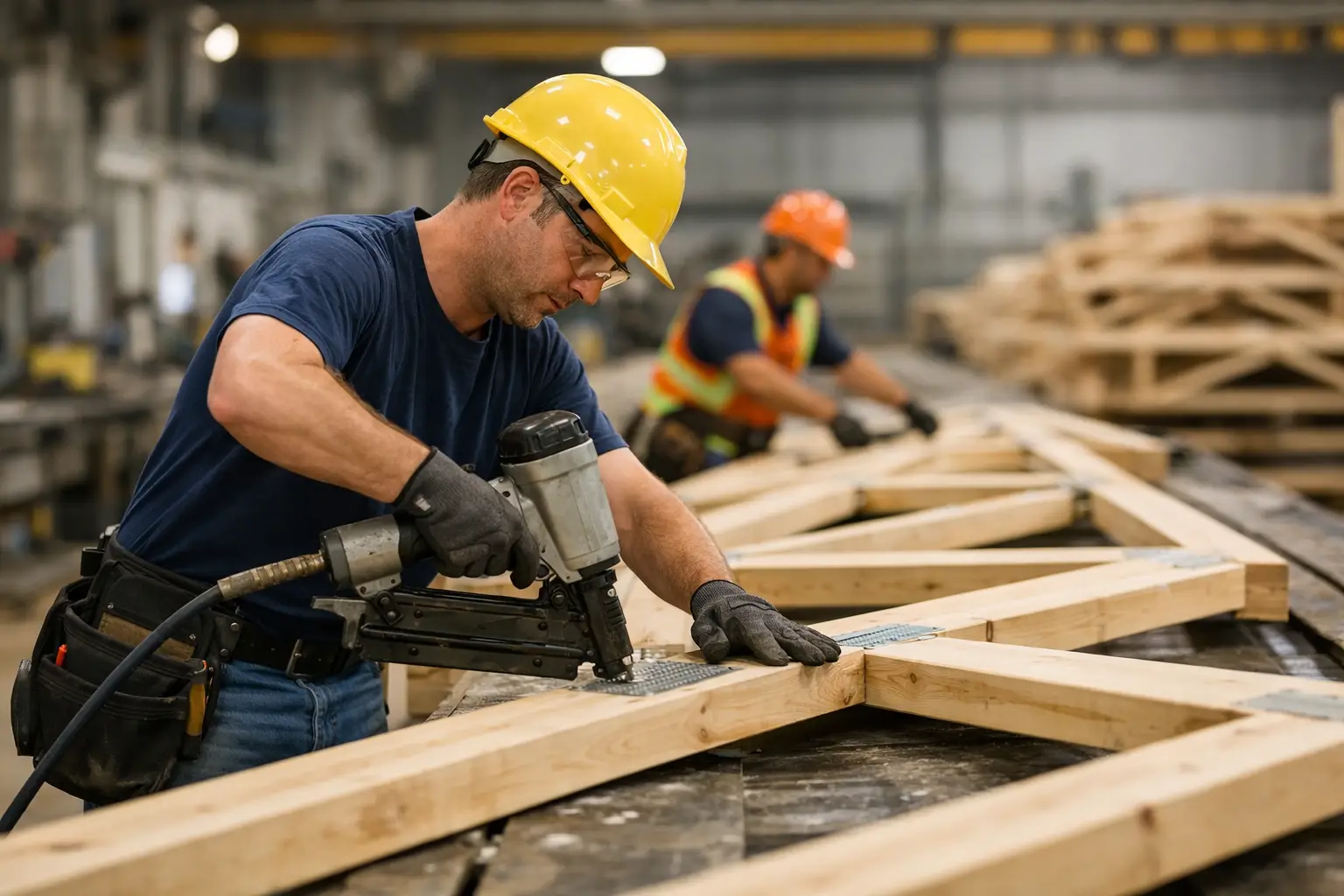
    When a truss plant misses margin, direct labor is usually in the middle of the story. Not because labor is the only cost that matters, but because truss plant direct labor touches almost every operational result that leaders care about – throughput, quality, scheduling, overtime, rework, and the real cost of every job that leaves the yard.

    That is why smart operators do not treat direct labor as a line item to squeeze. They treat it as a production system to manage. The plants that win are not always the ones with the cheapest crews. They are the ones that can align labor hours with demand, protect quality under pressure, and keep output moving when hiring gets tight.

    What truss plant direct labor actually includes

    In most operations, truss plant direct labor means the hands-on production work tied directly to manufacturing components. That usually includes saw operators, jig setters, assemblers, press operators, stackers, repair personnel, forklift support tied closely to production flow, and sometimes lead hands whose time is spent primarily on the floor.

    What does not always fit cleanly into the bucket is where many plants get distorted data. Plant supervisors, maintenance, yard logistics, quality control, and design support may be coded differently from one company to the next. If one location loads setup time into direct labor and another pushes it into overhead, comparing labor performance across plants becomes messy fast.

    That matters because bad categorization leads to bad decisions. If leadership thinks one plant is labor-efficient when it is really just coded differently, they will chase the wrong fix.

    Why direct labor is the number everyone watches

    Material cost usually gets the most attention in component manufacturing, and for good reason. Lumber and plate pricing can move hard and fast. But direct labor is where operators still have room to influence outcomes every week.

    Labor performance affects capacity in a direct way. If labor productivity slips, promised lead times start stretching. If training is weak, errors rise and remakes eat margin twice. If overtime becomes the default answer, labor cost climbs while fatigue drives more mistakes onto the floor.

    This is also where demand volatility shows up first. A plant can carry strong backlog one month and then get hit with mix changes, difficult profiles, labor gaps, or design bottlenecks the next. Direct labor becomes the pressure gauge for everything upstream and downstream.

    The real drivers behind truss plant direct labor cost

    A lot of plants still talk about labor as if hourly wage is the whole equation. It is not. Wage rate matters, but labor cost per truss, per set, or per thousand board feet is shaped by much more than pay.

    Product mix is a major factor. A steady run of repeatable roof trusses behaves very differently from highly variable floor systems, complex girder packages, or jobs with frequent revisions. Plants with tougher work can look less efficient on paper even when they are operating well.

    Layout and material flow matter too. If crews spend too much time waiting on cut parts, hunting for plates, moving finished bundles, or resetting stations, the plant is paying direct labor for nonproductive minutes. Those minutes compound across the shift.

    Training depth is another big one. A veteran table crew can absorb job variation and keep pace under pressure. A thin bench with too many new hires cannot. Plants feel that gap in output first, then in quality, then in customer callbacks.

    Scheduling discipline also changes labor performance more than many leaders admit. Plants that overload one day and starve the next create waste even with good people on the floor. Smoother release planning usually beats heroic overtime.

    Labor shortages changed the game

    For years, many component plants tried to solve growth with local hiring alone. That approach is now harder, slower, and more expensive in many markets. Skilled production workers are tough to find. Skilled truss designers, estimators, and technical support staff are even tougher.

    This matters because plant labor efficiency is not just a floor problem. When design release lags, the floor stalls. When estimating falls behind, bid volume suffers. When engineering coordination gets backed up, production sequencing breaks down. What shows up as a direct labor issue may actually start in technical staffing.

    This is where strong operators separate themselves. They stop viewing labor in isolation and start looking at the full production chain, from quote to design to cut lists to shop output to delivery.

    Why cutting labor too hard usually backfires

    Every plant wants a lean labor model. No serious operator wants bloat. But there is a difference between lean and exposed.

    If crews are cut too far, small disruptions become expensive fast. One absent lead, one bad release package, one late material lane, and the shift falls apart. Plants then make up the difference with overtime, rushed repairs, premium freight, or delayed jobs. The payroll line may look cleaner for a week, but margin erosion shows up somewhere else.

    The same is true when leaders delay technical staffing because they want to avoid fixed cost. If design capacity is too tight, production labor ends up paying for it through idle time, sequencing issues, and remake risk. Cheap staffing decisions can become expensive plant decisions.

    A better way to improve direct labor performance

    The best plants improve truss plant direct labor by attacking the causes of waste, not just the visible hours. That starts with clean measurement. If labor is tracked inconsistently, there is no reliable baseline. Plants need to know what hours belong in direct labor, what output those hours produced, and where productivity changes by shift, line, and product type.

    Then comes workflow. If design release is unstable, fix release discipline. If saw bottlenecks choke assembly, fix cut flow. If setup times are excessive, standardize jig strategy where possible. If one supervisor consistently outperforms another with the same headcount, study the process difference instead of assuming it is luck.

    Cross-training helps, but only when it is intentional. Rotating people without a plan can create average performance everywhere and mastery nowhere. The better model is to build depth in critical positions while keeping enough flexibility to cover peaks and absences.

    There is also a strong case for separating core plant labor from scalable technical production support. Floor labor must be close to the work. But design, estimating, detailing, and selected production support functions can often be scaled faster through specialized external teams. That gives plants more room to stabilize release flow without waiting months to hire locally.

    The margin impact leaders should care about

    Direct labor is not just an efficiency metric. It is a growth constraint. If a plant cannot control labor performance, it cannot scale output confidently. That hurts more than current jobs. It reduces bid appetite, limits customer acceptance, and forces leadership into defensive decisions.

    On the other hand, when labor performance is under control, the plant gains options. It can take on more volume, quote more aggressively, and absorb schedule pressure without losing discipline. That is where better margins come from – not from pushing crews harder, but from building a system that produces repeatable output.

    For many businesses, that system now includes a mix of local leadership, disciplined plant operations, and external technical production support. All Points Technical has built its business around that exact gap: helping construction and component manufacturers increase capacity without waiting on impossible hiring timelines. For operators dealing with direct labor pressure, that kind of model is not a workaround. It is a practical way to keep production moving.

    What good looks like in practice

    A healthy labor model in a truss plant is not perfect. It still has hard weeks, staffing gaps, and ugly jobs. But it has visibility, accountability, and enough support to prevent small issues from becoming margin leaks.

    Good plants know their labor numbers, but they also know what is behind them. They can explain whether performance moved because of product mix, release timing, training gaps, or poor scheduling. They do not confuse activity with output. And they do not expect floor labor to compensate for weak planning upstream.

    That is the bigger point. Truss plant direct labor is one of the clearest signals in the operation, but it is rarely a standalone problem. When leaders read that signal correctly, they make better staffing decisions, build stronger production flow, and protect margin where it actually lives – on the shop floor, in the design queue, and across the handoff between them.

    If your labor line keeps getting blamed for every miss, it may be time to stop asking who is on the clock and start asking what the system is forcing them to overcome.